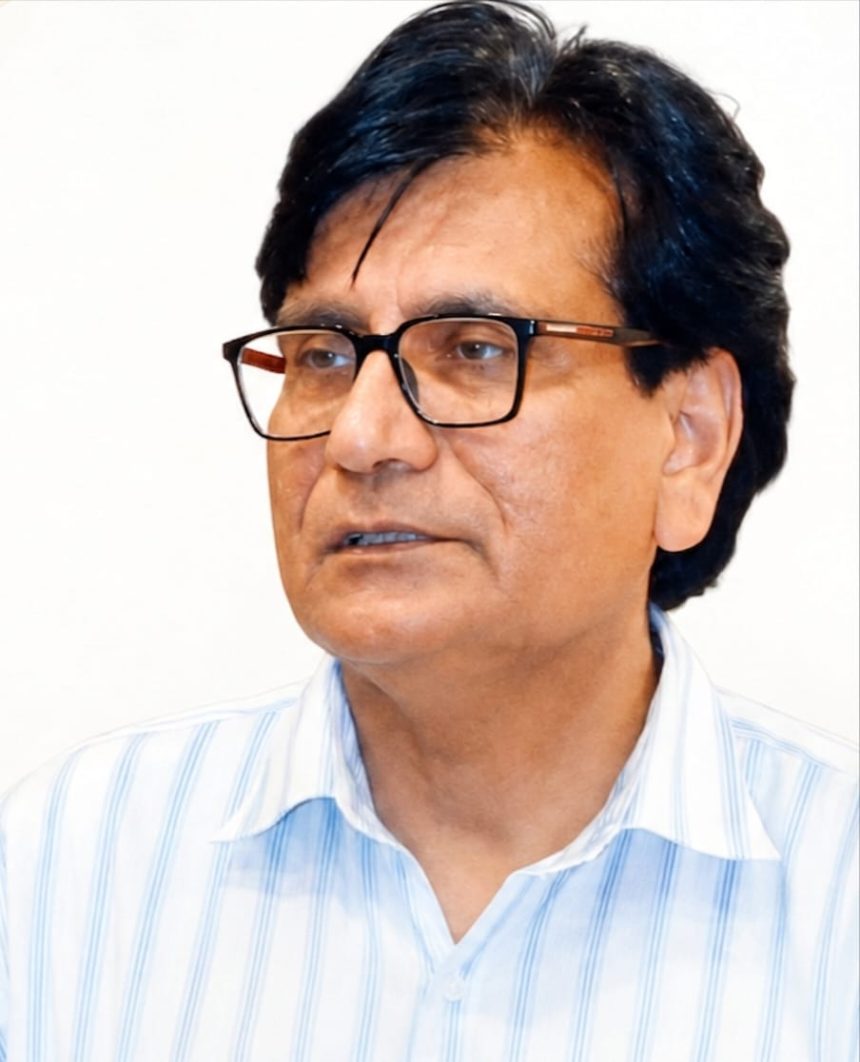
Written By:Dr. Nasser Hussyn Bukhari
Published By:ANI News Agency
The Middle East may be approaching a strategic turning point. The confrontation between Iran and the United States is no longer merely another episode in the region’s long history of conflict. It is becoming a contest over the future security architecture of the Middle East — and the emergence of the Mecca Pact may be its most consequential development.
Iran appears to have strengthened its position through a combination of military resilience, strategic deterrence and diplomatic manoeuvring. The United States, meanwhile, continues to enjoy overwhelming advantages in air power, naval strength, intelligence, logistics and global force projection. Yet military superiority has not translated automatically into political dominance. Tehran has demonstrated an ability to absorb sustained pressure while continuing to challenge the strategic calculations of Washington and its regional allies.
This changing equation is particularly significant for the Gulf states. For decades, their security architecture has rested largely on American military protection. But the intensification of regional conflicts has encouraged some Gulf capitals to reconsider whether dependence on an external power provides a sufficient long-term security guarantee.
The Mecca Pact could emerge from this reassessment. If it develops into a credible regional security mechanism, it could signal a shift from an externally dominated security order towards one based increasingly on regional cooperation and collective deterrence. Iran’s reported interest in joining such an arrangement would be particularly significant. Bringing Iran and the Gulf states into a common security framework could fundamentally alter the strategic map of the region.
The issue, however, is not simply whether Iran can defeat America militarily. By conventional measures, it cannot. Washington possesses superior technology, air power, naval capabilities, intelligence and global military reach. Iran’s strength lies elsewhere: geographical depth, missile and drone capabilities, strategic partnerships, political endurance and the ability to impose costs on a technologically superior adversary.
This distinction is crucial. Modern conflicts are rarely decided solely by battlefield statistics. Strategic victory can also mean denying an opponent its political objectives. From this perspective, Iran’s resilience has become an important component of the regional balance.
The Strait of Hormuz remains the most dangerous pressure point. A major proportion of global energy supplies passes through this narrow waterway. Any prolonged disruption could send oil and gas prices soaring, increase shipping and insurance costs and intensify inflation worldwide. What happens in the Gulf therefore does not remain in the Gulf.
Israel adds another layer of complexity. Israel considers Iran’s missile programme and nuclear ambitions major security threats, while Tehran views Israeli military operations as part of a broader effort to contain its regional influence. The confrontation is consequently intertwined with the conflicts in Gaza, Lebanon, Syria, Iraq and elsewhere.
The nuclear question could prove decisive. If Iran were eventually to cross the nuclear threshold, the regional balance could change dramatically. Advocates of nuclear deterrence would argue that such a capability could discourage external military intervention. Opponents would warn of a regional nuclear arms race involving other states. Either outcome would place enormous pressure on the international non-proliferation system.
Pakistan possesses a unique diplomatic position. It shares a border and historical relationship with Iran while maintaining close political, economic and defence relations with Saudi Arabia and other Gulf states. It also has longstanding relations with the United States, deepening strategic cooperation with China and growing ties with Türkiye.
This places Islamabad in a potentially valuable position: not as another military participant, but as a bridge between competing regional and global interests.
Pakistan should resist the temptation to become directly involved in another Middle Eastern war. Its strategic interest lies in diplomacy, mediation and regional stability. Islamabad could facilitate dialogue among Iran, Gulf countries and Türkiye while maintaining communication with Washington and Beijing.
Türkiye could play a complementary role. Together, Pakistan and Türkiye possess considerable diplomatic credibility across different parts of the Muslim world and could support a regional framework based on dialogue, sovereignty and collective security.
China and Russia will also influence the emerging order. Beijing has substantial energy and economic interests in the Gulf, while Moscow seeks to maintain its diplomatic and strategic influence. Both, however, have strong reasons to prevent the conflict from escalating into a wider international war.
The humanitarian consequences should not be overlooked. Whatever the strategic calculations of governments, civilians ultimately bear the greatest cost. Displacement, destruction of infrastructure, economic hardship and disruption of healthcare and essential services can create consequences lasting for generations.
The war has also benefited the international defence industry. Rising demand for missile defence systems, aircraft, drones, naval platforms and surveillance technology has transformed regional insecurity into a major commercial market. This raises an uncomfortable question: can a conflict become economically attractive to those who profit from continued militarisation?
The answer to the Middle East’s security dilemma cannot ultimately be found in an endless accumulation of weapons. Military deterrence may prevent war, but it cannot by itself create peace.
The Mecca Pact, if transformed into a credible and inclusive regional security arrangement, could offer an opportunity to rethink the old security paradigm. Iran’s possible inclusion, Gulf states’ changing strategic calculations, and the growing diplomatic roles of Pakistan and Türkiye could mark the beginning of a new regional order.
The Middle East does not need another cycle in which every military victory creates the conditions for another war. It needs a security architecture in which regional powers recognise that permanent confrontation is ultimately more costly than compromise.
Wars may be fought with missiles, drones and aircraft, but they are ultimately decided at negotiating tables. The future of the Middle East will depend on whether its leaders choose the battlefield or the table.