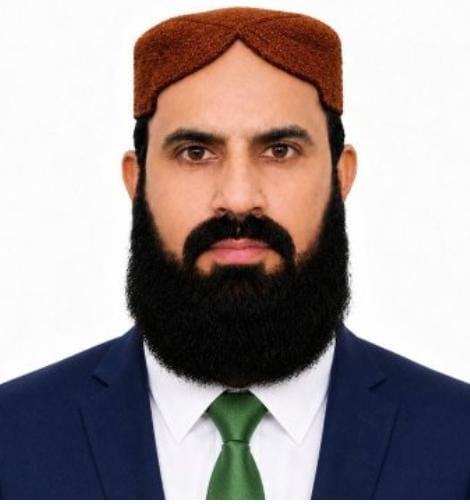
By Mansoor Nizamani :
Teacher and Columnist
On the night of October 18, 2007, a bloody chapter was written in history on Karachi’s Shahrah-e-Faisal, the echoes of which can still be heard in Pakistan’s political history. The night began with hope, joy, and political enthusiasm, but within moments, it turned into a symbol of mourning, screams, and human tragedy. On that night, after eight years of exile, Mohtarma Benazir Bhutto returned to her homeland. Karachi’s streets were filled with people who had gathered to welcome her. Party flags were waving everywhere, slogans were echoing through the streets, and the faces of the people reflected their happiness at seeing their beloved leader. However, two consecutive explosions suddenly ripped through the jubilant crowd, drowning the celebrations in blood. The Karsaz tragedy was not merely a terrorist attack; it raised serious questions about Pakistan’s democratic journey, political stability, and public safety.
Benazir Bhutto’s return to Pakistan held extraordinary significance in the political circumstances of that time. Under General Pervez Musharraf’s rule, debates were underway about the transfer of power, general elections, and the restoration of democracy. In such circumstances, her return was viewed by her supporters as a sign of hope for a new political era. When Benazir Bhutto arrived in Karachi from Dubai on October 18, 2007, large crowds had gathered to welcome her, from the airport to various roads across the city. Thousands of party workers and supporters were waiting for their beloved leader. Benazir Bhutto was travelling in a specially designed security truck on her way to the mausoleum of Quaid-e-Azam. The procession was moving slowly along Shahrah-e-Faisal, while people eagerly waited for a glimpse of their leader. The scene reflected not only public affection but also hopes for political change. No one could have imagined that this homecoming would become associated with one of the bloodiest events in the country’s history within just a few hours.
Late that night, powerful explosions suddenly occurred near the Karsaz area. A second blast followed the first after a short interval, spreading fear and chaos throughout the procession. The force of the explosions threw many people to the ground, destroyed vehicles, and filled the road with scenes of smoke, blood, and injured people. Those who had been chanting slogans just moments earlier were now searching for their companions and family members. The wounded were crying out for help, while many people risked their own lives to rescue others. The atmosphere of celebration on Karachi’s busy thoroughfare suddenly turned into one of mourning. That moment created a void in the lives of hundreds of families that has remained unfilled to this day.
Approximately 140 people were killed in the Karsaz tragedy, while hundreds more were injured. The victims included Pakistan Peoples Party workers, security volunteers, police personnel, and ordinary citizens. Many had left their homes simply to welcome their leader, but they never returned. Every victim had a story of their own: someone was the sole breadwinner of a family, someone was the light of a mother’s eyes, someone was a father to young children, and someone was the only support for their family’s future. Following the explosions, the injured were transported to Jinnah Postgraduate Medical Centre and other hospitals, where medical staff worked to provide emergency treatment. Outside the hospitals, distressed relatives waited anxiously for news of their loved ones. For many families, that night was not merely a tragedy; it marked the beginning of a lifetime of separation. The number of people killed was certainly an important part of the news, but behind every figure was a human life and a world shattered for many others.
At the time of the explosions, Benazir Bhutto was inside the security truck and remained safe. She was immediately moved to a secure location, but her survival could not diminish the severity of the attack or the scale of the human loss. Following the incident, numerous questions were raised about the security arrangements. How could such an attack occur despite the return of such a prominent political leader and the presence of a massive public gathering? Had there been prior information about the threat? If so, what measures had been taken to prevent it? Clear answers to these questions did not emerge. The government of the time pointed towards extremist groups and described the incident as a suicide attack. Before the attack, Benazir Bhutto and some Pakistan Peoples Party leaders had also expressed concerns about the security arrangements. Nevertheless, questions remained about the effectiveness of the preventive measures and security arrangements. It was essential to conduct a transparent investigation and arrest those who had planned the attack, but many questions in this regard remain unanswered to this day. The public had hoped that the full truth would emerge, those responsible would be identified, and the affected families would receive justice. However, the matter remains a question mark even today.
Approximately two months after the Karsaz tragedy, on December 27, 2007, Benazir Bhutto was assassinated in another terrorist attack at Liaquat Bagh in Rawalpindi. Her death was a major shock to Pakistan’s politics. She had survived the attack on the night of Karsaz, but tragically, her life came to an end just a few weeks later. Both incidents left deep scars on the country’s political history and heightened concerns about the safety of political leaders and ordinary citizens alike. These events also teach us that the consequences of terrorist attacks on democratic processions are not confined to a single day or incident. They continue to affect families, institutions, and the national consciousness for many years. When the safety of human lives cannot be guaranteed during political activities, public trust in institutions is also undermined.
Today, the purpose of remembering the Karsaz tragedy is not merely to recount a bloody incident from the past, but also to draw lessons from it at the national level. The families of the victims are still waiting for justice. Their sacrifices can only be truly honoured when the facts surrounding such incidents are established, those responsible are held accountable, and effective measures are taken to ensure public safety in the future. The Karsaz Bridge remains a silent witness to that night when a democratic procession filled with joy suddenly turned into a scene of mourning. The tragedy reminds us that a strong democracy requires the rule of law, accountable institutions, political tolerance, and respect for human life. The Karsaz tragedy repeatedly teaches us that democracy cannot be protected through political slogans alone; it requires a practical commitment to justice, peace, and human dignity, which are the fundamental rights of every ordinary citizen. It is hoped that Pakistan will play an effective and sustained role in combating terrorism and ensuring the safety of its ordinary citizens.