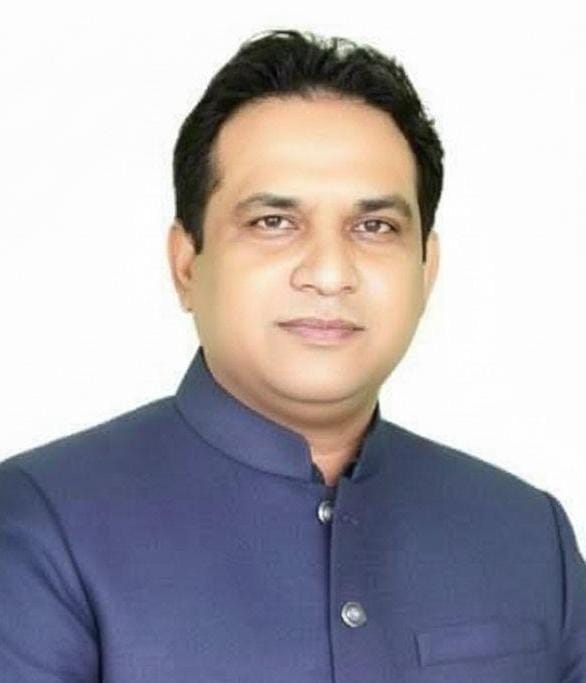
[10:32 am, 27/08/2026] Baba: By Rana Farooq Ashraf :Published by ANI
Pakistan stands at a decisive economic and administrative crossroads. The country needs a long-term national vision that goes beyond political slogans and focuses on economic self-reliance, industrial production, exports, administrative devolution and the empowerment of ordinary citizens.
The real question is not simply how many provinces Pakistan should have. The more important question is whether the existing provinces, districts and local governments have sufficient authority and financial resources to serve their people effectively. A strong Pakistan requires a strong federation, strong provinces, empowered districts and effective local governments.
The creation of new provinces is certainly a legitimate political and administrative debate. However, every administrative problem does not necessarily require a new province. A new province would require a new assembly, governor’s office, secretariat, departments, official residences, vehicles, protocol and an expanded administrative structure. These arrangements inevitably create additional non-development expenditure. At a time when Pakistan is facing fiscal pressures and a heavy debt burden, the country must carefully consider whether scarce resources should be spent on expanding administrative structures or on education, healthcare, infrastructure and economic development.
A more practical approach is to transfer financial and administrative powers to the grassroots. Provincial authority should not remain concentrated in provincial capitals. Districts and local governments must receive their constitutional, administrative and financial space to address local problems.
Every province should have a strong and permanent Provincial Finance Commission to ensure fair distribution of resources among districts according to population, area, backwardness, development needs and other relevant indicators. Just as the distribution of resources between the federation and provinces is important, equitable distribution within provinces is equally essential.
Local governments should also be restored and strengthened in their true spirit. Education, healthcare, sanitation, clean water, roads, drainage and basic infrastructure should be managed as close to the people as possible. Citizens should not have to travel to provincial capitals for routine matters that can be resolved efficiently at the district or local level.
But administrative reform alone cannot transform Pakistan. The country must also undertake a serious programme of industrialisation and economic self-reliance.
Pakistan has a domestic market of nearly 250 million people. This enormous population should be viewed not merely as a challenge but as a major economic opportunity. If a greater proportion of the goods required by our people are manufactured domestically, Pakistan can save foreign exchange, create employment, increase industrial activity and broaden the government’s revenue base.
At the same time, our import policy needs a fundamental rethink. Imports should not be discouraged indiscriminately, because modern industry requires machinery, technology and essential raw materials from abroad. However, unnecessary and luxury finished goods should not be allowed to undermine domestic manufacturers. The objective should be to import what strengthens our productive capacity while reducing dependence on imported finished products wherever competitive local production is possible.
The example of Türkiye deserves serious consideration. Türkiye has placed strong emphasis on domestic manufacturing and has built a wide industrial base capable of supplying its own population while competing in international markets. A visit to Turkish shopping centres and commercial markets demonstrates the visibility and availability of domestically manufactured products. The lesson for Pakistan is not to shut itself off from the world, but to develop local industries that can produce competitive alternatives, create employment and retain foreign exchange within the country.
Pakistan must also be realistic about its agricultural and textile requirements. For example, raw cotton should not be treated as an export priority when the country’s own textile industry faces shortages and depends on imported cotton to meet its requirements. Instead, our policy should focus on increasing domestic cotton production, improving yields, supporting farmers and ensuring a reliable supply of quality cotton to our textile industry. The ultimate objective should be to move further up the value chain—from raw material to yarn, fabric, garments and internationally competitive finished products.
The same principle should apply to minerals and agricultural commodities. Instead of exporting resources in raw form, Pakistan should encourage processing and value addition inside the country. More value should be created domestically before products reach international markets.
The experience of neighbouring India also provides an important administrative lesson. India has 28 states and 8 Union Territories, making 36 administrative units in total. Its population is distributed among states of vastly different sizes. Uttar Pradesh alone has an estimated population of around 243 million, while Bihar has around 133 million, Maharashtra around 125 million, West Bengal around 104 million and Madhya Pradesh around 85 million. These figures are estimates and vary by source and reference year, but they illustrate the enormous diversity in the size and population of India’s administrative units.
Uttar Pradesh, in particular, has a population broadly comparable to Pakistan’s total population. Yet India manages such a vast population through a multilayered administrative structure. The lesson for Pakistan is not necessarily that we must copy India’s provincial map or create a large number of new provinces. Rather, we should study how administrative responsibilities can be distributed effectively and how governance can be brought closer to citizens without unnecessarily multiplying the cost of government.
Pakistan also needs a Charter of Business—a long-term national economic agreement between the government and the business community. Chambers of commerce, industrialists, exporters, small and medium-sized enterprises, financial institutions and investors should be brought together to formulate a 10-to-15-year economic framework.
Governments may change, but fundamental industrial, investment and trade policies should not change with every political transition. Investors need policy continuity, legal protection, institutional stability and confidence.
The investment process should also be simplified through an effective one-window system. Investors should not have to move from department to department to obtain licences, approvals and permissions. Unnecessary red tape must be eliminated, while transparency and accountability should remain intact.
Tax reform is another essential pillar of economic independence. Pakistan cannot build a sustainable economy simply by increasing tax rates on those who already pay taxes. The tax base must be broadened. Undocumented sectors of the economy should gradually be brought into the formal system through digitalisation, simplified procedures and greater institutional transparency.
Loss-making state-owned enterprises must also be restructured. Where appropriate, they should be transparently privatised, professionally managed or operated through carefully designed public-private partnerships. The state should focus on creating an environment in which the private sector can invest, produce and create employment.
Pakistan must also harness the potential of its youth. Our young population should be equipped with modern education, technical skills, entrepreneurship opportunities and access to technology. Education and industry must be connected so that universities and technical institutions produce skilled people according to the needs of the economy.
Healthcare, agriculture, small industries, technology, infrastructure and national defence must all be viewed as interconnected pillars of national strength. A prosperous Pakistan must have healthy citizens, educated youth, productive farmers, competitive industries, modern infrastructure and strong national institutions.
Our defence capabilities must continue to evolve through professional training, modern technology, research, indigenous production and institutional reforms. A strong defence is essential for national security, but long-term national strength also depends upon a strong economy capable of supporting that defence.
Ultimately, Pakistan needs to change its economic priorities. We must build an economy that produces more, exports more, creates employment, attracts investment and generates sufficient domestic revenue to reduce dependence on external borrowing.
A strong federation does not require weak provinces. Strong provinces do not require weak districts. Strong districts require empowered local governments, adequate resources and accountable institutions.
Pakistan does not necessarily need more layers of administration; it needs better administration. It does not simply need more institutions; it needs stronger and more accountable institutions. And it does not need endless borrowing; it needs production, investment, exports and economic discipline.
Our political differences may continue, but there should be a national consensus on one fundamental principle: economic strength is the foundation of national sovereignty.
If Pakistan can strengthen its federation, empower its provinces and districts, reform local government, promote domestic industry, reduce unnecessary dependence on imports, expand exports, broaden the tax base and maintain consistent economic policies, it can gradually break the cycle of financial dependence.
Pakistan does not need additional burdens. Pakistan needs a new direction.
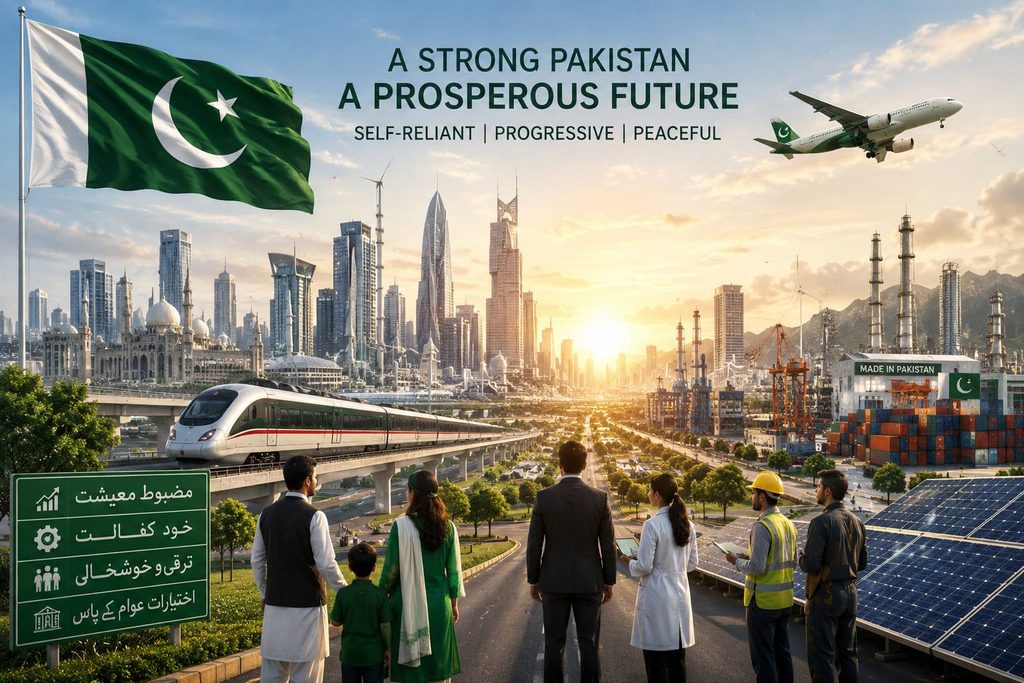
The way forward is clear: strengthen the federation, empower the provinces, devolve authority to the people, support farmers and small industries, invest in education and healthcare, promote industrial production, develop indigenous technology and defence capabilities, expand exports and create an environment in which investment and enterprise can flourish.
That is how Pakistan can stand on its own feet—and build a prosperous, self-reliant, secure and economically sovereign future.