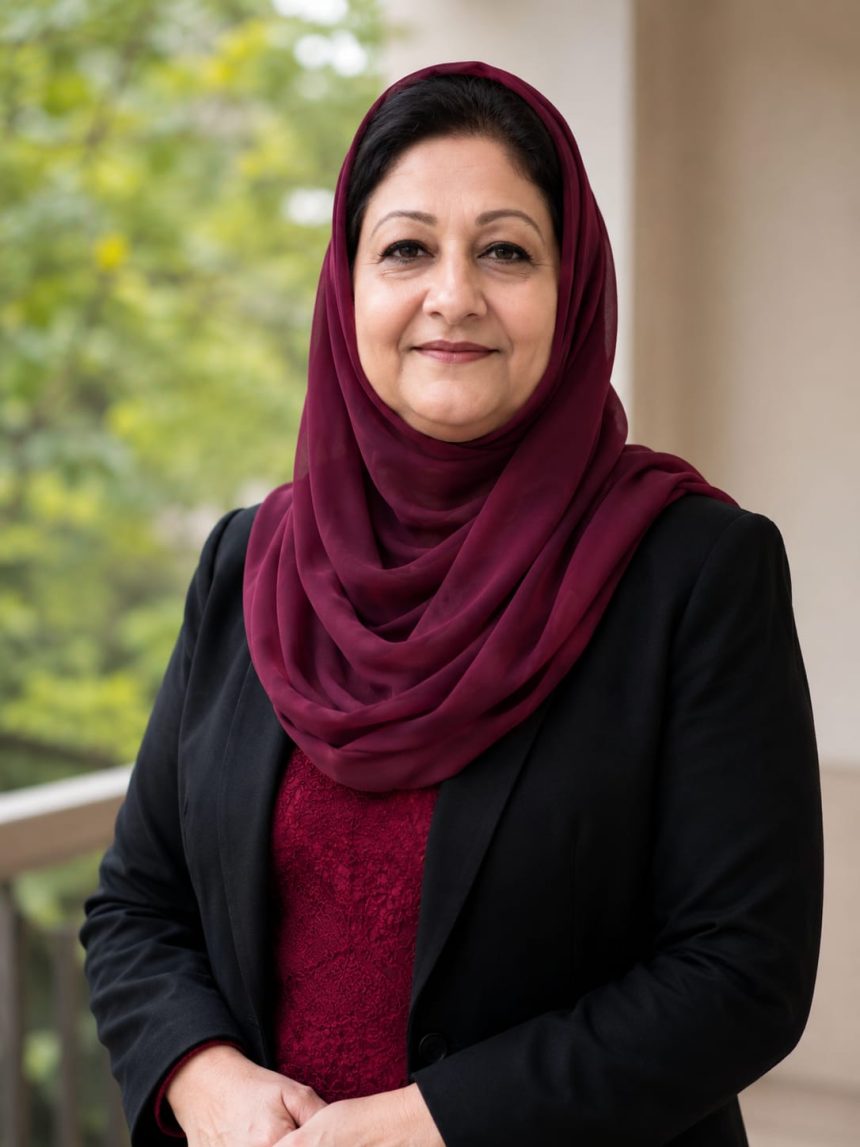
BY: Yasmeen Asad
Published By:ANI News Agency
For millions of Pakistanis, economic recovery is not measured by the stock market, foreign exchange reserves or a headline announcing that GDP has grown. It is measured at the grocery shop, at the petrol station, when the electricity bill arrives and when parents sit down to calculate how much they can afford to spend on their children’s education.
This is the reality facing Pakistan’s middle class today.
On paper, there are reasons for cautious optimism. Pakistan’s economy recorded real GDP growth of 3.70 percent in FY2025-26, while per capita income rose from US$1,751 to US$1,901. The services sector expanded by 4.09 percent, while industrial growth also improved. These figures suggest that the economy is moving away from the severe instability of recent years.
But economic growth becomes meaningful only when ordinary families can feel it.
That is where Pakistan’s story becomes more complicated.
The middle class is often described as the backbone of a stable economy. It includes salaried employees, teachers, small traders, professionals, entrepreneurs and families running modest businesses. They may not be poor enough to qualify for many forms of social assistance, but neither are they wealthy enough to absorb every increase in the cost of living.
For this group, financial pressure has become a daily experience.
A family that once managed comfortably on one income may now need additional earnings. Parents are reconsidering private schooling. Young people are delaying marriage or home ownership. Families are cutting back on eating out, travelling and other non-essential expenses. Even healthcare and education, traditionally treated as priorities, increasingly require difficult financial decisions.
The numbers help explain this pressure. According to the Pakistan Bureau of Statistics, the average monthly household income in 2024-25 stood at around Rs82,179, while average monthly household consumption was approximately Rs79,150. The narrow difference between income and consumption leaves limited room for savings, emergencies or long-term investment.
And averages can hide the real struggle.
A household with a relatively stable income may still find itself vulnerable if rent, school fees, transport, food and utility bills rise faster than salaries. The problem is not necessarily that people have stopped earning. It is that their earnings often do not provide the same purchasing power they once did.
Inflation has eased considerably from the extraordinary levels seen during Pakistan’s recent economic crisis, but lower inflation does not mean lower prices. It simply means prices are rising more slowly.
That distinction matters.
If a household has already experienced years of sharp price increases, a reduction in the inflation rate does not return prices to their old levels. Families continue to live with a higher cost base. Pakistan’s Economic Survey reported average CPI inflation of 6.19 percent during July-April FY2025-26, compared with 4.73 percent in the corresponding period a year earlier. On a year-on-year basis, inflation reached 10.89 percent in April 2026.
For the average consumer, these percentages translate into very simple questions: Can I pay the bill? Can I save anything this month? Can I afford the school fee? What happens if someone in the family becomes ill?
This is why the debate about economic growth must move beyond GDP.
Growth is necessary, but growth alone does not guarantee economic security. What matters is the quality of growth: whether it creates productive jobs, raises real incomes, supports small businesses, improves public services and creates opportunities for people to build assets.
Pakistan’s household consumption remains a major part of the economy. The Economic Survey shows household consumption accounting for more than 82 percent of GDP in FY2025-26.
That means the condition of households is not separate from the condition of the economy. They are connected.
When families have confidence, they spend, invest, educate their children and establish businesses. When they are financially anxious, they become defensive. They postpone purchases, avoid investment and focus on surviving the month.
A strong economy therefore needs a confident middle class.
One of Pakistan’s biggest challenges is the cost of essential services. Electricity bills remain a major concern for households and businesses. Education and healthcare costs are also increasing the pressure on families. Housing has become particularly difficult for younger Pakistanis, while transport costs affect workers every day.
The answer cannot simply be higher salaries.
If wages rise but productivity remains weak, businesses face higher costs and may reduce hiring or pass those costs to consumers. Pakistan needs a broader solution based on productivity, investment, competition, skills and employment.
The country must create an environment where businesses can expand and hire more people. Small and medium-sized enterprises, which employ large numbers of Pakistanis, need easier access to finance, predictable taxation and less bureaucratic friction.
At the same time, education must become more closely connected to the labour market.
A university degree should not be the end of a young person’s economic journey. Technical skills, digital services, artificial intelligence, freelancing, vocational training and entrepreneurship can provide new avenues of income. Pakistan’s large young population can either become an economic advantage or a source of frustration if sufficient opportunities are not created.
The government also needs to think carefully about taxation.
A sustainable tax system should broaden the base rather than continuously increasing the burden on those who are already documented and compliant. Salaried people should not feel that every attempt to formalise their income results in a disproportionate tax burden while large segments of the economy remain outside the effective tax net.
Similarly, economic policy must give greater attention to savings.
A middle-class family that cannot save is vulnerable to every unexpected event. One medical emergency, job loss, major repair or educational expense can push a household toward borrowing. Encouraging savings, pension planning, insurance and responsible investment should therefore become part of Pakistan’s broader financial literacy agenda.
Digital finance can help, but technology is not a substitute for income security. The country needs a culture in which people understand budgeting, saving, responsible borrowing and investment, while financial institutions provide products that ordinary households can actually use.
There is also an important psychological dimension to the middle-class crisis.
People want more than survival. They want dignity.
They want to believe that hard work will allow their children to live better than they did. They want to own a home, provide quality education, access decent healthcare and save enough to face retirement without depending on others.
That aspiration is not unreasonable. In fact, it is precisely the aspiration that a growing economy should protect.
Pakistan has made progress toward macroeconomic stabilisation, and that progress should not be dismissed. The latest economic figures indicate recovery in several sectors. But stabilisation is only the beginning. The next stage must be about translating stability into opportunity.
The real test of economic policy is therefore not simply whether GDP grows by another percentage point.
It is whether the shopkeeper can expand his business.
Whether the salaried employee can save at the end of the month.
Whether a young graduate can find a productive job.
Whether parents can educate their children without falling into debt.
Whether a family can pay its electricity bill without sacrificing food, healthcare or education.
Pakistan does not need an economy that looks strong only in official reports. It needs an economy that feels stronger inside Pakistani homes.
The middle class has carried a significant share of the country’s economic burden through taxes, consumption, entrepreneurship and employment. Protecting and expanding this class should therefore be treated not as a social luxury, but as an economic necessity.
The question before Pakistan is no longer simply whether the economy can grow.
It is whether that growth can reach the household.
And ultimately, that is where economic success will be judged.