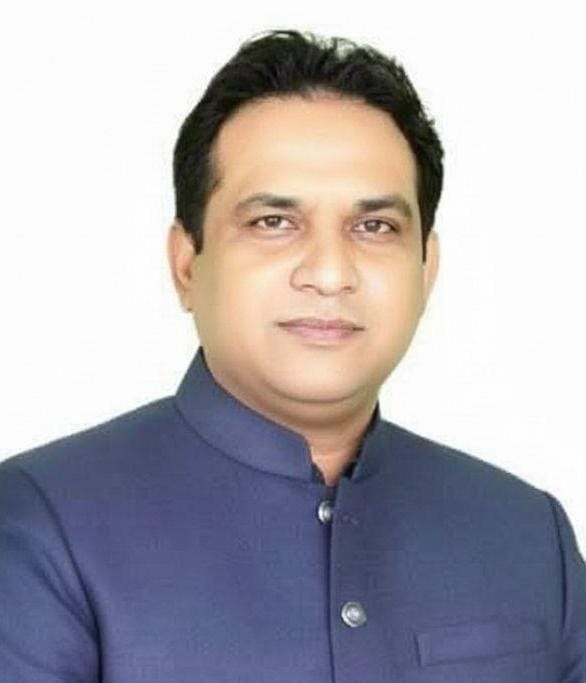
By Rana Farooq Ashraf / Published By ANI
The office of the Governor of Punjab carries constitutional responsibilities, but the true character of a person holding such a position is often revealed beyond official ceremonies and protocol. It is reflected in the way he treats ordinary people, listens to those who have little access to power, responds to human suffering and, perhaps most importantly, remembers the people who stood with him during his political journey.
Sardar Saleem Haider Khan, who assumed office as Governor of Punjab in May 2024, has gradually developed a public image that goes beyond the formalities of the Governor House. A longstanding Pakistan Peoples Party worker and political leader, he has maintained contact with party workers, students, social organisations and ordinary citizens. His political journey from the grassroots to one of Punjab’s highest constitutional offices remains an important part of his public identity.
One of the most notable features of his personality is his attitude towards political workers. He has repeatedly described himself as a proud party worker and has maintained that workers are the real strength of any political organisation. Even after becoming Governor, he has tried to remain accessible to PPP workers and has encouraged them to visit Governor House and discuss their concerns. For workers who spend years in political struggle without holding public office, such recognition carries considerable emotional value.
There is also a softer and more personal side to his public personality. During an interaction with students at Governor House, Sardar Saleem Haider spoke openly about his childhood, political journey and personal experiences. What attracted attention was not merely his willingness to answer political questions but the calm and respectful manner in which he engaged with young people. In an increasingly polarised political environment, the ability to listen to disagreement without turning every discussion into a political confrontation is a quality worth recognising.
A particularly revealing incident was reported during a discussion concerning university appeals. According to a published account, a matter involving the daughter of one of his close relatives came before him. Despite the personal connection, he reportedly chose to deal with the matter according to law and merit, while speaking to the young woman with the concern and firmness of an elder. Such incidents may not make major headlines, but they offer a glimpse into the personal values of a public office-holder when relationships and principles happen to meet at the same point.
His response to human suffering has also been visible during natural disasters. During the 2025 floods, he visited affected areas and relief camps, met families who had lost homes and property, and expressed solidarity with them. His emphasis was not limited to immediate relief; he also spoke about compensation for damaged homes and livestock and the need for long-term support for affected families.
His interaction with children suffering from thalassemia and haemophilia provides another example of his compassionate approach. During a visit to Sundas Foundation, he spent time with the children, asked about their wellbeing and distributed gifts. He subsequently spoke about those moments with visible emotion and encouraged young people to donate blood. For families dealing with a life-long blood disorder, such personal attention from a senior public official can have a significance that cannot be measured through official statistics.
Education has remained another important part of his tenure. As Chancellor of universities in Punjab, he has emphasised merit, research, modern technology and opportunities for young people. His interactions with students have also provided them with an opportunity to raise questions directly with the Governor. At a time when young Pakistanis are increasingly concerned about employment, skills and their future, his emphasis on practical education and modern technologies is particularly relevant.
His relationship with the PPP leadership has also remained strong. Chairman Bilawal Bhutto Zardari welcomed his appointment as Governor Punjab and recognised him as a political worker with a long history of service to the party. Senior PPP leaders have also appreciated his engagement with workers and his efforts to strengthen the party’s presence in Punjab. For someone whose political career began at the grassroots, recognition from the party’s central leadership represents more than a ceremonial endorsement; it reflects a political relationship built over years.
Sardar Saleem Haider’s political role, however, cannot be separated from his identity. He has spoken openly about inflation, petroleum prices, farmers’ problems and issues affecting ordinary citizens. His political statements have sometimes attracted criticism from opponents, particularly because the Governor’s office carries an important constitutional character. Critics believe that greater political restraint is necessary, while his supporters argue that remaining connected with public issues is part of democratic politics.
This tension between political identity and constitutional responsibility will remain one of the major tests of his tenure. A Governor is not the Chief Executive of Punjab, and therefore the province’s entire administrative and development performance cannot fairly be attributed to him. His record should instead be assessed through his constitutional responsibilities, his role as Chancellor, his public engagement, welfare initiatives and contribution to institutional and political dialogue.
Yet politics is not always remembered through statistics and official notifications. Sometimes it is remembered through small human moments: a worker being received with respect after years of political struggle, a flood victim finding someone willing to listen, a sick child receiving attention from a senior official, or a student being given the confidence to ask an uncomfortable question.
That human dimension appears to be an important part of Sardar Saleem Haider Khan’s public personality. His political career has taken him from the grassroots to Governor House, but he has continued to emphasise the value of ordinary people and party workers who form the foundation of political life.
The final assessment of his tenure will, of course, belong to history and the people of Punjab. But if his accessibility, compassion and respect for workers continue alongside constitutional responsibility and institutional balance, his tenure may be remembered not simply as another political appointment, but as an effort to bring the Governor’s House closer to the people it represents.