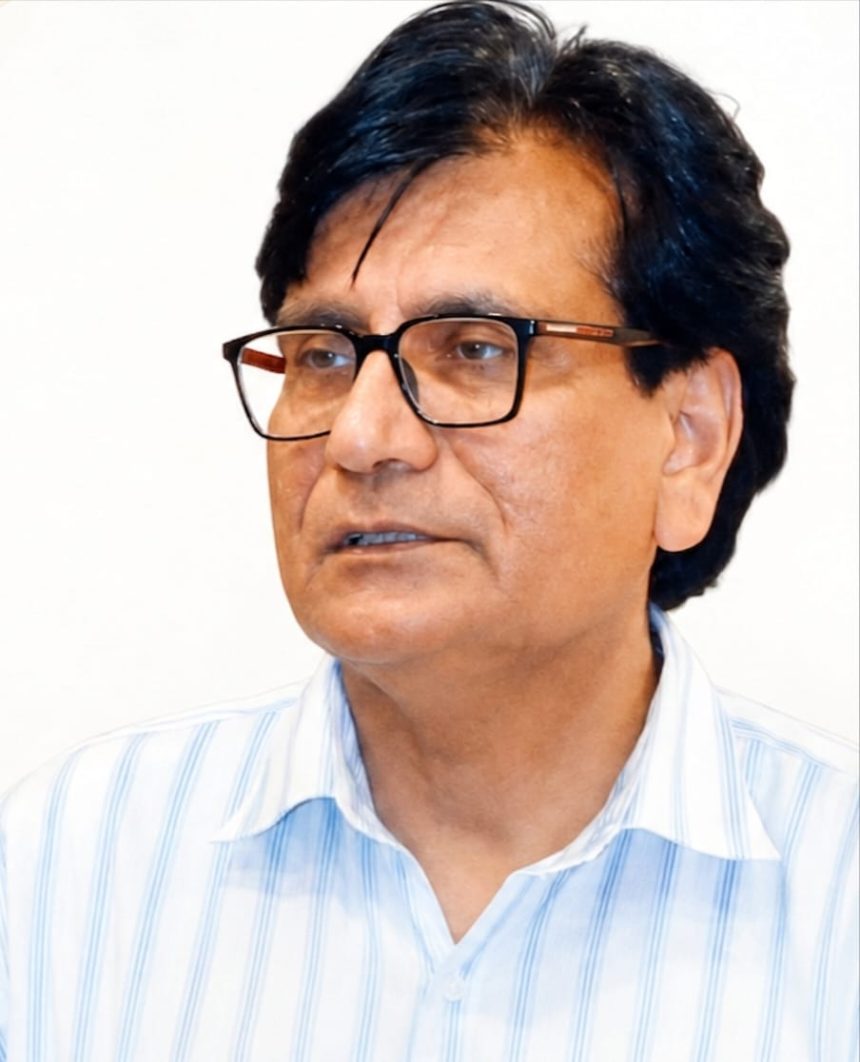
By: Dr Nasser Hussyn Bukhari
Published By:ANI News Agency
The global economic and political order is passing through a period of significant transformation. The recent BRICS summit in New Delhi has further highlighted this transition. BRICS is no longer merely a forum for emerging economies; it has evolved into an important platform influencing debates on global governance, financial sovereignty, unilateral sanctions and the balance of global power. Yet before viewing it as an alternative to the West, it is important to examine its internal contradictions and limitations.
The origins of BRICS can be traced to 2001, when Goldman Sachs economist Jim O’Neill coined the term BRIC to identify Brazil, Russia, India and China as emerging economies with the potential to become major forces in the global economy. In 2006, the four countries began formal political and diplomatic cooperation, followed by the first BRIC summit in Yekaterinburg, Russia, in 2009. South Africa joined in 2010, transforming BRIC into BRICS. Iran, Egypt, Ethiopia and the United Arab Emirates subsequently joined, while Indonesia has also become a full member. BRICS has therefore developed into one of the most significant collective platforms representing the interests of the Global South.
The primary motivation behind BRICS was not initially confrontation with the West but a demand for greater representation for emerging economies within the global order. Decision-making structures in institutions such as the International Monetary Fund and the World Bank have long reflected the disproportionate influence of established Western powers. The global financial crisis of 2008 strengthened the perception that countries contributing an increasing share of global economic output should also have a greater voice in shaping the international financial system. BRICS consequently emerged as an advocate of a more balanced, representative and multipolar global order.
China has a central role in this transformation. It is not only the largest economic power within BRICS but also possesses the financial and technological capacity to advance initiatives involving the New Development Bank, trade in local currencies, digital payments and infrastructure investment across the Global South. Yet China’s growing influence raises an important question: could BRICS eventually replace US dominance with greater Chinese financial influence? If that were to happen, it would not represent the end of financial dominance but merely a shift from one centre of power to another.
This is where the concept of de-dollarisation needs to be viewed realistically. BRICS has not yet introduced a common “BRICS currency”. The current debate is primarily about increasing the use of national currencies in bilateral trade, developing mechanisms to manage currency risks and creating cross-border payment systems that can reduce dependence on the US-dominated financial architecture.
This distinction is crucial. Removing the dollar from the global financial system is a political aspiration; creating a credible alternative global currency or financial system is an extraordinarily complex economic undertaking. The dollar’s strength rests not only on the size of the US economy but also on its central role in international trade, banking, financial markets, the US Treasury market and global foreign-exchange reserves, as well as the institutional confidence associated with it. BRICS therefore cannot realistically replace the dollar in the short term. It can, however, gradually reduce the world’s dependence on it.
Iranian President Masoud Pezeshkian’s recent position illustrates this emerging agenda. Addressing the BRICS summit in New Delhi, he called for stronger resistance to unilateral sanctions, the transformation of competition into cooperation and the establishment of a permanent BRICS secretariat to ensure more effective and rapid implementation of its decisions. He also advocated stronger political coordination based on respect for the UN Charter and national sovereignty, as well as economic and financial relations independent of monopolistic mechanisms. Greater cooperation in science, technology, energy and food security, he argued, should also be pursued.
Pezeshkian’s most significant economic proposal concerned the increased use of national currencies. Merely conducting trade in local currencies, however, is not enough. Such a system requires mechanisms for managing currency risks, mutual settlement arrangements and financial instruments capable of protecting trade from political shocks and sanctions. This represents a more practical interpretation of de-dollarisation.
The Iranian president also linked the Palestinian question to the moral credibility of the international system. He argued that respect for the Palestinian people’s right to self-determination represents a serious test of the legitimacy of global governance and called for a more active BRICS role in ending occupation and safeguarding the legitimate rights of Palestinians.
Yet BRICS’ greatest weakness remains its internal political diversity. Strategic competition between China and India, differing interests among Russia and India, divergent priorities among Gulf members and the varying geopolitical calculations of Iran and other members make it difficult for BRICS to evolve into a unified military or political alliance. At the recent summit, India also emphasised that BRICS should not become an alliance directed against any particular country, but rather remain a platform for the Global South and for reform of international institutions.
The future of BRICS, therefore, is more likely to lie in the creation of an alternative economic and financial network than in becoming a military bloc against NATO. The New Development Bank, increased trade in local currencies, alternative payment mechanisms, digital financial infrastructure and cooperation in energy and food security are more realistic avenues through which BRICS can reshape the global order.
This development is also important for Pakistan. Islamabad should view its engagement with BRICS not merely through the lens of geopolitical alignment but in terms of trade, investment, energy, technology and regional connectivity. Pakistan has already been included among the countries associated with the wider BRICS framework, making closer economic engagement increasingly relevant.
Ultimately, the question is not whether BRICS will suddenly abolish the dollar. The more important question is whether it can contribute to the emergence of a genuinely multipolar financial system in which no single currency, country or financial centre exercises disproportionate influence.
The immediate collapse of dollar dominance remains unrealistic. A gradual reduction in dependence on the dollar, however, is a credible possibility. BRICS will succeed only if it moves beyond political rhetoric and builds reliable financial institutions, transparent payment mechanisms and mutual confidence among its diverse members. That is the real test of its ambition to reshape the global economic order.