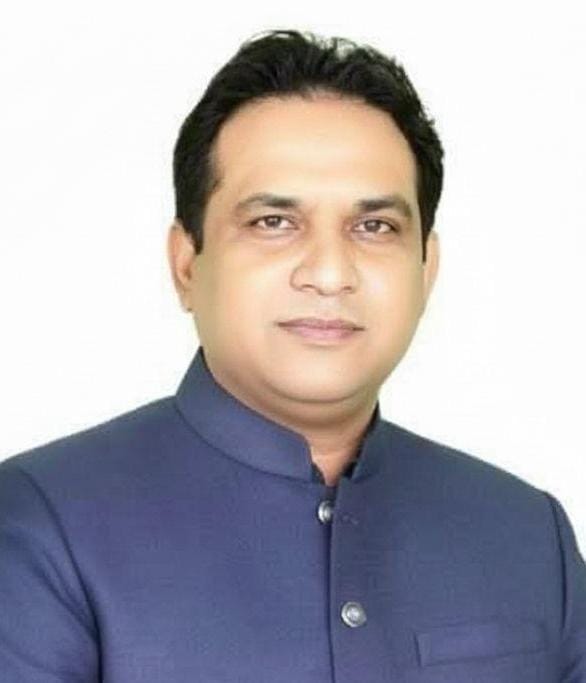
Written By: Rana Farooq Ashraf
Published By: ANI News Agency
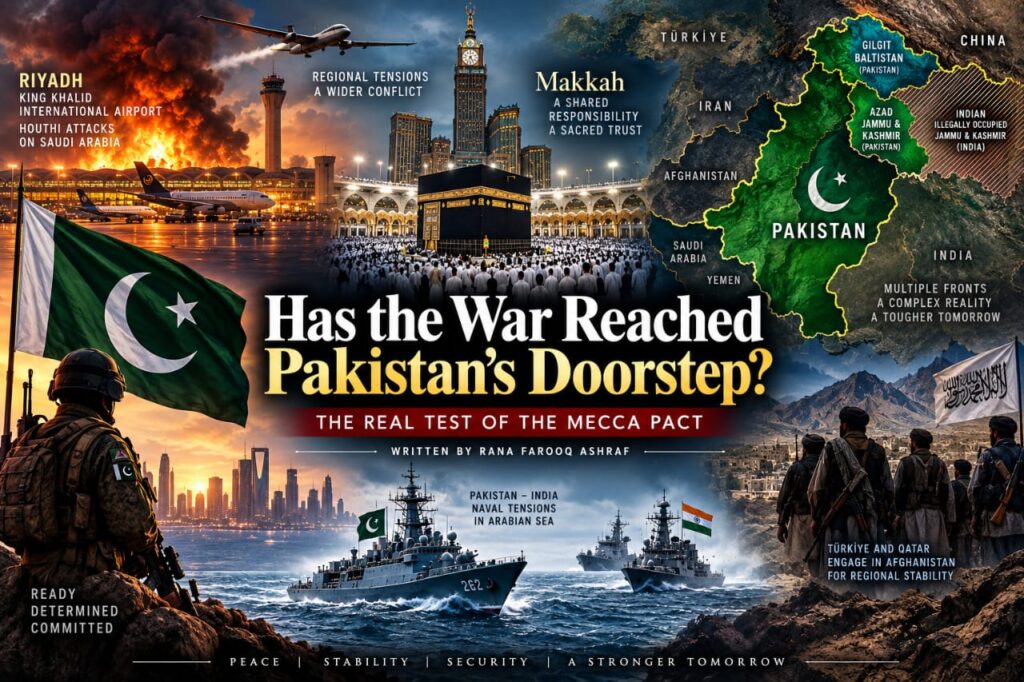
The rapidly changing situation in the Middle East is no longer merely a regional crisis. Developments over the past few days have raised questions that Pakistan can no longer afford to ignore. The intensifying confrontation involving Saudi Arabia and the Houthis, the reported drone incident near Makkah, today’s developments near Riyadh airport, the naval confrontation involving Pakistan and India in the Arabian Sea, and simultaneous Turkish and Qatari security engagements in Afghanistan are unfolding against an increasingly volatile regional backdrop.
On September 19, Saudi authorities issued warnings over possible aerial threats in Riyadh. Explosions were reported near King Khalid International Airport, followed by fires and columns of smoke. Saudi authorities later issued an all-clear. International reports said a fire occurred near a fuel facility, while the Houthis claimed attacks against sensitive targets in Saudi Arabia. The precise nature and extent of the damage remain subject to verification.
The development is particularly significant because it follows Saudi claims that a Houthi drone was intercepted south of Makkah earlier this week. The incident caused widespread concern across the Muslim world because any threat approaching the vicinity of Islam’s holiest sites carries significance far beyond the battlefield.
Against this backdrop, Pakistani Defence Minister Khawaja Asif’s remarks regarding the implementation of the Mecca defence agreement have assumed greater importance. He has indicated that circumstances may require the agreement to become operational and that Pakistan would fulfil its commitments concerning Saudi security. At the same time, Islamabad has repeatedly emphasized that the agreement is defensive in nature and is not directed toward creating an offensive military bloc.
The central question, therefore, is not simply whether Pakistan has made a commitment to Saudi Arabia, but what form that commitment would take if the conflict escalates. Would it involve military deployment, air-defence support, intelligence cooperation, logistical assistance, or another mechanism? The precise operational arrangements of defence agreements are not necessarily made public.
Pakistan also faces another strategic challenge in the Arabian Sea. A recent confrontation involving the Pakistani Navy and India’s INS Kolkata has generated concern at a time when tensions between the two nuclear-armed neighbours remain sensitive. Pakistan and India have presented different accounts of the incident and its circumstances. Whatever the competing narratives, an unintended escalation at sea could create an additional security crisis for Islamabad at precisely the wrong moment.
The timing of developments in Afghanistan is equally noteworthy. Turkish intelligence chief Ibrahim Kalin held meetings in Kabul and Kandahar with senior Taliban officials, while a Qatari delegation was also engaged in Afghanistan. Security, counterterrorism, regional stability and relations between Kabul and Islamabad have featured prominently in these diplomatic contacts.
For Pakistan, Afghanistan is not a secondary issue. Any decision to assume a larger security role in the Gulf would require Islamabad to consider the stability of its western border just as carefully as developments along its eastern frontier.
It would, however, be premature to conclude that all these developments are parts of a single coordinated strategy. What can be said with greater certainty is that several security theatres are becoming interconnected. Saudi Arabia is facing attacks linked to the Yemen conflict; Pakistan is managing tensions with India; Afghanistan remains a major security concern; and Turkey and Qatar are actively engaged in regional diplomacy.
The protection of Makkah and Madinah is, for Pakistan’s people, not simply a matter of military agreements. It carries profound religious significance. Yet state decisions must also account for national security, military preparedness, diplomatic consequences and the possibility of escalation across multiple fronts.
The real question facing Pakistan today is therefore not simply whether the war has reached its doorstep. The more consequential question is: how many fronts can Pakistan manage simultaneously if the regional conflict expands?
The answer may determine not only Pakistan’s next strategic move, but also the future security balance of the wider region.