BY: Qurat ul Ain Ali Khawaja/ANI
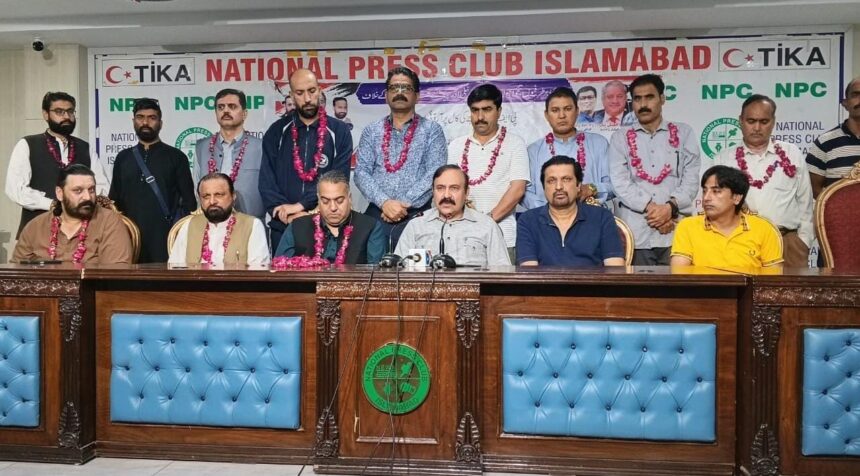
The hunger strike at the Islamabad Press Club has ended. A federal minister arrived, listened to the journalists, offered assurances and personally fed dates to those protesting. It was a moment of empathy and hope. Yet a harder question remains: the date may have ended the hunger, but who will end the deprivation and insecurity that drove journalists to the streets?
This is not a question directed at one individual, but at the system itself. The protesting journalists raised concerns over job insecurity, unpaid salaries and dues, sudden dismissals, professional rights and freedom of expression. On the surface, these may appear to be labour disputes, but at a deeper level they raise a fundamental democratic question: if journalists protect the public's right to know, who protects their right to earn a dignified livelihood?
Pakistan's Constitution recognises freedom of speech and the press under Article 19, while Article 19-A guarantees citizens' right to information. Yet the gap between constitutional guarantees and realities inside newsrooms remains a serious concern.
Press freedom is often discussed in terms of censorship, restrictions and arrests. But there is another dimension: economic freedom. A reporter waiting months for a salary, living under the fear of dismissal and lacking an effective mechanism to recover earned dues may be legally free to speak, but how free is that journalist in practice?
If journalism is an industry, journalists are not merely an operating cost; they are its most important professional asset. Behind every story is a reporter, cameraman, editor, producer and other professionals whose work creates the credibility of a media institution.
The assurance given by Federal Minister for Parliamentary Affairs Dr Tariq Fazal Chaudhry that journalists' concerns would be taken up with the government is a welcome step. His willingness to engage on PECA-related concerns and support for digital media professionals also reflects the changing nature of journalism.
But the real test begins now. Will these assurances lead to structured negotiations, documented demands, clear timelines and a permanent mechanism to protect journalists' professional rights? If so, the protest could mark a beginning rather than an ending. Otherwise, today's crisis may simply be postponed.
The world, however, is not waiting. Artificial intelligence, deepfakes, synthetic voices and algorithms are already transforming journalism. The journalist of the future will need to be an investigator, digital verifier, guardian of information integrity and a responsible communicator in the age of AI.
Therefore, protecting journalists' futures cannot mean protecting only today's jobs. It must also mean preparing them for tomorrow's economy.
For journalists' organisations, this moment should be an opportunity for institutional introspection. Protest is a democratic right, but it cannot become a substitute for policy. A stronger journalists' movement should not only raise its voice on the streets but also contribute to legal frameworks, implementation mechanisms, monitoring and accountability.
Employment protection, payment of dues, legal security, digital safety, professional training and editorial independence are interconnected components of a modern media policy.
Dr Tariq Fazal Chaudhry may have ended a journalist's fast with a date. The more important question is whether that moment can be transformed into institutional reform — a system in which journalists do not have to go hungry to demand their salaries or depend on personal assurances for professional security.
Ultimately, the question is not who fed the journalist a date today. The real question is why the journalist had to go hungry in the first place.
The pen does not need freedom alone. The person holding the pen needs dignity, security and a future.