

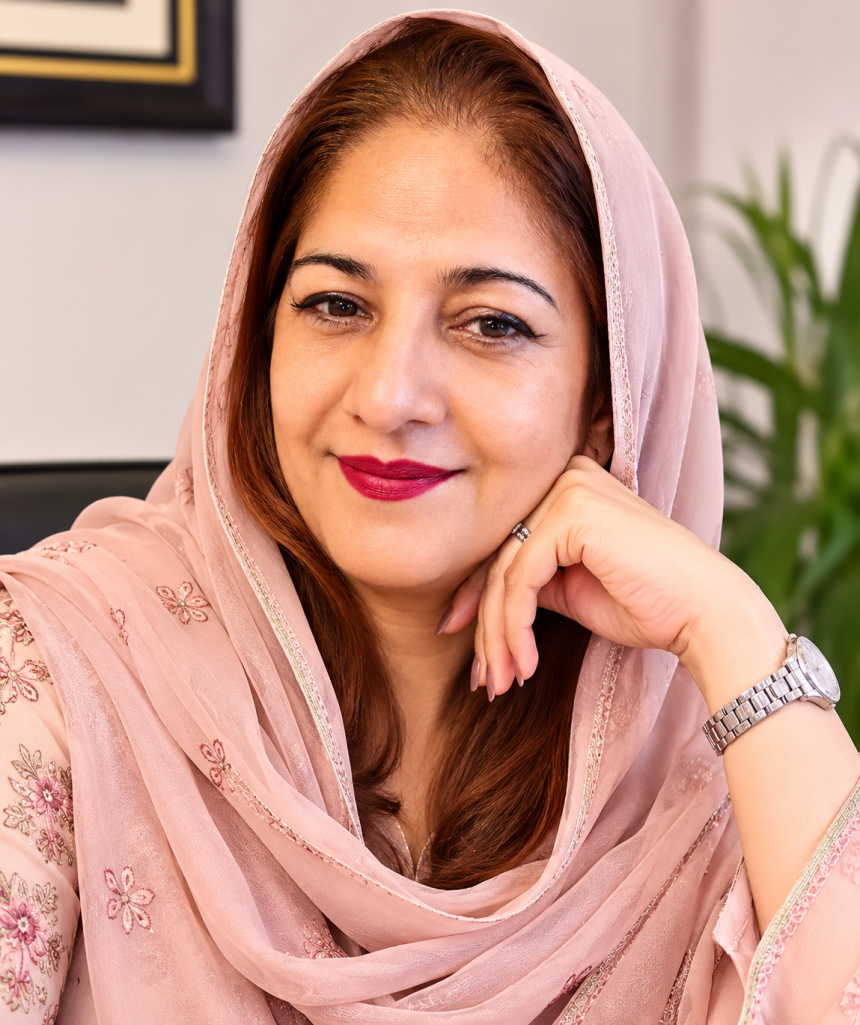
By Ms Sumblina Hassan
Former Secretary to Shaheed Morthrama Benazir Bhutto
Former Consultant Foreign Office Islamabad
In Charge of Office 10 UK RCC Bilawal Bhutto House
Published By:ANI News Agency
Our Chief Minister of Sindh Murad Ali Shah stated categorically during an adjournment motion on the unity of the Province of Sindh, that we will never compromise on Sindh’s territorial integrity.
The Interior Minister Mohsin Naqvi says governance needs a “Reset”. His argument is that by creating new provinces and administrative units it will help restructure Sindh and make every household prosperous.
Our former Leader Shaheed Morthrama Benazir Bhutto’s stance on Sindh’s unity proclaimed that we must preserve Sindh’s territorial integrity, and she opposed any form of bifurcation which led to the dismantling of its true identity. She was prepared to negotiate with MQM specifically to avoid division but she attempted to bridge the gap between urban and rural communities. By doing so she did not yield to the demands for a separate administrative or ethnic province. Like her father the anti separatist tradition would be anchored in unifying Sindh, and standing against carving the Province.
Our Party rejects any moves that divide Sindh province as Bilawal Bhutto Zardari, and Asif Ali Zardari backs territorial integrity. It was maintained that any proposal to create administrative units should be pursued through political consensus.
Now the question arises “what and the how”. Where did this notion come from? Who and why did they bring this proposal. Why was it addressed by an Interior Minister who is debating it in the UK; together with our Leaders? Why didn’t these politicians bring it into Pakistan’s Parliamentary domain through the order and system of our government and in accordance to our Constitution. A big question as this should have had all parties present with all Leaders including our Prime Minister. Surely we must follow Parliamentary procedures and due process?
Sindh matters as it remains the PPP’s strongest political base and it is considered as the key source of its electoral support and strength. If these changes are instigated it could weaken the party’s economic and political influence and it’s argued it could impact in the long term on its parliamentary strength.
Our party’s sources have raised questions over a boarder political motive. The belief that reorganising provincial boundaries that are supported by Pakistan’s military establishment could weaken civilian political authority and this could inevitably set a precedent for greater military influence in political affairs. We must also remember the threat of India when it openly threatened that it will divide Pakistan within. One must also remember that the more a province is segregated it will face more laws, regulations and constraints imposed by Parliament.
Critics argue that by dividing Sindh into smaller administrative provinces would lead to more balanced development, better financing and improved local services. They argue that the current system is overly centralised and fundamentally unfair.
The Urban districts complain of disparity as Karachi generates the vast majority of the Province’s revenue yet these funds are disproportionately funnelled into rural projects, rather than utilised into urban infrastructure. However, rural residents complain that despite funding there is rural neglect and that development remains extremely poor.
What are Sindh’s financial sources and how exactly does it work? The federal government collects majority of the nation’s taxes I.e income tax. This money then goes into the Federal Divisible Pool. Then more than half of it is distributed back to the four provinces. Sindh receives a fixed percentage which is thereby calculated in accordance to population poverty levels. It then injects it into funding teachers, hospitals and medicines. Plus, it is used for schemes recommended by MNA’s and MPA’s. The government also provides funding from major financial streams such as its own internal fund to supplement Sindh by also using Sales tax on services. It collects property tax, agricultural income taxes etc. It is aided by international Loans as local tax is not enough to cover massive infrastructure projects. It partners with global financial institutions that provide low interest loans designed specifically for the poor. The World Bank and the Asian Development Bank fund long term schemes such as improving Sindh Water and Agricultural transformation. The UN agencies, Public Private partnerships (PPP’s) stretch its budget further; the Sindh government uses a model to divide the cost with private companies, and those that are non profit groups. NGO’s manage the daily running costs of staffing by doing so they reduce corruption and thus they lower the financial burden on the State.
In Sindh’s fiscal budget this year it unveiled a massive total of Rs 3.562 trillion. Education was allotted R/s 338.2 billion. Basic health care was allotted 38.9 billion. For the development of the province it was assigned 38. 9 billion Rupees which is meant to expand hospitals and improve health provision.
Lawmakers try to secure funds by pushing harder during budget sessions to ensure their specific districts are granted funds for heavy duty projects I.e. building new rural health amenities, setting up high schools and for developing major water drainage networks.
A parliamentary Task Force run by Assembly members has been initiated, and its responsibility is to track spending, the United Nations development program oversees and reviews how money is spent and ensures that local funding reaches projects for the poor.
We must note that Sindh receives roughly 24.55 % of the entire provincial pool. Therefore, regardless of political arguments at the top Sindh receives a steady stream of billions that flow into the Province to keep lights on, schools running and ensuring hospitals and water networks remain in operation.
But our Minister Naqvi wants a Reset? And I’m not too fond of this contemporary word that is used by the West to propagate a fundamental change! I agree on healthy debates that first and most protects the integrity, the interests and the needs of the people of Sindh province and for that matter all provinces. Decisions based on dominant thought processes ones that have been inherited from colonial world order reduce us to question our choices of leadership. Our thoughts must not be dictated by the script and narratives of those that ignore our demands. We must question the truth and falsehood and implement a suitable strategic approach that challenges the government to do more! Government officials should be more approachable, to account for any misdemeanours or mistakes that have not been corrected. Meetings should be held on a local and national level to be productive that encourages and ensures further insights and inspection of where the public funds are spent and if they have been spent appropriately? A powerful public committee can be lawfully established in towns and cities up and down the country; that represents its people to liaise with Parliamentarians officially checking the purse of the government and ensuring all people are given their rights to education, health and safe water supplies.
One response to “Sindh’s Real Challenge: Beyond Political Identity to Good Governance”
-
Ma’am Sumblina always point out the real issues in her column. Her article present the real situation of the Sindh province. A well articulated and research based articles with factual state of Sindh



Leave a Reply