

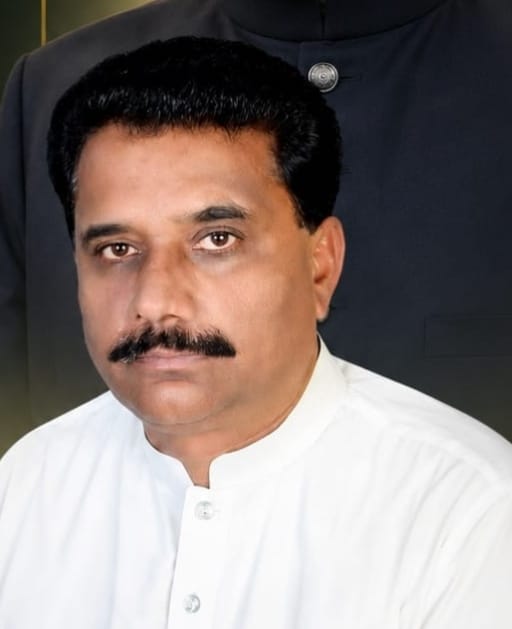
By: Chaudhry Shabbir Balochistani : Published by ANI
Prime Minister of Pakistan Mian Muhammad Shehbaz Sharif’s call for a grand dialogue and broad consultation to address the issues of Balochistan is a significant and welcome development. It is more than a political statement; it points towards a course of action that Balochistan has needed for a very long time.
The idea that Balochistan’s problems should be addressed through dialogue, consultation and by taking the people into confidence is encouraging for all serious and patriotic voices who have long maintained that Balochistan cannot be understood solely through the lens of security. Its political, economic, social and human dimensions must also be given equal consideration.
In this context, Field Marshal Syed Asim Munir’s recent remarks on Balochistan also carry considerable significance. He described the present and future of Balochistan and Pakistan as inseparable and recognised the people of Balochistan as talented, resilient, patriotic and dignified. He also emphasised that lasting peace and stability are essential for unlocking the province’s economic potential, attracting investment and transforming its natural and human resources into prosperity for its people.
The Prime Minister’s emphasis on dialogue and the Field Marshal’s focus on peace, youth, development and public prosperity are, in essence, two important dimensions of the same national objective.
This is precisely where Balochistan needs to be viewed from a new perspective.
Balochistan’s problems cannot be solved through the gun; they require dialogue.
Of course, the writ of the state, protection of citizens and action against terrorism are fundamental responsibilities of the state. There can be no justification for attacks on innocent civilians, labourers, security personnel or national installations. But it would also be a mistake to treat the fight against terrorism and the resolution of genuine political and public grievances as if they were the same issue.
While the state must act decisively against terrorism, the doors of political dialogue must remain open to the people.
Dialogue is not a sign of weakness; it is a manifestation of statecraft and political wisdom.
What Does History Tell Us?
The history of Balochistan shows that, at different points in time, force was used, military operations were conducted and administrative decisions were imposed under circumstances specific to those periods. Yet if political, economic and social questions continue to exist decades later, we must honestly ask ourselves whether the method of dealing with the problem also needs to change.
The state has the constitutional authority to use force when necessary, but force cannot be the first and final answer to every political and social problem.
A gun may create silence, but it cannot create trust.
Trust can only be built through dialogue.
Balochistan Must Be Seen Through the Eyes of Its Own People
One of the shortcomings of the past has been that, at times, decisions concerning Balochistan were based on reports and advice from individuals who did not possess a complete understanding of the province’s realities on the ground.
Balochistan is not merely Quetta. It encompasses Makran, Rakhshan, Kalat, Chagai, Nasirabad, Sibi, Zhob, Loralai, Lasbela, Gwadar and many other vast regions, each with its own tribal structures, languages, cultures and social traditions.
A handful of meetings in Quetta cannot amount to understanding the whole of Balochistan.
Anyone involved in shaping the future of Balochistan must travel among its people, listen to them directly and understand their concerns firsthand.
Balochistan cannot be understood through reports alone; it must be understood through its people.
Why Not Benefit from Balochistan’s Experienced Leadership?
If the federal government and the state genuinely wish to open a new chapter in the political resolution of the Balochistan question, they should engage experienced political, national and tribal figures who have played important roles in the province’s political, governmental and public life over the years.
For this purpose, consultations could be held with experienced leaders such as Dr Abdul Malik Baloch, Sardar Akhtar Jan Mengal, Mir Abdul Quddus Bizenjo, Nawab Muhammad Aslam Raisani, Nawab Zulfiqar Magsi, Nawab Chingiz Khan Marri, Jam Kamal Khan and Mir Muhammad Sadiq Sanjrani.
The objective should not be to declare any one individual the sole representative of Balochistan. Rather, the purpose should be to bring different political, tribal and regional experiences to one table.
The experience of Nawab Zulfiqar Magsi is particularly relevant because of his long association with Balochistan’s politics, government and tribal society.
Jam Kamal Khan, too, has held responsibilities at various levels of Balochistan’s political and administrative life and possesses firsthand knowledge of the province’s affairs. Such experience should be utilised for the future of Balochistan.
Similarly, senior political leader Saeed Ahmed Hashmi brings with him considerable political experience. Having served in governmental responsibilities during different periods and having worked with former Balochistan political leadership, including Nawab Akbar Khan Bugti, his experience could prove valuable in a dialogue process that seeks to learn from the lessons of the past.
Leaders such as Nawab Chingiz Khan Marri, with their political and tribal experience, could also be included so that the political and tribal dynamics of Balochistan can be understood more effectively.
Likewise, Mir Muhammad Sadiq Sanjrani’s national and parliamentary experience, particularly his experience of leading the Senate, could contribute to building a more effective bridge between Islamabad and Balochistan.
The Voice of Pashtun Balochistan Must Be Equally Heard
It is equally essential to give effective and dignified representation to the Pashtun areas of Balochistan in any meaningful dialogue.
Leaders with extensive political experience, such as Mahmood Khan Achakzai, along with other respected political and tribal figures from the Pashtun belt, should also be taken into confidence.
Zhob, Loralai, Pishin, Qila Abdullah, Chaman, Quetta and other areas of northern Balochistan have their own political and social priorities. Without involving the genuine representatives and influential political and tribal voices of these regions, the complete picture of Balochistan cannot emerge.
The beauty of Balochistan lies in the fact that Baloch, Pashtun, Brahui and other communities have been part of this land for centuries.
Therefore, any solution for Balochistan must provide space for every region, every community and every major political and social voice.
Learning from the Experience of the Pakistan Muslim League (N)
In the political dialogue on Balochistan, the long political and organisational experience of Governor Balochistan Jaffar Khan Mandokhail can also be utilised extensively.
Jaffar Khan Mandokhail has remained familiar with Balochistan’s politics, the organisational structure of the Pakistan Muslim League (N), tribal and political relationships, and the province’s realities for many years. His experience is significant because he views Balochistan not merely through the lens of a government office, but also through the perspective of a long political career.
If the federal government initiates a genuine political dialogue in Balochistan, experienced political figures such as him should not be confined to formal meetings. They should be made active participants in the process of finding solutions.
Why Not Establish an Empowered Balochistan Dialogue Commission?
The Prime Minister’s concept of a grand dialogue could be translated into practical policy through the establishment of an empowered Balochistan Dialogue and Reconciliation Commission.
Such a commission should not consist solely of government officials or parliamentarians. It should include representatives from different regions and communities of Balochistan.
Political parties, tribal elders, lawyers, intellectuals, young people, women, the business community, civil society and individuals with genuine knowledge of Balochistan’s ground realities should all have a place at the table.
The commission should not merely be an institution that holds meetings. It should have the authority to hear public grievances, meet affected families, consult political parties, examine ground realities and submit its recommendations directly to the federal and provincial leadership.
If pursued sincerely, such a dialogue could lay the foundation for a new relationship of trust between Balochistan and the federation.
Disgruntled Citizens and Armed Terrorists Are Not the Same
There is one fundamental distinction that must be understood in dealing with Balochistan:
A disgruntled citizen and an armed terrorist are not the same.
A person who questions the state is not necessarily an enemy of the state.
A young person who demands employment, education, access to resources, justice, political representation or constitutional rights should be heard. Listening to such a citizen is not an act against the state; rather, it can strengthen the state.
But anyone who kills innocent civilians, targets labourers, attacks national installations or engages in armed violence must face action in accordance with the law.
Dialogue and the writ of the state should therefore not be viewed as alternatives to one another. They should be regarded as complementary elements of a comprehensive national strategy.
The Field Marshal’s Message and Balochistan’s Future
Field Marshal Syed Asim Munir’s emphasis on transforming Balochistan’s human and natural resources into public prosperity, creating peace and stability for investment, and involving young people in national development should not remain confined to speeches.
There is no shortage of talent among the youth of Balochistan. What is needed is opportunity.
If the youth of Balochistan are provided with quality education, skills, employment, entrepreneurship and an appropriate role in national decision-making, they can become one of the strongest pillars of Pakistan’s economic development.
The development of Balochistan is not merely the development of one province; it will have consequences for the prosperity of the entire country.
Balochistan’s Genuine Share in Its Resources
Reko Diq, mineral resources, Gwadar, the coastline, gas, oil and other natural resources possess the potential to transform Balochistan’s future.
But the real question is: How much of this wealth will actually change the life of the ordinary citizen of Balochistan?
If minerals are extracted while local youth remain unemployed; if a port exists while the surrounding population lacks basic facilities; if development projects are announced but their benefits do not reach ordinary people, then the concept of development remains incomplete.
The people of Balochistan must see tangible benefits from their province’s resources in the form of employment, education, healthcare, skills, business opportunities and basic services.
The true success of natural-resource development will be measured by whether that wealth becomes visible prosperity in the lives of ordinary people.
The Army Chief Should Sit Among the People of Balochistan
If the state leadership genuinely wants to approach Balochistan from a new perspective, an extraordinary step could be for the Army Chief himself to sit in Quetta and meet representatives of different sections of Balochistan directly.
Political leaders, tribal elders, young people, traders, lawyers, teachers, journalists, affected families and ordinary citizens should be given the opportunity to speak directly.
Such an initiative would send a powerful national message: the state is not only prepared to speak; it is also prepared to listen.
Decisions should not be based solely on reports prepared behind closed doors. Reports from state institutions are undoubtedly important, but public observation, the views of local leadership and realities on the ground must also become part of the decision-making process.
The opinion of one institution, one individual or a handful of selected sources cannot be treated as the opinion of the entire population of Balochistan.
The Need for a National Balochistan Policy
The time has come to formulate a comprehensive National Balochistan Policy whose fundamental direction does not change every time a government changes.
The federal government, provincial government, Parliament, political parties and state institutions should jointly develop a policy with clear objectives relating to peace, political reconciliation, resource-sharing, education, healthcare, employment, local government, the future of the youth and tribal harmony.
The policy should also be subject to annual parliamentary oversight and performance reviews so that commitments to Balochistan do not remain confined to political statements.
The Time for a New Beginning
Prime Minister Shehbaz Sharif has opened the door to dialogue, while Field Marshal Syed Asim Munir has spoken about the shared future of Balochistan and Pakistan, peace, the youth and public prosperity.
These two messages point towards the same national direction.
Peace will bring development. Development will create greater trust. And greater trust will strengthen the relationship between Balochistan and Pakistan.
The need now is to translate these messages into practical policy.
Political and tribal leaders from Balochistan should be invited to the table. Diverse political opinions should be heard. Young people should be engaged. Affected families should receive justice and support. Local leadership should be taken into confidence. A fair and meaningful share of resources should be ensured for the people of Balochistan. Above all, decisions concerning Balochistan should be made after consulting those who genuinely understand the province.
We must decide whether Balochistan is to be viewed merely as a security challenge or as a fundamental pillar of Pakistan’s national unity, economic development and strategic importance.
I firmly believe that the people of Balochistan seek a relationship with Pakistan based on love, dignity, justice and equality. What they need is simply a system that listens to them and delivers justice.
For God’s sake, do not listen to Balochistan only through the sound of guns; listen to the voice of its people as well.
A gun may create silence, but it cannot create trust.
Trust can only be built through dialogue.
And this is the path that will strengthen both Balochistan and Pakistan.
Ultimately, the truth is simple:
Peace in Balochistan is Pakistan’s security.
Prosperity in Balochistan is Pakistan’s progress.
And the trust of Balochistan is a guarantee of Pakistan’s national unity.
Balochistan’s solution lies in dialogue, not at the barrel of a gun.


Pakistan’s political challenges, particularly in Balochistan, require trust rather than confrontation. Sustainable peace can only be achieved by listening to grievances and strengthening the political process.