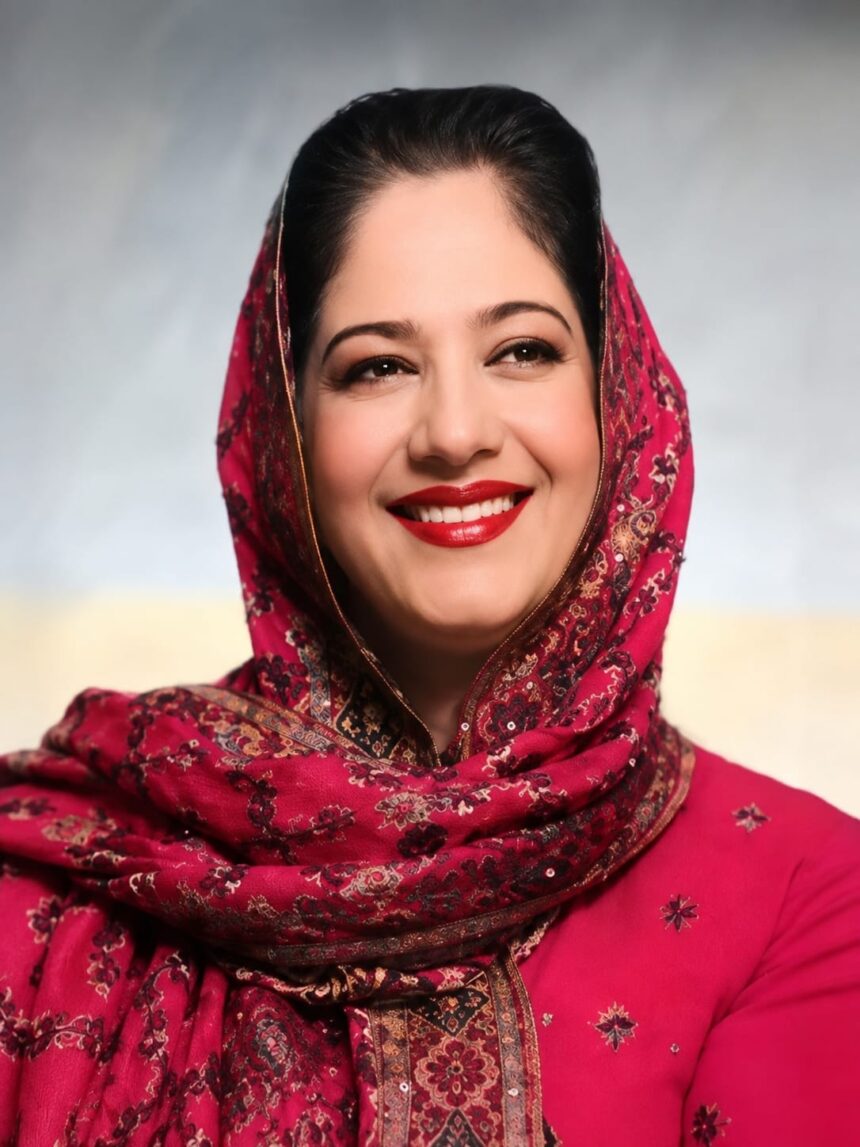
By: Sumblina Hassan
Secretary to Shaheed Mohtarma Benazir Bhutto
Former Consultant to the Foreign Office, Islamabad
In Charge of Office 10, RCC, Bilawal House
Published By: ANI News Agency
What enhances our lives and what brings comfort to our daily struggles? The fundamentals we are already aware of are water, crops, cotton or textiles, social interactions, safety from the adversity of climate, etc. But what is the gravitational pull that is keeping the balance of economies all over the world alive and kicking? This commodity is advancing mankind towards magnificent achievements in respect of technological advancement, the supply surplus of water, defence capacity, and it impacts and improves urban and rural life.
It is that nature has helped man strategise a network of electricity throughout the circumference of the world. We are now far remouved from an era of human history where an automatic door can open and close at the flick of a button. Instead, because of this commodity, we are able to reach the stars. We have been given the green light to unimaginable possibilities and opportunities that cannot come without electricity.
It is a given fact that in the West, it is an acceptable norm for every household to live with electricity and not without it, and it would be considered strange if they were deprived of it. In this day and age, the developed and developing world has harnessed this energy by extracting the resources of our geographical regions across all planes. Furthermore, it has given us the ability to grow, produce, supply and sell commercial commodities at a speed unprecedented or previously thought of. It has literally breathed life and light into ourselves and our planet.
Electricity is a natural phenomenon, one that has been harnessed over many centuries. It has been utilised and developed by scientists and inventors who turned it into usable technology.
What is electricity, how did it evolve, and how did its story begin? Apart from other eminent pioneers who contributed to its development, the man who made the world’s pulse alive and who, by his genius attributes, is said to have proclaimed that he could supply the world with free energy at no cost was Nikola Tesla.
So why do we Pakistanis struggle with this concept of electricity and load shedding? Why are our politicians constantly accused of malpractice when the question of the supply of this energy is not met? Why is it not a centralised feature of government policy despite protests about double standards that do not address or adhere to the complaints of citizens who face daily load shedding that lasts up to 16–20 hours a day in some areas of the country? Severe routine outages of electricity in local towns and city areas have become the norm.
Pakistan, however, due to persistent structural debt, has experienced major widespread blackouts. It faces seasonal fuel shortages that, in turn, trigger localised load shedding.
My argument is that the lack of this fundamental commodity cripples Pakistan’s economic and industrial ambitions. Not only has it caused economic erosion, but it has impacted major industrial hubs up and down the country. It has also affected micro-level household economies. Due to unprecedented power cuts, export and import projects are triggered and international deadlines are missed. This inevitably means foreign capital is driven out of the country.
Your local grocer, including street-level markets, bears heavy losses in perishable goods due to the lack of budgets for expensive fuel generators. They are then forced to close early due to the lack of refrigeration, which leads to the automatic spoilage of food. This includes agricultural yields and medicines.
This social instability fuels unrest and institutional distrust, thereby creating a highly volatile social atmosphere that exacerbates and boils into public anger.
This creates a class divide, while low-income working-class neighbourhoods endure virtually 12–24 hours of daily blackouts, while the elite, government offices and military cantonments enjoy uninterrupted electricity. This encourages a wide divide and undermines trust in governance and state institutions. There is an underlying issue here: one wonders if this is state-induced or enforced by external agencies to keep the divide and disrupt Pakistan’s economy intentionally, so that it controls mass civil unrest and prevents it from sparking a power dynamic in the country.
Other crises evolve too when power goes out at municipal water pumps, which then fail; this leads to acute water shortages. Street crime surges, causing theft and security vulnerabilities. When electrical power is not distributed equally, especially to Khyber Pakhtunkhwa, Sindh and Balochistan, simply because sending them power guarantees a financial loss, this is due to some of these regions having high levels of electricity theft, and the government is left with low bill recovery.
Pakistan signed take-or-pay contracts with power generation companies, which means Pakistan had to pay enormous “capacity fees” to keep their plants available.
The circular debt relinquishes the government’s operational cash; therefore, the government cannot afford to run these plants. Ultimately, the state resorts to paying billions in fixed capacity fees to idle plants while citizens suffer severe blackouts.
As this debt mounts, the government increases electricity tariffs in accordance with IMF guidelines, creating a massive migration towards solar energy. The result of this approach means that the best-paying customers generate their own power, and the state, in turn, recovers its costs from low-income consumers by endorsing massive fixed costs. Consumers are already paying high costs for solar panels, but they are charged heavy costs and penalised for not paying on time. Again, the worst off are those who do not have an income, cannot get employment, and, if they do, cannot afford electricity, let alone solar panels.
So the government is in a catch-22 situation as it faces further financial deficits as recoveries decrease rapidly, leading to deeper load shedding so that it can cut its operational losses.
The government made a plan via a commercial bank settlement. It tried to arrange a massive financial restructuring programme with the Ministry of Finance and with the Pakistan Banks’ Association (PBA). They signed a term sheet with 18 commercial banks designed to pay down the legacy power-sector debt.
But Pakistan also faces arbitrary, volatile legal and regulatory battlegrounds. Thirty-two Saudi entities and five Kuwaiti firms collectively hold a 30.7% indirect stake in KE and a $2 billion international arbitration claim against the State of Pakistan. Perhaps Asif Muneer could have it written off as a goodwill gesture for the purposes of initiating and restoring security for the Kingdom of Saudi Arabia?
Bearing in mind the concept that electricity can be free, the world is forced to play into the monopoly of those consortium companies that represent the rich and the oligarchs of our time, who have shaped our economies through greed and injustice towards those who merely want to survive, develop and progress, and bring bread to the table, per se. It is their taxes and their labour that bring revenue to the country, and this can shoulder the government’s responsibility by bringing a balanced society, enhancing and encouraging hard work. But this can be achieved if load shedding is eliminated. Economic success can then be a great achievement.
Since the 1880s, Pakistan has been sitting on a project that has been fully funded and fully designed, and it is the greatest-ever dam that could have been built. It is the Kalabagh Dam, which is set on the Indus River. It could generate around 3,600 megawatts of electricity, which could end 18-hour daily blackouts that have strangled Pakistan’s industry for forty years, and it would be enough to stop the billions spent every year on imported fuel.
The blueprints were done, and international funding was secured. The engineers, however, signed off on it decades ago. Yet we are still left in darkness daily. Punjab wants the dam, Sindh is convinced it will kill its river delta, and the Pakhtuns say it will swallow their farmland. Every government since Zia-ul-Haq has promised to break the deadlock. But the project never took off.
The dam could be built, though it will take decades, but Pakistan has to fix fundamental structural issues, such as the financial costs pertaining to paying off debts incurred on power plants that lie idle. As Pakistan relied on imported fuel, the cost of electricity spiked out of control. Transmission lines leak, and, as mentioned earlier, electricity theft prevents the state from recovering the cost of electricity, leaving us with a mountain of unpaid debt.
The way forward is addressing the long-term strategy of universal electrification. That is to renegotiate the dollar-indexed Independent Power Producers (IPPs), to privatise highly inefficient distribution companies in order to halt electricity theft, or to use a government institution working to scrutinise effectively the consumption of electricity and the costs incurred, i.e. balancing the books.
Why has a system been allowed to function that fails in its entirety? One that serves the IMF and the corporate companies that inevitably increase the value of the dollar? Shouldn’t we be working earnestly to increase the value of our rupee and the value of our own resources, and halt our reliance on outside intervention that favours their interests, when we have the manpower and the expertise to do our own bidding and develop Pakistan as a self-reliant entity capable of providing its own electricity at a lower cost?
The debate is on the table. We can moderate, affirm and negate a good outcome. It only needs ambition, determination and commitment to the people of Pakistan, who have patiently demanded change.