

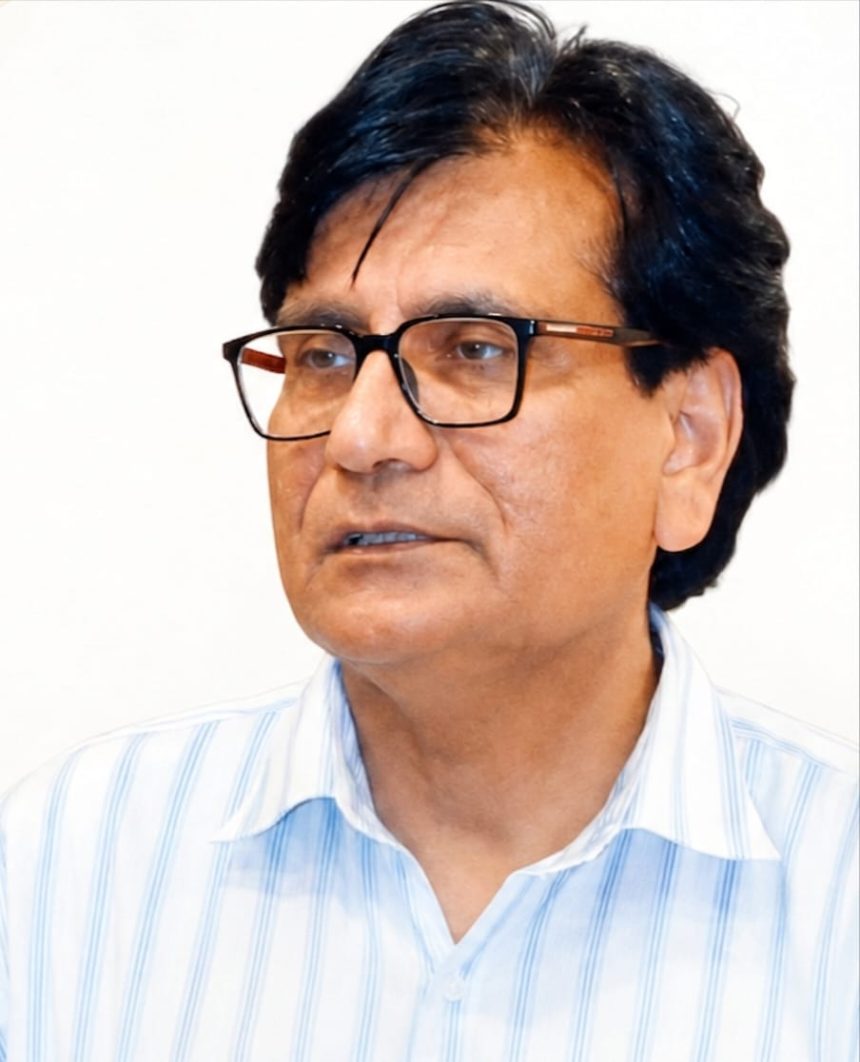
Dr. Nasser Hussyn Bukhari : Published By ANI
Sexual violence against women and children is among Pakistan’s most disturbing social realities. Yet whenever a case captures public attention, the debate often moves away from the perpetrator and towards the victim. Questions about clothing, mobility, lifestyle, social interaction and education quickly emerge, as if a woman’s appearance or freedom somehow explains a criminal act committed against her. This narrative is not only misleading; it prevents society from confronting the real causes of sexual violence.
If clothing were a principal cause of sexual violence, how would we explain the abuse of infants and very young children? What choice of dress or lifestyle can possibly be attributed to a child who is only a few years old? Similarly, cases involving elderly women, women observing conservative dress, or victims assaulted within their own homes cannot reasonably be explained by arguments about modern clothing or female freedom. The evidence from Pakistani society points towards a much more complicated reality.
Sexual violence should not be understood merely as an uncontrolled expression of sexual desire. In many cases, it is connected with power, control, humiliation, revenge and a sense of entitlement. The offender may seek not simply sexual gratification but domination over another human being. This distinction is important because the way a society understands a crime determines the solutions it chooses. Reducing sexual violence to “lust” alone overlooks the social and psychological conditions that allow such behaviour to occur.
Pakistan’s own experience illustrates this complexity. There have been cases in which women and girls have been subjected to sexual violence because of family disputes, personal rivalries, tribal conflicts and bradari tensions. In such situations, the victim may be deliberately targeted to humiliate or punish another family. The woman effectively becomes a weapon in a conflict between men. This reflects a deeply troubling patriarchal attitude in which women are treated as carriers of family honour rather than autonomous individuals possessing equal human dignity.
When a woman is regarded as the property or honour of her family, violence against her can be used to settle scores with male relatives. Such thinking transforms a woman from a citizen into a symbol and makes her vulnerable to violence for reasons entirely unrelated to her clothing, behaviour or personal choices. It also reveals why the problem cannot be solved simply by imposing greater restrictions on women.
The same patriarchal mindset contributes to another serious problem: victim-blaming. After an assault, society often asks questions such as: Why was she outside? Why was she alone? What was she wearing? Why did she trust that person? Why did she go there? Such questions may appear to be attempts to understand the circumstances, but they frequently transfer responsibility from the criminal to the victim. The more appropriate question is: Why did the perpetrator believe that he could violate another person’s dignity and escape the consequences?
This distinction is not merely semantic. Victim-blaming has serious practical consequences. Women and children who fear social condemnation may choose not to report abuse. Families may remain silent because they fear stigma, damaged reputations, broken marriages or retaliation. In this way, social attitudes can unintentionally protect perpetrators. A society that makes victims feel ashamed while allowing offenders to hide behind social influence creates an environment in which crimes remain underreported.
The argument that modern education or co-education is responsible for sexual violence is similarly difficult to sustain. Sexual abuse occurs in homes, workplaces, neighbourhoods, transport, educational institutions and other environments. Pakistan has witnessed allegations involving people occupying positions of trust, including relatives, teachers and religious instructors. The common factor is not necessarily co-education or modern lifestyles. It is the misuse of trust, authority and power.
This reality should also force us to reconsider how children are educated and protected. Children need age-appropriate awareness about personal boundaries, inappropriate behaviour and the importance of speaking to a trusted adult. Parents, teachers and institutions must create environments where children can report uncomfortable or abusive behaviour without fear of punishment or disbelief. Silence cannot be a substitute for protection.
The issue of law enforcement is equally critical. Even strong laws cannot deter crime if offenders believe they can escape punishment. Weak investigations, delayed trials, intimidation, social influence and political connections can create a culture of impunity. When powerful individuals believe that their wealth, status or connections can protect them from accountability, the deterrent effect of law is severely weakened.
Pakistan therefore needs a criminal justice system that is professional, timely and sensitive to victims. Investigations must be conducted without political or social pressure. Survivors should not be subjected to unnecessary humiliation during legal proceedings. Witnesses need protection, and perpetrators must face the law regardless of their wealth, political influence, family connections or social status. Justice must be based on evidence and law, not on the social position of either the victim or the accused.
Punishment, however, cannot by itself solve the problem. Prevention requires a transformation in social attitudes. For generations, much of the advice given to girls has centred on restrictions: do not go out alone, do not talk to strangers, dress modestly, return home early and avoid certain places. Some precautions may have practical value, but they cannot constitute a comprehensive national strategy against sexual violence. Restricting women cannot eliminate the criminal intentions of offenders.
The same seriousness must be applied to educating boys. Boys should learn that masculinity does not mean domination, that women are not objects of possession, and that consent and personal boundaries are fundamental principles of human interaction. Respect for women must be cultivated at home, reinforced in schools and supported by religious and community institutions. A society cannot expect responsible men to emerge automatically; respect, empathy and self-control must be deliberately taught and reinforced.
Families have an equally important role. Parents should create an environment in which children can discuss uncomfortable experiences without fear of punishment or disbelief. Children must understand that no relative, teacher, neighbour or other adult has an unlimited right to their bodies. At the same time, children must know that they will be believed, protected and supported when they report inappropriate behaviour.
Religious leaders can also contribute positively by emphasising dignity, accountability, justice and respect for human beings. Religious teachings should never be interpreted in ways that shift responsibility for a man’s criminal behaviour onto the woman he has assaulted. Faith and morality should strengthen the principles of justice and human dignity rather than reinforce social prejudice.
The media has a responsibility as well. Sexual violence should not become sensational entertainment. Reporting must protect the identity and dignity of survivors while keeping public attention focused on accountability, institutional weaknesses and prevention. Responsible journalism can help change public attitudes by refusing to turn victims into subjects of scrutiny and perpetrators into secondary figures.
Pakistan’s debate on sexual violence therefore needs a fundamental shift. The question should not be what a woman was wearing when she was assaulted. The question should be why a perpetrator believed he had the right to violate another person’s dignity. A woman’s clothing cannot transfer responsibility for a criminal act to the woman herself. Nor can modern education, mobility or social interaction adequately explain crimes committed against children, elderly women or victims assaulted within conservative environments.
The deeper challenge lies in a culture where male entitlement, unequal power relations, victim-blaming and impunity can reinforce one another. Changing this culture requires more than legislation. It requires families that teach respect, schools that promote equality, religious institutions that uphold dignity, media that rejects sensationalism and a justice system that ensures accountability.
Pakistan cannot address sexual violence simply by restricting women’s choices and movements. It must address the behaviour of perpetrators, strengthen the rule of law, challenge patriarchal assumptions and create institutions in which victims can seek justice without fear or shame. The responsibility for preventing violence belongs to the entire society, but accountability for a criminal act must always rest with the person who commits it.
The real measure of a civilised society is not how successfully it controls its women. It is how effectively it protects the vulnerable, punishes the offender and preserves the dignity of every human being. Until Pakistan learns to stop asking what the victim did to invite violence and starts asking why the perpetrator committed it, the country will continue to debate the wrong question while the real problem remains unresolved.



Perfact explanation of the situations for women in our society.
Well said. Enough is enough. This is important now to identify the sex offenders in our society. Their sex hormones be tested and they must be treated accordingly.