By Rana Farooq Ashraf: Published by ANI
Coalition governments are built on a delicate balance of trust, consultation and mutual political interests. When that balance begins to weaken, disagreements between coalition partners can quickly become a test of parliamentary stability. The Pakistan Peoples Party’s decision to suspend cooperation with the federal government until its legitimate concerns are addressed should therefore be viewed as more than an expression of political displeasure. It is a carefully calculated message to the government that coalition support cannot be taken for granted.
According to PPP Central Information Secretary Shazia Marri, the party has decided to suspend cooperation with the federal government until its concerns regarding public issues, provincial matters, the federal budget and the elections in Azad Jammu and Kashmir are addressed. At the same time, the PPP has made it clear that it will continue to play a responsible parliamentary role in legislation relating to national security, defence and the wider national interest.
This distinction is politically significant. The PPP has not announced its withdrawal from the parliamentary system, nor has it declared an intention to destabilise the government. Instead, it has drawn a line between political cooperation and national responsibility. The message is clear: disagreement with the government does not mean abandoning the state or parliamentary democracy.
PPP Chairman Bilawal Bhutto-Zardari’s recent position reinforces this approach. He has made it clear that government support will remain suspended until the party’s concerns are addressed, while also stressing the importance of parliamentary engagement and political dialogue. His position suggests that the PPP is keeping the door to negotiations open, but expects the federal government to take its concerns seriously.
The roots of the current tension between the PPP and the Pakistan Muslim League-Nawaz government go beyond a single issue. Questions surrounding the federal budget, provincial rights, distribution of resources, legislative priorities and the political situation in Azad Jammu and Kashmir have gradually widened the gap between the two coalition partners.
Provincial autonomy remains particularly important for the PPP. The party has historically presented itself as a strong advocate of provincial rights, and the constitutional framework established after the 18th Amendment remains central to its political narrative. Any perception that provincial financial or constitutional interests are being overlooked is therefore bound to generate resistance within the PPP.
The issue of Azad Jammu and Kashmir has added another layer to the dispute. Bilawal Bhutto-Zardari has repeatedly emphasised the political and democratic rights of the people of AJK and the importance of respecting their mandate. For the PPP, the credibility of the electoral process and the political voice of the people of Kashmir are matters that cannot simply be treated as routine administrative questions.
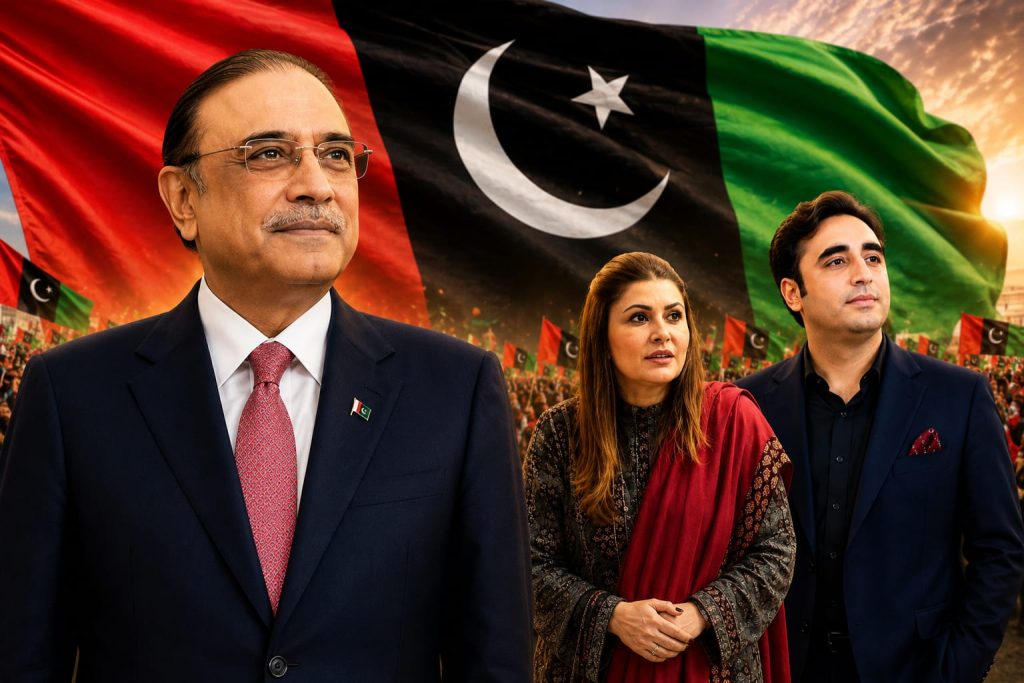
President Asif Ali Zardari’s long political career has been associated with reconciliation, negotiation and political accommodation. The PPP’s present decision also reflects that tradition to some extent. By keeping national security, defence and essential matters of national interest outside the scope of its political disagreement, the party has avoided closing the door on the broader political system.
The position taken by other senior PPP leaders also indicates that the party does not regard coalition politics as merely a mechanism for keeping a government in power. From the PPP’s perspective, political cooperation must also deliver protection for public interests, provincial rights and democratic institutions. This explains why the party has chosen conditional cooperation rather than unconditional support.
The situation, however, presents a serious political test for both sides. The federal government cannot afford to treat the PPP’s concerns as routine political bargaining. At the same time, the PPP must ensure that its legitimate demands remain within the framework of parliamentary dialogue and constitutional politics.
Pakistan is already facing considerable economic, political and regional challenges. At such a time, prolonged confrontation between coalition partners would serve neither democracy nor the public interest. Differences are an essential part of democratic politics, but they must be managed through negotiation rather than political brinkmanship.
The PPP has sent its message. Cooperation with the federal government may be suspended, but its responsibility towards the state and Parliament has not. This distinction is perhaps the most important aspect of the party’s decision.
The responsibility now rests primarily with the federal government. Serious negotiations, meaningful consultation and a willingness to address the concerns of its major coalition partner could prevent the current disagreement from developing into a deeper political crisis.
Ultimately, the strength of parliamentary politics is not measured by how effectively one side defeats the other, but by how successfully competing interests are brought to the negotiating table. If the federal government and the PPP can resolve their differences through constitutional dialogue and political wisdom, the outcome will benefit not merely the two parties but Pakistan’s parliamentary democracy and political stability as a whole.