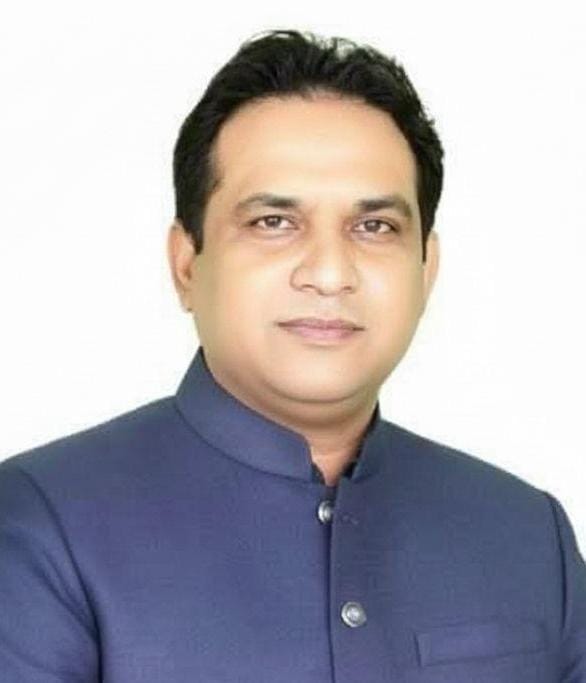
By: Rana Farooq Ashraf
Published By:ANI News Agency
The rapidly changing situation in the Middle East requires Saudi Arabia’s foreign policy to be viewed through a different lens. For years, various predictions have been made about Crown Prince Mohammed bin Salman’s direction. Some claimed that Riyadh would join the Abraham Accords, others predicted that Saudi Arabia would formally recognise Israel, while some portrayed the Kingdom as entirely aligned with Washington. Yet the facts present a more complex picture. Saudi Arabia has not established diplomatic relations with Israel, and Riyadh has continued to link normalisation to a credible pathway toward Palestinian statehood.
The central argument of Saudi policy today is therefore not that Mohammed bin Salman is abandoning the United States in favour of China. It is that Riyadh is seeking greater strategic autonomy. Saudi Arabia continues to regard Washington as an important strategic partner while simultaneously expanding its economic, technological and diplomatic relations with China and strengthening security partnerships with countries such as Pakistan and Türkiye. This approach gives Riyadh more options and greater room for independent decision-making.
The proposed F-35 deal illustrates the complexity of this relationship. The United States has approved a potential $24.3 billion sale of 48 F-35 fighter aircraft to Saudi Arabia, while American intelligence officials have reportedly warned that China could potentially gain access to sensitive American military technology because of its expanding military and telecommunications links with Riyadh.
The contradiction is significant. Washington is prepared to provide Saudi Arabia with one of its most sophisticated weapons systems while simultaneously expressing concern about Saudi Arabia’s growing relationship with Beijing. The issue therefore extends beyond an arms transaction; it reflects the wider strategic and technological competition between the United States and China.
Saudi Arabia’s relationship with China has also moved well beyond oil. Infrastructure, technology, telecommunications, energy and diplomatic engagement have become increasingly important parts of the relationship. At the same time, Riyadh has continued to maintain its security relationship with Washington. This combination suggests that Saudi Arabia is attempting to avoid becoming dependent on a single external power.
The same principle can be seen in Saudi Arabia’s regional diplomacy. Riyadh has sought dialogue and de-escalation with regional actors while maintaining its own security interests. Recent contacts involving the United States, Iran and the Houthis demonstrate how complicated Middle Eastern diplomacy has become. Such contacts should not automatically be interpreted as evidence of a single coordinated strategy against Saudi Arabia; rather, they demonstrate that even opposing parties maintain channels for negotiations when their interests require them.
For Pakistan, this changing Saudi strategy has particular significance. The signing of the Makkah Joint Defence Agreement by Saudi Arabia, Pakistan and Türkiye in August 2026 has created a new framework for collective defence cooperation. The agreement states that an armed attack against one of the three countries will be regarded as an attack against all, while Pakistani officials have stressed that the arrangement is defensive in nature and is not directed against any particular country.
Pakistan therefore has an opportunity to deepen its relationship with Saudi Arabia not only in defence but also in energy, investment, minerals, technology and trade. The establishment of a permanent secretariat for the Makkah agreement and plans for joint defence-industry cooperation further demonstrate that the relationship is moving toward greater institutionalisation.
The most important question, therefore, is not whether Saudi Arabia is with America or China. The more consequential question is whether Riyadh can preserve its freedom of decision-making while maintaining relationships with competing global powers. Mohammed bin Salman’s emerging strategy appears centred on keeping multiple doors open, strengthening Saudi capabilities and placing national interests at the heart of foreign policy.
The Middle East is no longer governed by the assumptions of the previous era. Regional states are increasingly seeking their own strategic space rather than simply following the preferences of larger powers. Saudi Arabia’s evolving policy is one of the clearest examples of this transformation—and for Pakistan, it presents both a strategic responsibility and an opportunity to build a more balanced, economically meaningful and mutually beneficial partnership with the Kingdom.