The Sacrifices, Struggles and Political Legacy of Pakistan’s Leadership
Written by Rana Farooq Ashraf Published BY: ANI NEWS AGENCY
Pakistan’s political history is not merely a story of governments being formed and dismissed. It is also a history of political struggle, imprisonment, exile, persecution and personal sacrifice by leaders who, in their own ways, remained committed to their political parties and their vision of Pakistan.
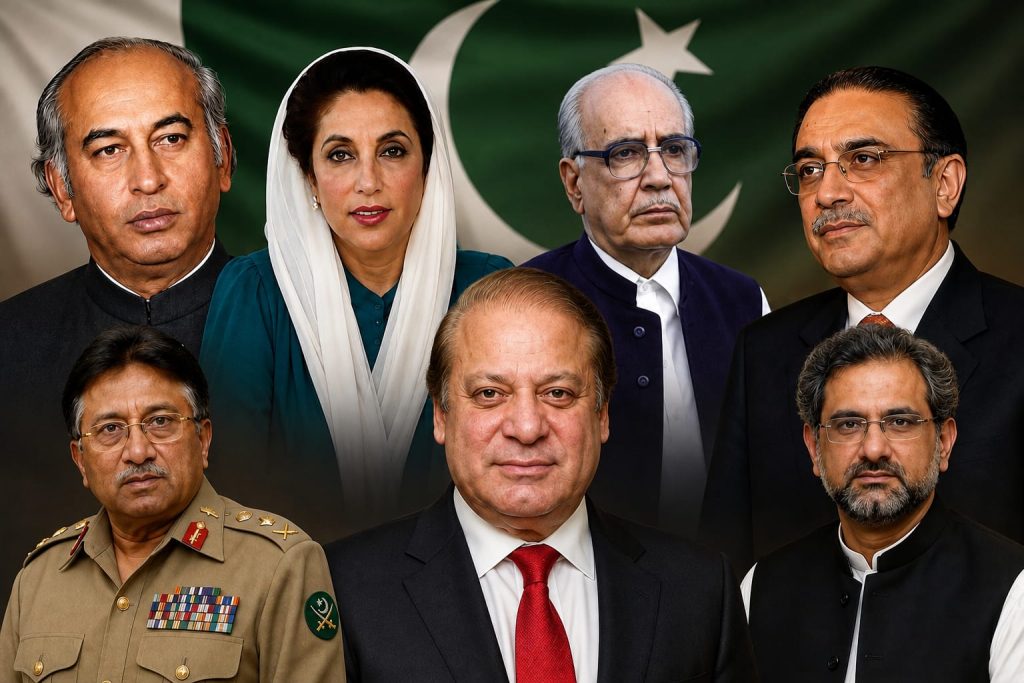
The figures highlighted in the accompanying graphic represent different chapters of Pakistan’s political journey. However, the number of days shown against some names does not accurately reflect the historical record. In several cases, the actual period of detention was considerably longer, while in others the figures cannot be independently verified.
The real question, therefore, is not simply how many days a politician spent behind bars. The more important questions are: Why were they imprisoned? What political circumstances led to their detention? What did they endure? And what did they contribute to Pakistan after their release?
Asif Ali Zardari: From Long Imprisonment to Political Reconciliation
Asif Ali Zardari is among Pakistan’s political leaders who spent an exceptionally long period in detention. According to widely reported accounts, he spent approximately 11 years in prison and detention in connection with various cases. He and his party repeatedly maintained that the cases were politically motivated.
Despite years of imprisonment, Zardari remained politically active. As president, he subsequently made political reconciliation one of the defining features of his political approach.
One of the most significant developments during his presidency was the passage of the 18th Constitutional Amendment, which strengthened parliamentary democracy and substantially altered the distribution of powers between the federation and the provinces.
His political journey offers an important lesson: a politician who had spent years behind bars later chose reconciliation rather than confrontation as a central instrument of political governance.
Benazir Bhutto: Imprisonment, Exile and Democratic Struggle
Benazir Bhutto’s political career was marked by imprisonment, house arrest and exile. During General Zia-ul-Haq’s military rule, she was repeatedly detained and spent periods in solitary confinement and house arrest before leaving Pakistan.
Despite these hardships, she remained committed to her party and democratic politics and eventually became Pakistan’s first woman prime minister.
Her governments were associated with initiatives concerning women’s political participation, health and social welfare. More importantly, her political struggle became a symbol of resistance to military rule and the demand for representative government.
Her life demonstrated that political commitment is tested not during periods of power, but during periods of adversity.
Zulfikar Ali Bhutto: Constitution, National Sovereignty and Political Mobilisation
Zulfikar Ali Bhutto occupies a central place in Pakistan’s political history. His contribution to the country’s constitutional and political development remains deeply significant.
Under his leadership, the Constitution of 1973 was framed and adopted with broad parliamentary consensus. It continues to provide the fundamental constitutional framework of Pakistan.
Bhutto also pursued an independent foreign policy, strengthened Pakistan’s relations with the Muslim world and played an important role in developing the country’s strategic and nuclear programme.
Following the military takeover of 1977, he was arrested, tried and ultimately executed on April 4, 1979.
His political legacy remains deeply embedded in Pakistan’s constitutional history, democratic consciousness and national political discourse.
Nawaz Sharif: Imprisonment, Exile and National Decisions
Nawaz Sharif’s political career has been marked by three terms as prime minister, military intervention, imprisonment, exile, disqualification and political comeback.
One of the defining decisions of his premiership came in 1998, when Pakistan conducted nuclear tests following India’s nuclear explosions. Despite intense international pressure, Pakistan demonstrated its strategic capability.
Soon afterwards, the Lahore Declaration opened a diplomatic path towards dialogue and confidence-building with India.
Nawaz Sharif’s governments also focused heavily on infrastructure development, motorways, economic liberalisation and private-sector growth.
His political journey demonstrates the resilience of a leader who, despite imprisonment and years in exile, eventually returned to Pakistan and remained a major force in national politics.
Yousaf Raza Gilani: More Than Five Years Behind Bars
The graphic attributes only 95 days of imprisonment to Yousaf Raza Gilani. Historical records, however, show that he was arrested in February 2001 and remained in prison until October 2006 — more than five years.
He was subsequently elected prime minister in 2008.
His tenure was particularly significant because the 18th Constitutional Amendment was passed during his government. The amendment strengthened parliamentary democracy, enhanced provincial autonomy and reshaped the constitutional balance between the federation and the provinces.
Gilani’s political journey is another example of a leader who experienced prolonged imprisonment before returning to the highest levels of parliamentary politics.
Shahid Khaqan Abbasi: Imprisonment Without Abandoning Politics
Shahid Khaqan Abbasi was arrested in July 2019 in connection with the LNG case and remained in detention until February 2020. His detention lasted considerably longer than the 120 days shown in the graphic.
The Pakistan Muslim League-Nawaz described his arrest as politically motivated, while the National Accountability Bureau maintained that the case concerned alleged irregularities in the LNG contract.
As prime minister, Abbasi’s tenure was brief but significant, particularly in the energy sector and the expansion of LNG-based energy infrastructure.
His political career reflects the ability to remain engaged in public life despite legal and political adversity.
Imran Khan: More Than Three Years in Custody
Imran Khan has been in custody since August 5, 2023, making his imprisonment one of the most consequential ongoing episodes in Pakistan’s contemporary political history.
He and his party have described the cases against him as politically motivated, while the government and state institutions have maintained that the proceedings are based on legal grounds.
During his tenure as prime minister, programmes such as Ehsaas and health-sector initiatives became prominent features of his government’s welfare agenda. His government also pursued a different diplomatic emphasis, particularly in relations with China, Afghanistan and the Gulf states.
His continued imprisonment has become another powerful symbol of the political polarisation that has increasingly characterised Pakistan’s politics.
Ghulam Ishaq Khan: A Different Kind of Political Power
The graphic associates Ghulam Ishaq Khan with nearly a year of imprisonment, but reliable historical records do not establish such a period of imprisonment.
His actual political importance lies elsewhere. A senior civil servant, finance minister, Senate chairman and later president of Pakistan, Ghulam Ishaq Khan became one of the most powerful constitutional figures of his era.
During his presidency, both Benazir Bhutto’s and Nawaz Sharif’s governments were dismissed. His tenure therefore represents an important chapter in the long institutional struggle between elected governments and powerful constitutional offices.
General Pervez Musharraf: A Critical Chapter
General Pervez Musharraf must be assessed differently from the political leaders discussed above. He came to power through a military takeover in 1999 that removed an elected government.
His era witnessed economic and administrative reforms and a major shift in Pakistan’s foreign and security policy after the September 11 attacks.
However, the imposition of emergency rule in 2007, the suspension of constitutional order and the removal of judges remain among the most serious controversies of his rule.
His later detention and legal difficulties were part of the political and constitutional consequences of that period.
The Larger Question: Political Difference or Political Persecution?
The reasons for the imprisonment of these leaders were not identical. Some faced corruption allegations, some were detained by military governments, some were imprisoned following judicial proceedings, while several political parties described the cases against their leaders as politically motivated.
Yet one pattern repeatedly emerges from Pakistan’s political history:
Political disagreement has too often been transformed into political hostility.
Whenever governments changed, the political environment surrounding accountability and prosecution frequently changed as well. Opposition leaders were arrested, governments were dismissed, political parties were weakened, and institutions became involved in political conflicts.
This culture of intolerance has repeatedly damaged Pakistan’s democratic development.
Every Political Leader Deserves a Fair Historical Assessment
Pakistan’s history should not be viewed solely through the lens of political loyalty or personal preference.
Zulfikar Ali Bhutto deserves recognition for the 1973 Constitution, national sovereignty and Pakistan’s strategic vision.
Benazir Bhutto deserves recognition for her democratic struggle, political resilience and efforts to expand women’s participation in public life.
Nawaz Sharif deserves credit for the 1998 nuclear decision, infrastructure development and economic initiatives.
Asif Ali Zardari deserves recognition for political reconciliation and the constitutional reforms undertaken during his presidency.
Yousaf Raza Gilani deserves recognition for returning to parliamentary politics after years of imprisonment and for presiding over an important period of constitutional reform.
Shahid Khaqan Abbasi deserves recognition for his contribution to the energy sector and for maintaining his political course despite imprisonment.
Imran Khan’s welfare initiatives, particularly Ehsaas, his emphasis on social protection and his efforts to reshape Pakistan’s foreign-policy narrative also form part of his political legacy.
This does not mean that any of these leaders should be considered infallible. Their policies, decisions and failures should be examined critically. But their sacrifices, struggles and contributions should not be erased from history simply because of political differences.
Pakistan Needs Political Tolerance, Not Political Revenge
Pakistan has witnessed military interventions, political imprisonments, judicial battles, dismissals, exile and intense confrontation between political forces.
The real question is whether the country has learned from this history.
Will every new government attempt to politically eliminate its opponents?
Will political disagreement continue to be answered through arrests and cases?
Will accountability standards continue to change with changes in political power?
If so, political parties may change, leaders may change and governments may change — but political intolerance will remain.
Pakistan needs a political culture in which disagreement is accepted as a natural part of democracy.
A supporter of Bhutto should be able to acknowledge the constitutional significance of his legacy. A critic of Nawaz Sharif should still be able to recognise the importance of the nuclear decision. An opponent of Zardari should be able to acknowledge the significance of the 18th Amendment. Those who disagree with Imran Khan should still be able to recognise his political struggle.
Political disagreement is the strength of democracy; political hatred is its weakness.
Pakistan belongs neither to one political party nor to one family, institution or individual. It belongs to its people.
The country’s future depends on strengthening the Constitution, Parliament, rule of law and democratic institutions — not on repeating cycles of political revenge.
Governments will come and go. Political leaders will rise and fall. But Pakistan must endure.
History does not belong to one political party. History belongs to Pakistan.