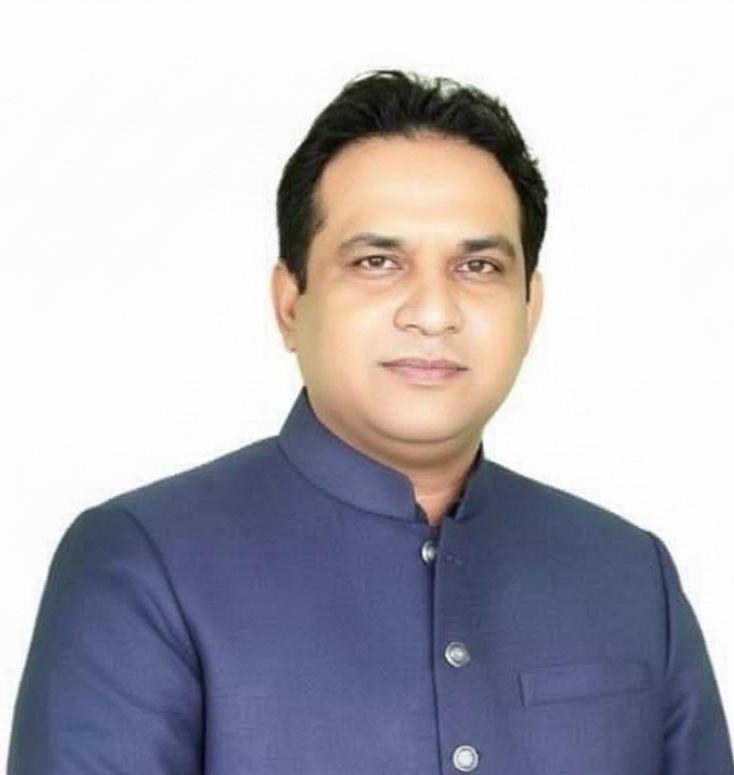
By: Rana Farooq ashraf
Published By: ANI News Agency
Pakistan’s current political landscape has brought Maulana Fazlur Rehman’s opposition to the government into the spotlight. His political strategy, influence among religious circles, and significance in Khyber Pakhtunkhwa and Balochistan make this an important national issue. The real question is whether his current stance is merely a political reaction or part of a carefully calculated strategy.
In Pakistan, certain political figures play a role that extends far beyond their political parties and parliamentary representation. Maulana Fazlur Rehman is one such personality. His political influence cannot be assessed merely through the electoral strength of Jamiat Ulema-e-Islam (JUI-F). His presence in Khyber Pakhtunkhwa, Balochistan and religious political circles gives him a distinctive position in national politics.
His recent strong statements and increasingly confrontational approach towards the government have generated considerable political debate. However, the important question is not simply why he disagrees with the government, but whether his current position reflects a temporary political reaction or a broader long-term strategy.
In my assessment, understanding Maulana Fazlur Rehman’s present political approach requires examining both his political history and the circumstances surrounding him. Throughout his political career, he has demonstrated an ability to negotiate, adapt and respond to changing political realities. At different times, he has worked alongside governments and, on other occasions, emerged as one of their strongest opponents. Therefore, dismissing his current position as an emotional reaction would be an oversimplification of the political situation.
One possible explanation is the need to restore and strengthen his political credibility. Following recent elections and changing political circumstances, traditional religious voters, particularly JUI-F supporters, are looking for renewed political direction. By adopting a firm position against the government, Maulana may be seeking to reconnect with his traditional voter base and strengthen his leadership among ideological supporters.
The security situation in Khyber Pakhtunkhwa and Balochistan is another important factor. Both provinces have faced serious challenges relating to militancy, instability and security threats. Maulana Fazlur Rehman has also previously spoken about threats to himself and members of his family. Consequently, his political decisions should not be viewed exclusively through the lens of power politics.
Nevertheless, the growing confrontation between the government and Maulana Fazlur Rehman presents a serious challenge for both sides. If the government attempts to suppress political opposition through arrests, legal cases or the excessive use of state authority, it could generate political sympathy for Maulana. Conversely, if the opposition moves beyond constitutional and parliamentary boundaries, the political temperature across the country could rise further.
Pakistan’s history offers several lessons about the dangers of religious and sectarian polarisation. Political disagreements should never be transformed into conflicts based on religious identity or sectarian affiliation. If the current political confrontation develops in that direction, its consequences will extend beyond government and opposition politics and may damage the country's broader social harmony.
The government's responsibility in this situation is particularly important. The real test of a democratic government lies in its ability to tolerate criticism, accommodate dissent and create space for political dialogue. At the same time, opposition leaders must ensure that political resistance remains within constitutional and parliamentary limits. Adopting a strong political position is a democratic right, but transforming disagreement into hostility serves no national purpose.
My assessment is that Maulana Fazlur Rehman currently occupies a political position in which both confrontation and reconciliation could offer political advantages. However, the ultimate outcome will depend on whether the government and opposition are willing to place national interests above their immediate political objectives.
Pakistan does not need another prolonged political confrontation. It needs political stability, parliamentary supremacy and a renewed national consensus. Neither Maulana Fazlur Rehman nor the government should allow the pursuit of political advantage to push the country towards another period of instability.
True political success does not lie in defeating opponents but in finding a way forward despite differences. Pakistan needs serious dialogue, political tolerance and wisdom far more than slogans, anger and confrontation.