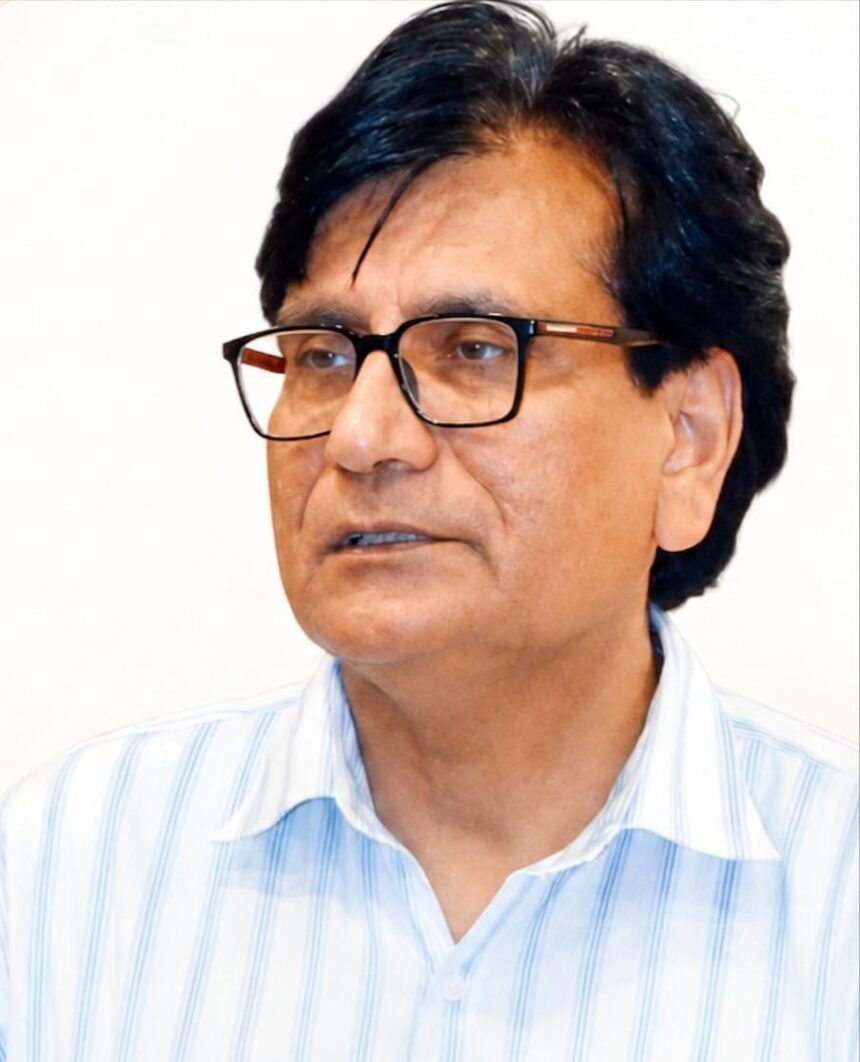
By: Dr. Nasser Hussain Bukhari
Analyst of International Relations, Geopolitics and Pakistan
Published By: ANI News Agency
Israel’s October 27, 2026, general election has produced a political outcome with implications extending far beyond the country’s domestic politics. Although Prime Minister Benjamin Netanyahu’s Likud emerged as the largest party, securing 27 seats, his right-wing coalition secured only 53 seats in the 120-member Knesset. The opposition bloc, led by former military chief Gadi Eisenkot, won 48 seats, while Arab-led parties collectively secured 19 seats. With 61 seats required for a parliamentary majority, neither major bloc has secured enough support to form a government independently. The result has opened another difficult chapter in Israeli coalition politics, raising the possibility of prolonged negotiations, political deadlock or fresh elections.
The most significant development is the unprecedented parliamentary strength of Arab political parties. The Joint List secured 11 seats, while Ra’am obtained eight. Their combined 19 seats give them considerable leverage in determining the composition of Israel’s next government. Mathematically, their support could raise the opposition bloc’s strength to 67 seats. However, parliamentary arithmetic does not automatically translate into political authority. Eisenkot and several of his potential Jewish political partners face considerable political and ideological obstacles in accepting Arab parties as coalition partners or relying on their parliamentary support.
Nevertheless, the election has created an important opportunity for Arab representatives to translate electoral strength into meaningful political influence. Their priorities are likely to include addressing discrimination, police violence, housing demolitions, municipal funding, public services and the rights of Palestinian citizens of Israel. They may also seek greater accountability regarding government policies towards Gaza and the occupied Palestinian territories. The central question is whether Israel’s political leadership is prepared to recognise Arab political participation as a legitimate component of democratic governance.
Netanyahu’s political survival should not be interpreted as an unrestricted mandate for another regional confrontation. His government has pursued a confrontational regional security strategy, particularly towards Iran, Lebanon and Gaza. The influence of far-right political figures, including Itamar Ben-Gvir and Bezalel Smotrich, has further complicated prospects for diplomatic engagement. If Netanyahu manages to retain power through negotiations with political allies, the possibility of renewed military escalation will remain a significant regional concern. Domestic political instability could also create incentives for a tougher external posture, although political difficulties do not necessarily translate into a decision for war.
The implications for Iran are particularly important. Israel’s security establishment regards Iran’s military capabilities, nuclear programme and regional alliances as long-term strategic challenges. Netanyahu has consistently favoured maintaining military options against Iranian strategic facilities rather than relying exclusively on diplomatic containment. Any renewed confrontation could threaten regional stability, particularly if it involves direct American military participation.
However, an Eisenkot-led government would not necessarily represent a complete departure from Israel’s established security doctrine. As a former chief of the Israel Defense Forces, Eisenkot has a strong military background and has advocated a security-focused approach. His leadership could place greater emphasis on military discipline, strategic coordination and engagement with international partners. Nevertheless, differences in military strategy should not be confused with a fundamental transformation of Israel’s regional security policy. The possibility of further military action against Iran would remain.
Gaza presents an equally difficult challenge. Eisenkot has maintained that Hamas should no longer govern Gaza and has supported dismantling its military capabilities. Consequently, a change of leadership in Jerusalem would not automatically bring an end to the Palestinian humanitarian and political crisis. At the same time, his criticism of certain West Bank settlement policies and settler violence could create limited opportunities for diplomatic engagement. However, his public rejection of the two-state solution following the October 7, 2023, attacks raises serious questions about the prospects for Palestinian statehood under his leadership.
The fundamental issue remains whether Israel’s future government is prepared to recognise Palestinian political rights and support a credible framework for self-determination. Without meaningful progress on these questions, military achievements alone are unlikely to produce sustainable regional peace.
The economic consequences of the election are equally significant. The Middle East remains central to international energy security, and any escalation involving Iran could threaten shipping through the Strait of Hormuz, one of the world's most important oil transit routes. Reuters reported on October 27 that Brent crude futures settled at approximately $113.88 per barrel, reflecting continuing concerns about regional conflict and shipping disruptions. A prolonged confrontation could increase insurance premiums, disrupt oil shipments, raise transportation costs and intensify inflation across energy-importing economies.
Pakistan would be particularly vulnerable to such developments. Already facing external financing and energy-import challenges, the country could experience higher petroleum import bills, additional pressure on foreign exchange reserves and increased domestic inflation. Any sustained disruption in Gulf energy supplies would therefore have direct consequences for Pakistan's economic stability and trade outlook.
The election also matters to regional powers, including Saudi Arabia, the United Arab Emirates, Qatar, Egypt and Jordan. These countries have strong economic and strategic interests in preventing another major regional conflict. Their development programmes, foreign investment initiatives, energy partnerships and efforts towards regional economic integration depend heavily on stability. A prolonged Iran-Israel confrontation could undermine these objectives and complicate the prospects for broader Arab-Israeli normalisation.
Ultimately, Israel’s election has exposed a significant contradiction within its political system: Arab citizens have secured unprecedented parliamentary representation, yet their participation in national decision-making remains politically contested. The opposition now faces a difficult choice between seeking Arab parliamentary support, negotiating alternative political arrangements or risking another period of political uncertainty. Netanyahu, meanwhile, remains a formidable political figure despite his coalition’s reduced parliamentary strength.
The real test for Israel’s next government will not simply be its ability to defeat political opponents or demonstrate military superiority. It will be whether the country's leadership can move beyond perpetual confrontation towards a regional security framework that recognises Palestinian rights, addresses legitimate Iranian security concerns through diplomacy and protects the economic interests of neighbouring states.
Without such a strategic transformation, a change of prime minister may alter Israel’s political direction and diplomatic language, but it will not necessarily change the underlying dynamics of Middle Eastern geopolitics. The consequences will extend well beyond Israel, affecting regional stability, international energy markets and the prospects for lasting peace.