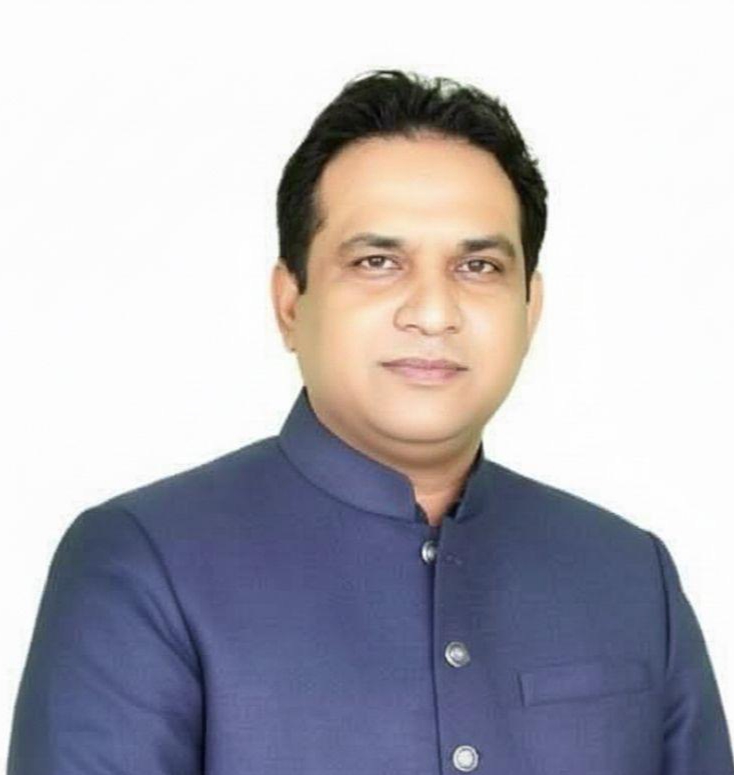
By: Rana Farooq Ashraf
Published By: ANI News Agency
Pakistan’s economic debate has increasingly focused on fiscal discipline, higher tax collection and the restoration of macroeconomic stability. While these objectives are important, a fundamental question remains: can an economy achieve sustainable growth when businesses face high taxes, rising costs and limited access to finance, while the government continues to absorb a substantial share of the country’s available savings?
Economic stability should not be measured solely through government revenue, banking-sector profitability or the ability to meet immediate financial obligations. Its real test lies in whether businesses can expand, employment opportunities can grow, investment can increase and ordinary citizens can experience an improvement in their living standards.
Pakistan’s taxation system places a considerable burden on the formal economy. When businesses face high taxes alongside expensive energy, financing and operational costs, their ability to invest and compete becomes increasingly constrained.
The problem is not taxation itself. Every functioning state requires revenue to finance public services, infrastructure, education, healthcare and security. The challenge is to develop a tax system that is broad-based, predictable, transparent and economically productive.
When the same registered businesses and salaried individuals repeatedly bear the burden of revenue collection, while significant economic activity remains outside the documented system, the result is an uneven distribution of responsibility. Compliant businesses face rising costs, and informal economic activity retains an unfair advantage.
Pakistan needs to widen its tax base rather than rely excessively on existing taxpayers. Better documentation, simplified tax procedures, effective enforcement and reduced opportunities for evasion can help distribute the burden more fairly.
One of Pakistan’s most serious economic challenges is the growing pressure of public borrowing on the financial system. When the government borrows heavily from commercial banks, financial institutions have strong incentives to allocate funds to government securities and other sovereign instruments. This can reduce the availability of credit for private businesses, particularly small and medium-sized enterprises that depend on bank financing to purchase machinery, expand production and create employment.
In a healthy economic cycle, household savings enter the banking system, banks lend to productive businesses, businesses expand and generate employment, and economic growth produces additional income and savings.
However, when government borrowing dominates the financial system, this cycle can weaken. Private enterprises may struggle to obtain affordable financing, investment can slow, and the economy can become increasingly dependent on government expenditure and further borrowing.
The concern is not that banks should never lend to the government. Government borrowing is a normal part of public finance. The real issue is whether the scale and cost of that borrowing leave sufficient financial resources available for productive private investment.
Pakistan must therefore examine the composition of public expenditure, the cost of debt servicing and the extent to which borrowed funds support long-term development rather than recurring consumption.
Banking-sector profitability and national economic prosperity are not necessarily the same thing. Banks may earn substantial profits from government securities and lending to the public sector, but those profits alone do not establish that the wider economy is performing well. If manufacturers cannot finance expansion, exporters face high production costs and entrepreneurs are unable to secure working capital, the economy’s productive capacity remains constrained.
The objective should not be to weaken the banking system. A stable and profitable banking sector is essential. Instead, financial policy must encourage a healthier balance between sovereign financing and lending to productive enterprises.
Regulatory improvements, stronger credit assessment, better access to finance for viable businesses and a more predictable economic environment can help redirect investment towards manufacturing, agriculture, exports, technology and other productive sectors.
Another important reform is the documentation of transactions across the economy. Large purchases and high-value services should be brought within an effective, transparent and practical reporting framework. This includes luxury goods, expensive wedding arrangements, high-value consumer purchases and other transactions that may otherwise remain inadequately documented.
The objective must be to establish a fair system in which economic activity can be recorded, tax obligations can be assessed lawfully and compliance can be verified without unnecessary harassment.
Documentation alone, however, is not a complete solution. Authorities must ensure that reporting requirements are proportionate, privacy is protected, legitimate transactions are not obstructed and the system is accessible to ordinary citizens and small businesses. A successful documentation regime should improve compliance while building public confidence in the tax system.
Pakistan needs a comprehensive reform programme that addresses the underlying causes of its economic difficulties. Public expenditure must be reviewed to identify waste, duplication and avoidable recurring costs. Borrowing should increasingly support productive investment, infrastructure and human development rather than simply financing persistent expenditure gaps.
Tax reform must broaden the base, reduce distortions and provide businesses with predictable rules. Consistent enforcement is essential to prevent politically connected or economically powerful groups from receiving preferential treatment.
Private investment must become a national priority. Businesses require affordable financing, reliable energy, policy continuity and efficient regulatory procedures. Without these conditions, higher tax collection will not automatically translate into higher production or exports.
Government borrowing and debt servicing require greater transparency. Citizens should be able to understand how public resources are collected, where borrowed funds are spent and what economic benefits are expected from major expenditure decisions.
Economic policy must ultimately be evaluated through outcomes that matter to society: employment, productivity, exports, investment, real incomes and poverty reduction.
Pakistan cannot build a durable recovery by concentrating exclusively on short-term fiscal targets. Stability is necessary, but stability without investment, production and employment offers only limited relief.
A sustainable economic model requires a functioning relationship between savings, banking, private investment and growth. Households must have opportunities to improve their living standards, entrepreneurs must be able to access capital, and businesses must have the confidence to invest in the future.
The government must recognise that tax collection is a means to economic development, not an end in itself. Revenue becomes meaningful when it supports better public services, stronger institutions, productive infrastructure and opportunities for citizens. Similarly, banking-sector strength becomes more valuable when it contributes to enterprise development and economic activity across the country.
Pakistan’s economic future depends on moving beyond a cycle of taxation, borrowing and short-term financial management. The country needs a system that rewards productivity, encourages investment, expands the documented economy and distributes the burden of national development fairly.
The real measure of economic success is not simply how much money the state collects or how much it borrows. It is whether the economy creates opportunities, strengthens domestic production and enables citizens to live with dignity and financial security. That is the difference between temporary economic stability and lasting national prosperity.