By Rana Farooq Ashraf Published By: ANI News Agency
Pakistan’s assumption of the Shanghai Cooperation Organisation’s presidency for 2026–27 is more than a diplomatic distinction. It gives Islamabad an opportunity to contribute to a major regional platform at a time when Eurasia is undergoing significant political, economic and strategic change. Pakistan joined the SCO as a full member in 2017, and almost a decade later, its one-year chairmanship presents an opportunity to translate diplomatic participation into practical cooperation.
The SCO was established in 2001 by China, Russia, Kazakhstan, Kyrgyzstan, Tajikistan and Uzbekistan. Initially focused on border security, terrorism, extremism and separatism, the organisation gradually expanded its agenda to include trade, investment, energy, transport, technology, education and cultural cooperation.
Pakistan first became an SCO observer in 2005 and joined as a full member in 2017, alongside India. The organisation has since expanded its geographical reach and now brings together major Asian powers and several Central Asian states. Its growing membership gives the SCO considerable political and economic weight, but also makes its institutional coordination increasingly complex.
To understand the SCO, therefore, one must look beyond its annual summit and examine its institutional structure.
The Council of Heads of State is the organisation’s highest political body. It determines the broad direction of the SCO and takes major political decisions. The Council of Heads of Government focuses more closely on economic, financial and practical cooperation.
Alongside these two councils, the SCO operates through regular meetings of foreign, defence, interior, trade, energy, transport, education and other ministers. National coordinators maintain communication among member states and help coordinate the organisation’s continuing activities.
The SCO also has two permanent bodies. The Secretariat, based in Beijing, provides administrative and organisational support, while the Regional Anti-Terrorist Structure, based in Tashkent, coordinates cooperation against terrorism, separatism and extremism.
This institutional continuity prevents the SCO from becoming merely an annual gathering of leaders. Yet it also raises an important question: how effectively can decisions reached at political summits be translated into practical programmes?
That is perhaps the central test of Pakistan’s chairmanship.
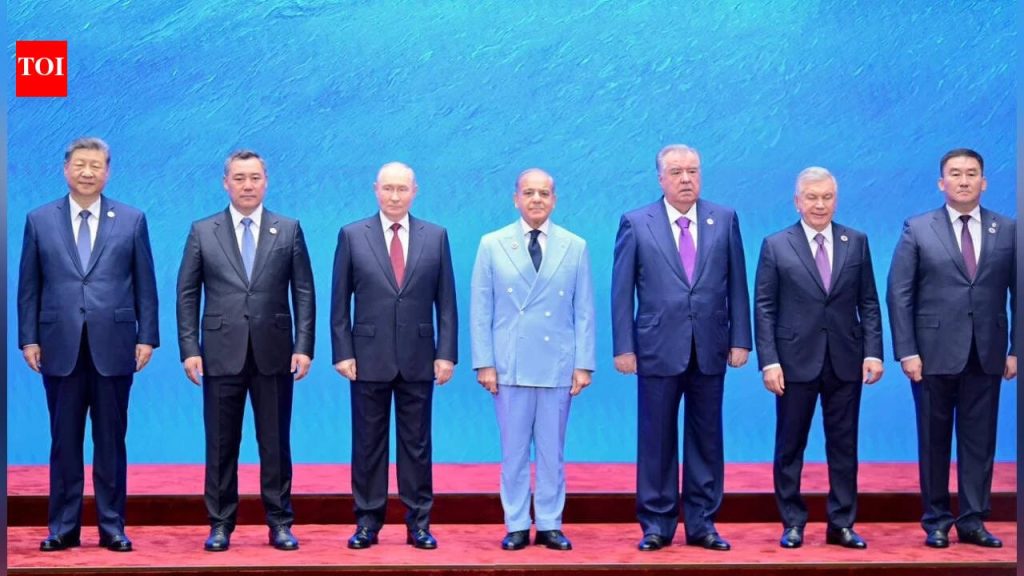
Prime Minister Shehbaz Sharif, in his address at the SCO summit, emphasised regional connectivity, energy cooperation, artificial intelligence, technology, poverty reduction and disaster management. Pakistan’s theme for its chairmanship — “Turning Vision into Action: Connectivity, Innovation and Shared Prosperity” — reflects a similar emphasis on practical cooperation.
Connectivity should be one of Pakistan’s most important priorities.
Pakistan’s geographical position gives it potential importance as a link between Central Asia and the Arabian Sea. Karachi and Gwadar can offer Central Asian economies possible routes to international markets. But geography alone cannot create connectivity. Roads, railways, customs systems, border procedures, investment and policy continuity are equally important.
Energy is another area where the SCO can potentially play a stronger institutional role. Central Asia possesses significant energy resources, while South Asia faces growing energy demand. Greater institutional cooperation in energy security, infrastructure and regional connectivity could benefit several member states.
Water security also deserves attention. Prime Minister Shehbaz Sharif stressed that water should not be weaponised or used as an instrument of political coercion. The water dispute between Pakistan and India remains primarily bilateral, but issues such as climate change, water scarcity and disaster management increasingly have regional implications. The SCO may not be a forum for resolving bilateral disputes, but it can provide space for dialogue on broader regional challenges.
At the same time, Pakistan should remain realistic about what the SCO can achieve. It is neither the European Union nor a collective defence alliance. Its strength lies in political dialogue, consensus-building and cooperation among states with very different interests.
Pakistan’s chairmanship should therefore focus less on ambitious declarations and more on strengthening existing institutional mechanisms, improving follow-up on decisions and promoting projects that can survive beyond its one-year presidency.
The 2027 SCO summit in Islamabad will be an important opportunity to demonstrate whether this approach has produced tangible results.
The success of Pakistan’s chairmanship should not be measured simply by the number of leaders attending the summit or the length of the final declaration. A more meaningful measure would be the number of practical initiatives launched, institutional mechanisms strengthened and areas of cooperation advanced during the year.
Ultimately, the SCO’s relevance will depend not on the size of its summits but on the effectiveness of its institutions, the continuity of its cooperation and its ability to turn political commitments into results.
Pakistan has one year.
The opportunity is not simply to preside over the SCO, but to contribute to making it a more effective and practical institution for regional cooperation.