

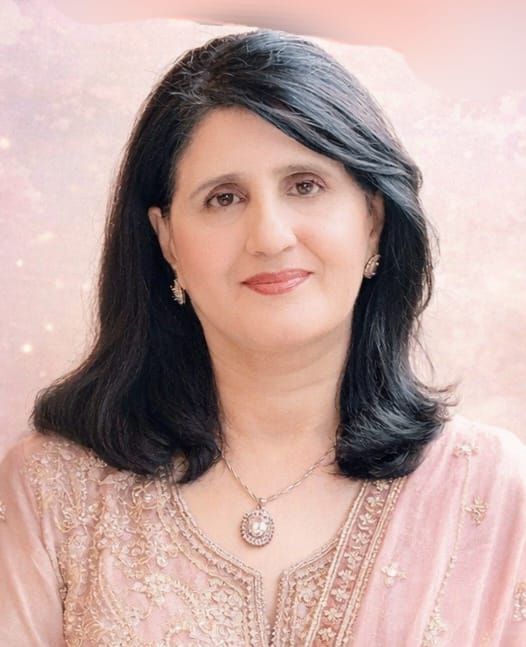
Written By :Sobia Aqeel
Published By:ANI News Agency
A Call to Action for Women Entrepreneurship to Rebuild Pakistan’s Flood-Hit Economy
“Embrace the strong women in your family; one day, their strength will be the foundation of yours.”
The devastating floods in Pakistan have once again shown how vulnerable our rural economy is. Crops are gone, livestock lost, and huge no of families have fallen further into poverty. Still, this crisis brings a key opportunity. By putting women-led entrepreneurship at the heart of rebuilding, we can create a recovery that is stronger, more inclusive, and better than before.
Annual Floods are a wake-up call for Pakistan: The floods in Pakistan have inflicted devastating damage, particularly in rural areas, deepening an already fragile economy. From late June through September, unprecedented monsoon rains submerged vast stretches of Punjab, Sindh, Khyber Pakhtunkhwa, and Baluchistan. Every year, thousands of people displaced and affected across the nation. The disaster has claimed at high death toll, destroyed thousands of villages and wiped-out critical crops.
In Punjab alone, Pakistan’s agricultural heartland, there are huge losses of crops, especially of rice, cotton & sugarcane including the deaths of thousands of livestock. Agriculture contributes about 24% of GDP and these losses are serious to hit the GDP. Food security severely threatened with billions of economic losses. This situation drastically dropped the GDP. Analysts warn of worsening inflation from food shortages, and a widened trade deficit projected to be $1.9 billion in FY26. This crisis shows how important it is to focus on women-led entrepreneurship as a key part of recovery. When women are fully involved, Pakistan can turn its recovery into lasting and fair economic growth. In this situation, women’s entrepreneurship stands out as a powerful way to revive the economy.
Women make up almost half of Pakistan’s population but only 22% of the workforce, with even fewer in rural areas because of limited mobility, cultural barriers, and lack of access to finance and markets. After disasters, helping women become entrepreneurs can create new jobs, boost family incomes, and make communities stronger. The 2022 floods showed this works: grants for women helped rebuild homes faster. Increasing women’s role in the economy after the floods is not only important for development, but also a constitutional right and in line with Islamic values of justice and fairness. Supporting women in business can help reduce poverty, prepare for future challenges, and build a stronger, fairer Pakistan. At the heart of this renewal are Pakistan’s women. Strong, resourceful, and deeply rooted in their communities, women represent untapped forces for recovery. By investing in women-led entrepreneurship, Pakistan can turn disaster into a catalyst for a brighter, more sustainable economic future.
Women’s entrepreneurship matters because women do more than support their households, they drive progress. The success of empowered women benefits their families, communities, and the whole economy. Women usually save for the future, and if we help them invest those savings in their own businesses, it can change things for everyone. Women often spend a major portion of their income locally, which helps village economies. Research shows women put up to 90% of their income back into their families, improving nutrition, health, and education. This is key to reducing poverty. This move should be beyond agriculture, in services, small-scale manufacturing, cottage industry, and digital trade to reduce vulnerability to future shocks and have diversified skills that are important to boost the rural economy. Women’s networks build cooperation, enabling collective businesses like cooperatives that thrive even in crises. Simply empowering women strengthens families, and strong families strengthen nations.
A Methodology for Sustainable Recovery can apply in phases to keep it workable at every phase as follows; rebuilding requires more than charity. It demands strategy. A four-phase methodology can systematically unleash women’s potential:
Phase 1: Assessment and Capacity Building (Months 1-3): Map skills in flood-hit areas to establish Women Enterprise Hubs for training, collaboration, and support.
Phase 2: Skill Enhancement and Enterprise Development (Months 4-9): Train women in climate smart agriculture, food processing, livestock care, digital literacy, and craft production.
Phase 3: Access to Finance and Markets (Ongoing): Facilitate microfinance, grants, and impact investments to support rural women-owned enterprises through venture funding and CSR initiatives with the help of welfare organizations, Akhuwat, Kashf, and others like them. Highlight rural products in city outlets, exhibitions, and online platforms. Connect women to e-commerce platforms, urban retailers, and branding support.
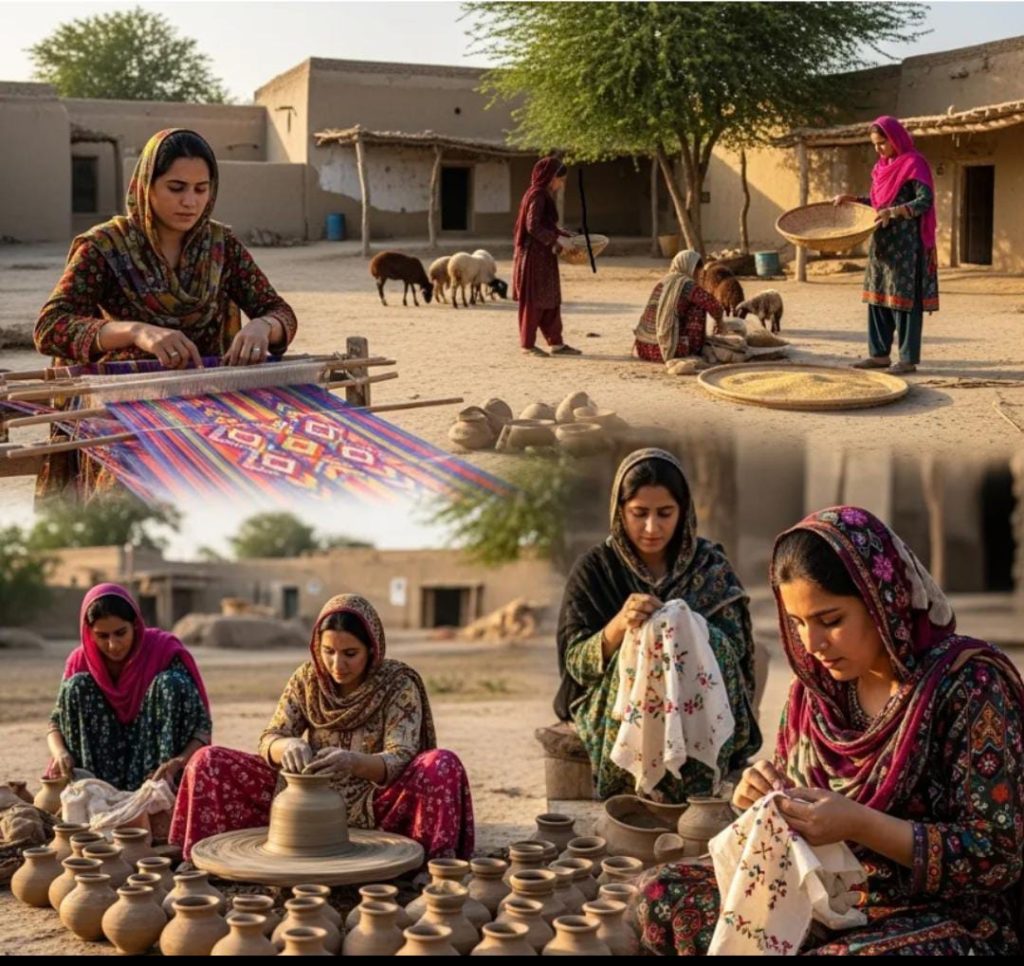
Phase 4: Mentorship and Scaling: Pair rural women with mentors from urban business communities. Urban Women as Bridges of Change. Scale successful pilots into regional and national programs. Share expertise in finance, marketing, and technology.
The “Sister Enterprise” Model: Urban women-led businesses and professional associations can “adopt” a rural women’s cooperative. They can provide pro-bono expertise in areas like branding, digital marketing, website development, financial management, and export regulations. For example, a Karachi-based marketing firm can help or partner with a Sindhi embroidery cooperative to build an Instagram store and craft its brand story. Urban women and institutions have a vital role in connecting rural talent to national markets. When urban and rural women collaborate, they form a powerful bridge, one that carries ideas, markets, and opportunities in both directions.
From Survival to Prosperity: This is not merely about recovery from floods. It is about reimagining Pakistan’s economy by placing women entrepreneurs, particularly in rural areas, at the core of resilience, inclusion, and justice. Supporting women-led enterprises strengthens the backbone of society and lays a foundation for future generations. From Fatima Jinnah to Arfa Karim, thousands of other unsung heroines in villages and towns, Pakistani women have always carried the strength of the nation on their shoulders. Today, that strength must embraced, not feared.
A Call to Action: With a proven model of the flagship program, “She Leads, She Inspires,” implemented in Faisalabad with the collaboration of local chamber of commerce after 2022 flood that offered a scalable blueprint for inclusive and sustainable recovery, its success shows we do not need to start from scratch. Chambers of Commerce, NGOs, and government agencies like BISP should partner with such projects to replicate this incubation model in every flood-affected district. There is also a call for policy advocacy for tax incentives, simplified registrations, and special quotas for women-led businesses in public procurements. By doing so, we can ensure that women, particularly those from the most vulnerable communities are not being leave behind but become architects of a stronger, more diversified, and equitable economic future.
Conclusion: Pakistan’s floods have taken much, but they have not taken away our resilience. If we choose to harness the strength of women through entrepreneurship, education, mentorship, and cooperation, we can rebuild not only homes and livelihoods, but trust, dignity, and hope. This is more than recovery. This is a renewal. And at the heart of this renewal will stand the women of Pakistan not as victims of disaster, but as pillars of a prosperous and just nation.


An excellent article
Best elaborated the role of women entrepreneurs to the revival of economy but would we will be able to change the social norms?
Insightful
Women like you, should address the scenario for implementation of suggestions.