

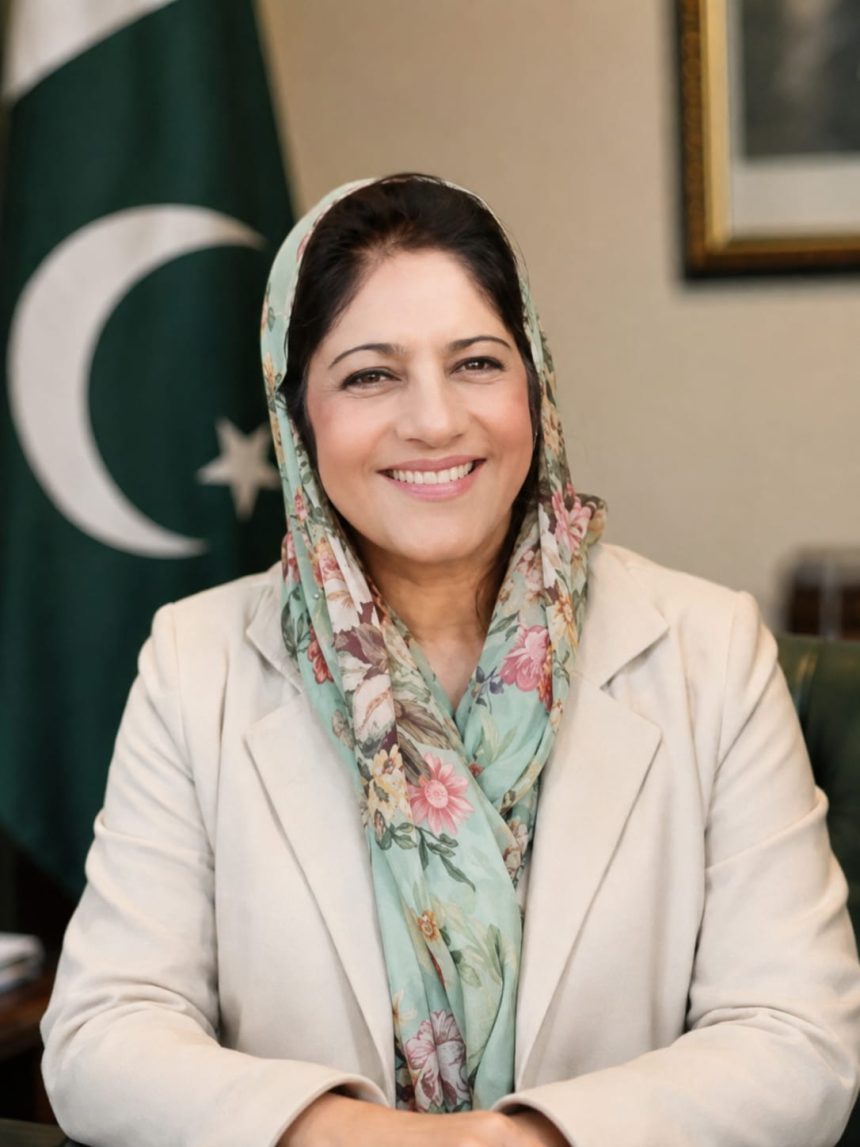
Jiya Pakistan
Written By: Sumblina Hassan
Former Secretary to Shaheed Mohtarma Benazir Bhutto
In-Charge, Office 10 UK
RCC Bilawal House
Published By:ANI News Agency
We must remember Quaid-e-Azam Muhammad Ali Jinnah, who, with the support of his sister, Mohtarma Fatima Jinnah, led the struggle that ultimately presented the people of the subcontinent with an independent homeland. He guided the nation with the principles of Unity, Faith and Discipline, rooted in democratic values, the rule of law, and a system of governance that guarantees religious freedom for all citizens.
His political struggle successfully led the movement that enabled the Muslims of the subcontinent to achieve a sovereign homeland where they could aspire to live with dignity, peace and harmony. The Partition of British India resulted in one of the largest mass migrations in modern history, with millions of people displaced and hundreds of thousands losing their lives amid widespread communal violence.
We must never forget the sacrifices made by our people during this painful separation. The independence of Pakistan came at a tremendous human cost, and the memories of those who suffered must remain part of our national consciousness.
History also reminds us of rulers such as Emperor Akbar (1556–1605), who is often remembered for policies aimed at promoting coexistence and reducing tensions between different religious communities. His attempts to encourage interfaith understanding provide historical lessons about the importance of tolerance and peaceful coexistence.
Muhammad Ali Jinnah was a revolutionary leader, as was Shaheed Zulfikar Ali Bhutto. Both leaders left an enduring mark on Pakistan’s political history and made immense sacrifices for the principles of democracy, sovereignty and public representation.
Today, Bilawal Bhutto Zardari also demonstrates qualities that are essential to modern political leadership, including a commitment to diplomacy, analytical thinking, attention to detail, negotiation skills, stamina, courage, loyalty and political vision.
He has demonstrated himself to be a determined and effective negotiator. We must support constructive political dialogue and policies that bring stakeholders back to the table, creating opportunities for hope rather than allowing society to remain trapped in pain, division and uncertainty.
Pakistan belongs to its people. Every citizen has a stake in the country’s government, politics, resources, land and development. The state also has a responsibility to establish social norms and institutions that build trust between citizens and government officials while ensuring access to affordable healthcare, quality education and a reasonable standard of living.
This should not be viewed as a power struggle between stakeholders and the government. Rather, it is a national challenge compounded by a growing crisis of affordability.
Pakistan faces a widening economic divide and significant gaps in opportunity across different sections of society. We cannot afford the erosion of public trust in our institutions. A critical and honest examination of our problems is essential; only through such an examination can these problems be properly addressed and rectified.
Income inequality, the undervaluation of citizens and barriers faced by women, children and the elderly undermine the principles of equality and justice. Obstacles to merit in universities and workplaces, discrimination based on class or gender, and other forms of exclusion prevent society from achieving genuine fairness.
Such barriers are fundamentally anti democratic. A functioning democracy cannot exist where a handful of wealthy individuals possess enough influence to buy political power or manipulate democratic institutions. Nor can we allow politicians to use personal wealth and influence to pollute and distort our political system.
The life and teachings of Prophet Muhammad (Peace Be Upon Him) also provide enduring lessons about justice, equality, accountability and the responsibility of leadership. His governance emphasized the dignity of individuals, fairness before the law and the protection of the rights of different communities.
It is the government’s responsibility to establish a political system that is transparent and accountable. Institutions must be empowered to address the basic social needs of citizens. Young people must have meaningful platforms through which they can voice their concerns. Women subjected to violence, including acid attacks, children who go missing, and citizens denied opportunities because of privilege rather than merit must have access to effective institutions and justice.
Legal assistance and support should be available to those who cannot afford to defend their rights. Public institutions must have the authority and resources to register complaints, monitor cases and provide oversight of the difficulties faced by ordinary citizens.
Ultimately, people are our greatest investment.
The value of a nation is reflected in the value it places on its citizens, and the value of its citizens is deeply connected to the quality of its leadership.
Pakistan cannot afford autocracy or any system in which power is not derived from the people. Nor can we accept unlimited, unlawful or unchecked authority exercised through coercion, influence or force.
Our independence must mean more than the freedom of a territory. It must mean freedom from injustice, freedom from discrimination, freedom from poverty and freedom from fear.
On this Independence Day, we must renew our commitment to the vision of Quaid-e-Azam Muhammad Ali Jinnah: a Pakistan founded on unity, democracy, constitutional rule, equality and justice.
Let us build a Pakistan where every citizen has dignity, every child has opportunity, every woman has security, every young person has a voice, and every individual can believe in the promise of a better future.
Jiya Pakistan!
Pakistan Zindabad!



Assalamu Alaikum Ma’am, we truly appreciate your feelings and can feel the pain in your words. Your dedication and efforts for Pakistan and Azad Kashmir are truly commendable. Thank you so much, Ma’am, and thank you, Financial Times. ❤️🇵🇰