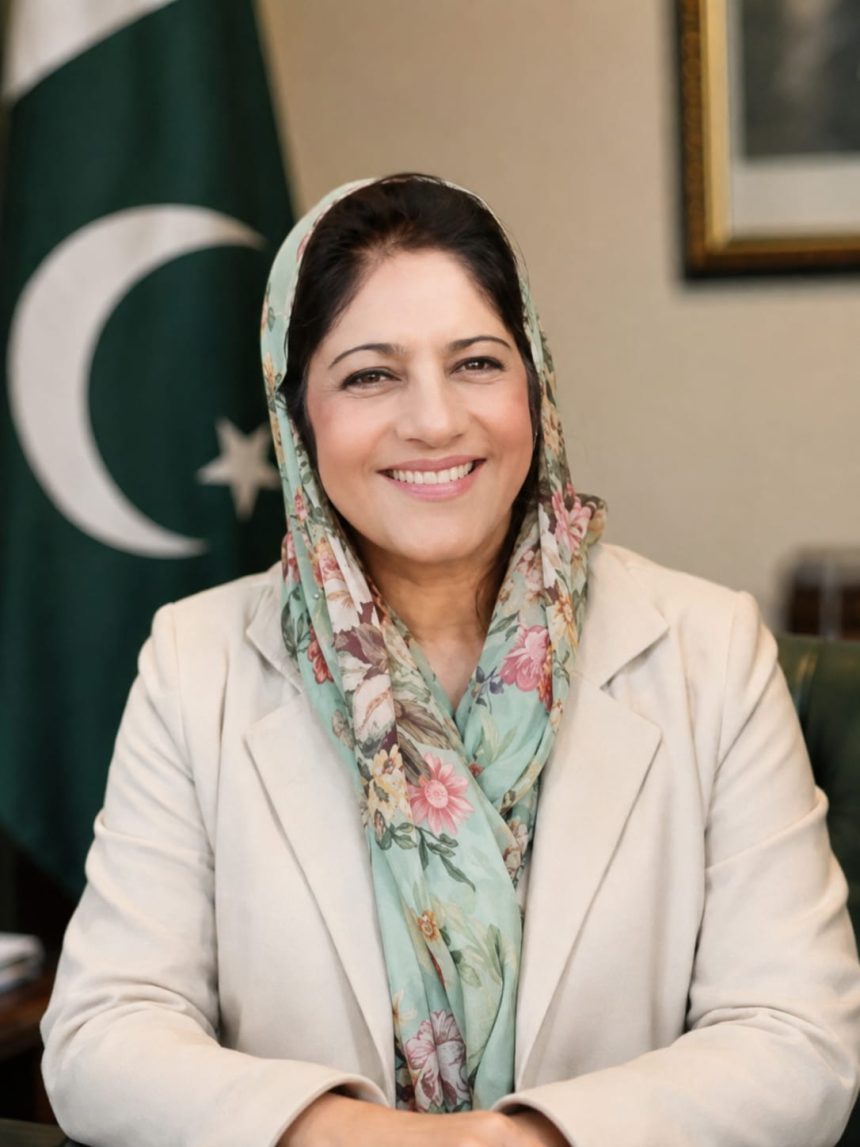
Written By: Sumblina Hassan
Former Secretary to Shaheed Mohtarma Benazir Bhutto
In-Charge, UK Office 10, RCC Bilawal House
Published By:ANI News Agency
Pakistan is passing through a period of considerable political, economic and social challenges. Political differences remain intense, the economy continues to demand difficult decisions, security concerns require sustained attention, and climate-related emergencies are placing additional pressure on communities across the country. At such a moment, Pakistan needs to look beyond conventional political debates and recognize one of its greatest national assets: the millions of Pakistanis living across the world.
Talent, wherever it is in the world, must not and should not go unnoticed. Pakistanis living overseas have acquired knowledge, experience and expertise across almost every field of modern life. They are working in medicine, education, technology, finance, engineering, business, public administration, research and international relations. This human capital represents an enormous opportunity for Pakistan.
Overseas Pakistanis are not simply a source of foreign exchange. They are an important part of Pakistan’s national community. They contribute to the economy through remittances, invest in businesses and property, support their families, promote Pakistan internationally and maintain strong connections with their homeland. Many have also acquired valuable experience in democratic governance, technology, education, healthcare, finance and entrepreneurship.
The relationship between Pakistan and its overseas citizens should therefore move beyond financial transfers. The next stage should be about partnership, knowledge and national development.
Pakistan is also a nation enriched with profound culture, art, music and poetry. Its cultural heritage reflects centuries of history and civilizational development. From the legacy of Mughal culture and architecture to the diverse traditions of all four provinces, Pakistan possesses a cultural identity that deserves greater recognition both nationally and internationally.
Our heritage is not simply part of our past; it is an important component of our future.
Pakistan is equally blessed with extraordinary natural beauty. Allah Ta’ala has blessed this country with vast and diverse landscapes, including some of the world’s most spectacular mountain ranges. A country that encompasses snow-covered peaks, valleys, forests, rivers and deserts possesses a remarkable geographical diversity.
From the majestic mountains of the north to the deserts and coastal landscapes of the south, Pakistan has a wealth of natural beauty that remains insufficiently explored and internationally recognized.
Tourism, therefore, has the potential to become a major contributor to Pakistan’s economy if developed responsibly and sustainably. With proper infrastructure, international marketing, environmental protection, security and facilities for visitors, Pakistan could attract tourists interested in adventure, heritage, culture, history, nature and mountaineering.
The potential is enormous, but development must always respect the rights and interests of local communities. Land and natural resources must be protected through lawful and transparent mechanisms so that local people remain the rightful beneficiaries of economic development. No individual or group, whether external or internal, should be permitted to exploit public or community resources outside the law.
Responsible tourism should create employment and opportunities for local communities rather than displacing them. The people who live in these regions must have a meaningful stake in their development and prosperity.
This is where the knowledge and expertise of Pakistani communities abroad can make a substantial difference.
Overseas Pakistanis can help introduce international tourism practices, investment models, hospitality standards, digital marketing strategies and sustainable development approaches. They can also help connect Pakistani tourism businesses with international markets and investors.
The same principle applies to education and technology.
Young Pakistanis need access to the skills required by a rapidly changing global economy. Professionals living abroad can mentor students, support startups, establish academic partnerships and provide international exposure. Pakistani universities, businesses and institutions should be encouraged to develop structured networks with professionals in the diaspora.
Women can also play a particularly important role in this process. Pakistani women living abroad have demonstrated their capabilities in business, professional careers, academia, public service and community leadership. Their experience can help inspire and support women in Pakistan who want to participate more actively in the economy and society.
Political stability is equally important. Pakistan cannot achieve sustainable economic development in an environment of permanent political confrontation. Democracy requires disagreement, but it also requires dialogue, tolerance and respect for constitutional institutions.
Political parties have the right to compete and present different visions for the country. However, national interests must remain above partisan differences. Political dialogue should be seen not as weakness but as a strength of a mature democratic system.
Pakistan also needs a stronger institutional mechanism for engaging its overseas citizens.
The government should consider establishing a dedicated and empowered institution specifically designed to coordinate the knowledge, expertise, investment and professional capabilities of overseas Pakistanis. Such an institution should not merely function as a bureaucratic office. It should serve as a bridge between Pakistan and its global Pakistani community.
It could maintain professional databases, facilitate investment, connect experts with Pakistani institutions, promote tourism and cultural diplomacy, encourage educational cooperation and help overseas entrepreneurs navigate legitimate investment procedures.
Such a platform could significantly improve Pakistan’s ability to benefit from its global human capital while also strengthening the country’s international relations and engagement.
The participation of overseas Pakistanis can help Pakistan’s economy grow by encouraging investment, supporting entrepreneurship, expanding exports and transferring knowledge and technology. With proper planning and institutional support, this contribution could produce benefits far beyond the value of remittances alone.
Pakistan can move forward by leaps and bounds if it encourages its overseas citizens to join hands with those at home for the betterment and advancement of the country’s future.
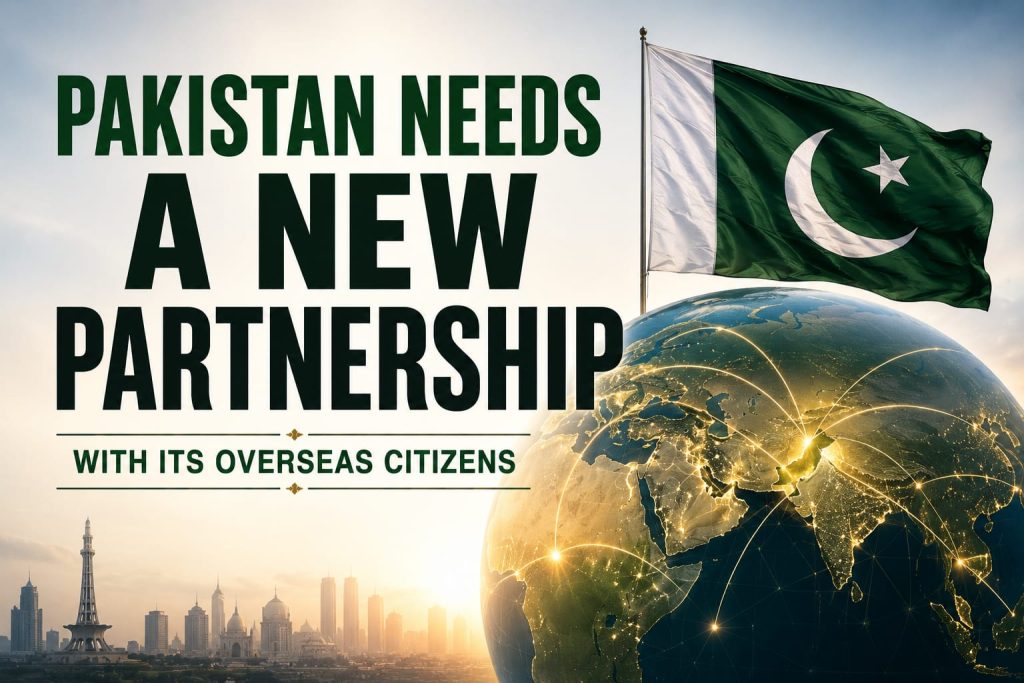
But this partnership must be based on trust, transparency and the rule of law.
Pakistanis living abroad should be given confidence that their legitimate investments and contributions will be protected, while local communities must also be assured that development will not come at the cost of their rights or resources.
The future requires cooperation between the government, private sector, civil society, local communities and Pakistanis across the world.
Pakistan’s greatest strength is ultimately its people. Its talented youth, rich cultural heritage, extraordinary landscapes and global Pakistani community provide the country with resources that many nations would consider invaluable.
The challenge is to organize these strengths into a coherent national strategy.
If talent wherever it exists is recognized, if culture and heritage are promoted, if tourism is developed responsibly, if natural resources are protected under the law, and if overseas Pakistanis are given meaningful opportunities to contribute their knowledge and expertise, Pakistan can unlock a new chapter of sustainable development.
The Pakistan of tomorrow should not be built by one institution, one political party or one generation. It must be built collectively—by citizens at home and abroad.
Our overseas community is not separate from Pakistan’s story. It is part of that story.
With the right vision, stronger institutions and a genuine spirit of cooperation, the knowledge, talent, investment and goodwill of Pakistanis around the world can become a powerful force for economic growth, international engagement and harmonious national development.
Pakistan has the people, the culture, the natural beauty and the resources.
What it needs now is the vision and institutional framework to bring these strengths together.