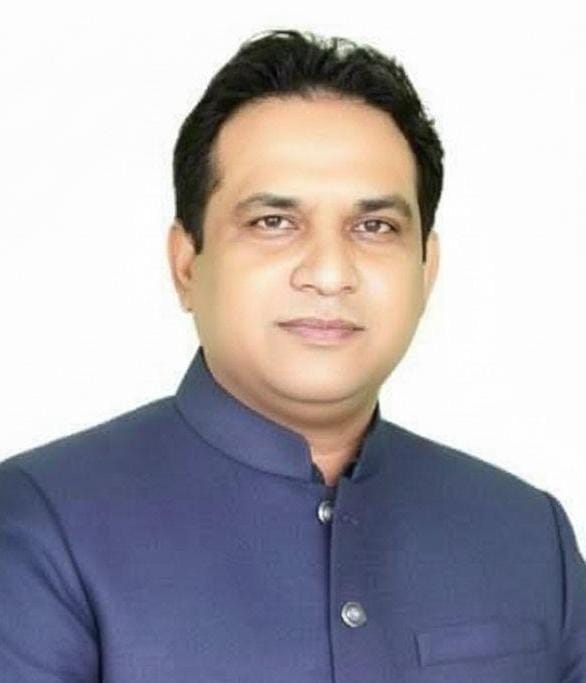
Written by Rana Farooq Ashraf : Published by ANI
Pakistan’s politics once again appears to be standing at a critical crossroads, where constitutional amendments, proposals for new administrative units, provincial autonomy, political alignments, and the issue of Imran Khan’s transfer from prison to a hospital have emerged simultaneously in the national debate. The real question is not simply whether new provinces should be created. The fundamental question is whether such administrative reforms will be pursued through the Constitution, Parliament and democratic consensus—or through political expediency and shortcuts.
In recent weeks, the debate over new provinces and administrative units has gained considerable momentum. Different political circles have raised the need for new administrative structures, while the Pakistan Peoples Party has made its position relatively clear: it is not opposed to the creation of new provinces in principle, but any such decision must strictly follow the constitutional and legal procedure.
The significance of the 18th Constitutional Amendment cannot be ignored in this debate. Passed in 2010, the 18th Amendment was a historic milestone in strengthening provincial autonomy and reshaping Pakistan’s federal structure. The Pakistan Peoples Party has consistently regarded the amendment as an important part of its constitutional and political legacy. Therefore, any attempt through a new constitutional amendment to undermine provincial powers, financial autonomy or the existing federal balance would naturally raise serious political and constitutional questions for the PPP.
There is nothing inherently unconstitutional about demanding new provinces. Around the world, administrative boundaries have been changed to improve governance, bring government services closer to citizens and make administration more effective. If people in any region of Pakistan demand a new province, their demand deserves to be heard. However, such a decision cannot be imposed through closed-door political arrangements. It must emerge through elected assemblies, constitutional procedures, parliamentary debate and public consensus.
The constitutional procedure in this regard is particularly important. Any alteration in the boundaries of a province requires the approval of the concerned provincial assembly by a two-thirds majority before the parliamentary process can proceed. Therefore, the idea that a province could be divided without the consent of its elected assembly would be fundamentally inconsistent with the spirit of the Constitution.
At the same time, the issue of Imran Khan’s transfer from prison to hospital has become another major subject of national politics. Following judicial directions concerning his treatment and family meetings, speculation has intensified regarding his political future, his possible role in future political developments and the possibility of new political contacts.
This has inevitably produced a question that is increasingly being discussed in political circles: Are the debate over new provinces and Imran Khan’s transfer to hospital merely a coincidence?
At this stage, no responsible observer can present speculation as established fact. It would be premature to draw a definitive connection between the two developments. Yet the fact that these issues have emerged simultaneously has undoubtedly created political questions and suspicions. In such an environment, political parties should rely on clear constitutional positions rather than political rumours and speculation.
The PPP’s position is significant because it has not rejected the idea of new provinces outright. Instead, it has emphasized that the constitutional route must be followed. If a provincial assembly, through the required two-thirds majority, approves a proposal for a new province, the constitutional process can then move forward. This is the democratic way, and it is also the way to strengthen the federation rather than weaken it.
On the other hand, if any political party—particularly one that claims to be the dominant political force in Punjab—becomes part of a plan to divide the province without adequate constitutional and public support, it will have to consider the consequences for its own political future. Similarly, if Imran Khan or the Pakistan Tehreek-e-Insaf supports a constitutional amendment that contradicts its previous political narrative, the question will not merely be about parliamentary numbers. It will also be about political credibility, principles and moral consistency.
President Asif Ali Zardari has repeatedly emphasized the importance of improving governance rather than merely experimenting with administrative structures. That question remains relevant today: will Pakistan’s governance improve simply by drawing new lines on the map, or by making existing institutions work more effectively within their constitutional responsibilities?
The reality is that good governance does not automatically emerge from the creation of new provinces. It depends on institutional performance, a clear division of responsibilities, empowered local governments, accountability, effective service delivery and respect for constitutional boundaries.
Pakistan today needs constitutional continuity, political consensus and institutional stability more than political experiments. If new provinces are genuinely required by the people, the Constitution provides a route. Provincial assemblies exist, Parliament exists and the democratic process exists. The solution should therefore be found within that constitutional framework.
But if the issue of new provinces becomes a tool for political engineering, short-term political interests or weakening a particular political party, the creation of new administrative units could produce another form of political division instead of solving the problems of governance.
Time will ultimately determine who stood by principles and who chose political expediency. The proposed 28th Amendment may take shape, its contents may change, or political parties may eventually reach a new understanding. But the real test is not merely whether an amendment is passed. The real test is whether the Constitution, Parliament, provincial autonomy and the democratic right of the people remain at the centre of the entire process.
Pakistan is passing through a sensitive political period. The coming days may reveal the true positions of political parties, the limits of their political narratives and the extent to which they are willing to defend constitutional principles when political circumstances become difficult.
History may ultimately show that the most important political battle was not over how many provinces Pakistan should have, but over whether constitutional democracy and federalism were protected while those decisions were being made.