By: Ms Hurish Shah : Published by ANI*
Bahauddin Zakariya University (BZU), Multan, is one of the most important public-sector universities in South Punjab, with thousands of students depending on it for their education and future. Hundreds of teachers, researchers and employees have also devoted years of their lives to serving the institution. Therefore, when teachers and employees repeatedly raise complaints and concerns about the administration, the matter cannot simply be dismissed as routine university politics.
The latest situation raises several important questions about the administrative direction and decision-making at BZU.
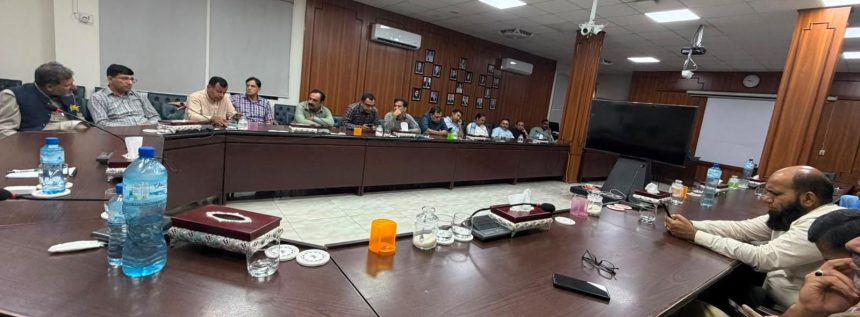
Two representative teachers’ organizations, the University Teachers Forum (UTF) and the Bahauddin Zakariya University Teachers Association (BZUTA), reportedly came together over concerns regarding certain matters connected with the forthcoming Syndicate agenda. The Syndicate is one of the university’s important statutory and decision-making bodies, making transparency and consultation in its affairs particularly important.
According to the teachers, they sought a meeting with the Vice Chancellor to present their concerns. They were reportedly asked by university staff to sit in the committee room and were told that the Vice Chancellor would come there.
However, what allegedly happened afterward made the situation more sensitive. According to the teachers, they were informed that the Vice Chancellor was present at Crush Hall and was allegedly making inappropriate or derogatory remarks about the protesting faculty.
This allegation requires independent verification, and the Vice Chancellor must also be given a full opportunity to present his version. However, if senior faculty members feel that their legitimate concerns are being met with insulting remarks instead of dialogue, it could indicate a crisis of confidence within the university.
A Vice Chancellor is not merely the administrative head of a university. He is also expected to serve as an academic leader who protects the dignity and rights of all members of the institution. Whether teachers’ demands are right or wrong, they deserve to be heard and treated with respect. True leadership is tested when disagreements arise.
The controversy surrounding the office of the Registrar also adds significance to the situation. BZU’s current information identifies Mr. Ejaz Ahmad as Registrar. However, media reports have previously raised questions regarding the continuation of his appointment as Acting or Additional-Charge Registrar.
Daily Financial Times also highlighted the matter in its June 2026 article titled “The Supreme Court Spoke. Did BZU Listen? Paragraph 39(c), the Six-Month Rule, the Rule of Law, and the Continuing Controversy Over the Acting Registrar at BZU, Multan.”
The issue is therefore not merely a disagreement between individuals. It also concerns institutional legality, transparency, continuity and respect for rules and regulations.
Questions are also being raised about the Vice Chancellor’s administrative leadership style. Administrative experience alone is not sufficient to successfully manage a large public-sector university. An institution like BZU requires consultation with teachers, sensitivity toward employees, respect for statutory bodies, understanding of university traditions and, above all, the ability to build confidence among all stakeholders.
Another administrative decision on August 3, 2026, further added to these concerns. The Vice Chancellor transferred Muhammad Iqbal, who was serving as Additional Controller of Examinations at BZU, Multan, and appointed him as Additional Treasurer. According to reports, the decision triggered serious concerns and protests within various sections of the university community.
Teachers and officers reportedly joined the protests, while demonstrations and strikes continued. During the dispute, the son of former Prime Minister Syed Yousuf Raza Gilani was also reportedly involved in an effort to help resolve the matter, after which the dispute was said to have been settled.
However, only seven days later, on August 10, 2026, the Vice Chancellor withdrew the transfer order, stating that it was being done “in the best interest of the university.”
The withdrawal of an important administrative order within just a few days naturally raises questions about the decision-making process. If there was a sufficient administrative justification for the transfer on August 3, what circumstances changed so significantly by August 10 that the order had to be withdrawn?
Repeated changes in important administrative decisions can create uncertainty within an institution and may affect the confidence of employees and other stakeholders.
This matter should also not be viewed in isolation. On August 4, 2026, the same newspaper had already reported employees’ concerns regarding delayed promotions and alleged administrative negligence under the headline “BZU Employees Protest Delay in Promotions, Allege Administrative Negligence.” According to reports, employees continued their protest for three days.
When employees protest over delays in promotions, teachers raise concerns over Syndicate matters and important administrative orders are issued and then withdrawn within days, it becomes difficult to treat every controversy as an unrelated event.
Instead, the university administration should seriously examine whether there is a wider problem with consultation, communication and decision-making within the institution.
The relevant authorities responsible for university oversight and administration in Punjab should also examine whether the current administrative arrangement is providing the stability, transparency and institutional harmony expected from one of the largest public-sector universities in South Punjab.
The question is not simply whether an office-holder met the formal criteria at the time of appointment. The more important question is whether the institution is being governed effectively after that appointment.
Bahauddin Zakariya University does not belong to one Vice Chancellor, one Registrar, one teachers’ organization or one employees’ union. It belongs to its students, faculty, employees and ultimately to the people of Pakistan.
Therefore, the Vice Chancellor and Registrar should respond to legitimate questions through documents, rules, transparency and dialogue—not through anger, confrontation or silence. At the same time, teachers and employees should continue to pursue their concerns through lawful and institutional forums.
When professors are compelled to leave their classrooms to protest and employees repeatedly raise their voices against the administration, responsible leadership should not ask:
“How can we silence them?”
It should ask a much more important question:
“What has gone wrong with our governance that so many people no longer feel heard?”
Until Bahauddin Zakariya University seriously seeks an answer to this question, the problem will not remain merely administrative. It risks becoming a deeper crisis of confidence, credibility, transparency and institutional trust.