Written by: Rana Farooq Ashraf : Published by ANI News Agency
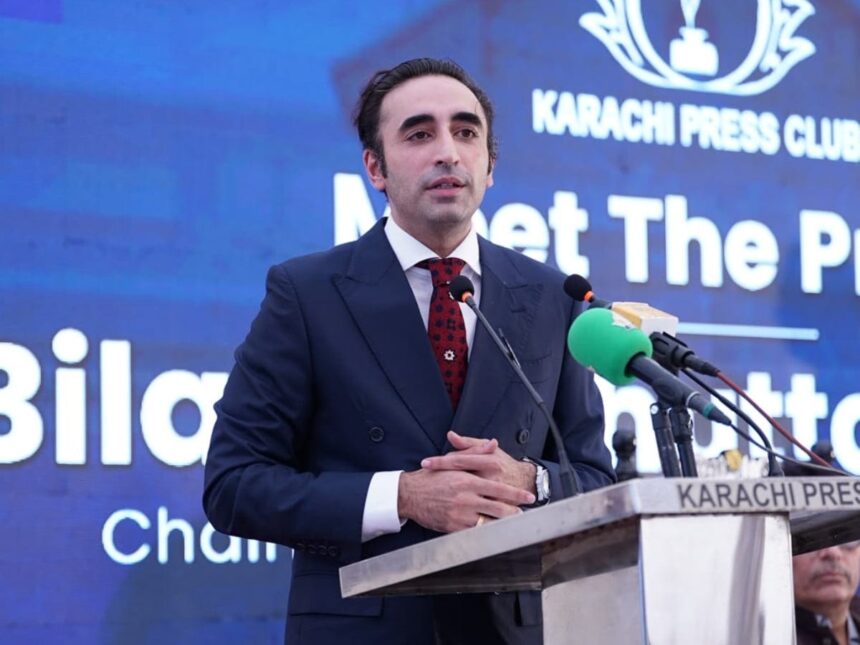
Sometimes, a single statement is powerful enough to expose the realities of an entire political system. In his recent speech, Pakistan Peoples Party Chairman Bilawal Bhutto Zardari demonstrated remarkable courage and political clarity by raising questions about the country's political and institutional environment. His remarks were not merely a political statement; they reflected a deeper concern about the direction of democracy, accountability and the rule of law in Pakistan.
Bilawal Bhutto's observation that the easiest way to get away with corruption in Pakistan is to remain on the "right side" of the state carries a profound political message. He argued that those who enjoy the support of powerful circles can often escape accountability, regardless of the seriousness of their actions. However, those who stand on the opposite side may find even their positive contributions and achievements being questioned.
This statement touches upon a longstanding concern in Pakistan's political landscape: whether accountability is applied equally to everyone or whether political affiliations and proximity to power influence the process.
His recent remarks have received considerable appreciation among civil society, intellectual circles, educated sections of society and, particularly, the younger generation. Many people have welcomed his willingness to address an issue that political leaders often approach with caution. The younger generation, in particular, expects leadership that does not simply seek political power but also has the courage to question established practices and challenge systemic weaknesses.
One of the most significant aspects of Bilawal Bhutto's speech was his political vision. He connected the questions of accountability, democratic rights, parliamentary supremacy and political victimisation, highlighting that Pakistan's real challenge is not merely the change of governments but the restoration of public confidence in democratic institutions.
His emphasis on political disagreement as an essential element of democracy also deserves recognition. Opposition is not an enemy of the state; rather, it is an indispensable component of a functioning democratic system. Political criticism should not automatically be treated as disloyalty, nor should differences of opinion become a reason for political persecution.
Another noteworthy aspect of Bilawal Bhutto's political approach is his willingness to acknowledge that mistakes have been made and that the time has come to correct them. In politics, accepting responsibility is not a sign of weakness. It reflects maturity, confidence and an understanding that leadership requires more than criticism of political opponents.
Bilawal Bhutto is leading a party whose political history is deeply associated with democratic struggle, constitutional supremacy and enormous political sacrifices. The legacy of Zulfikar Ali Bhutto and Shaheed Mohtarma Benazir Bhutto places an extraordinary responsibility on his shoulders. His real challenge is to transform this legacy into a modern political vision that responds to the aspirations of young Pakistanis and addresses the country's contemporary challenges.
In my view, the most important message of Bilawal Bhutto's recent speech is that Pakistan must move beyond personality-driven politics towards politics based on principles, constitutional values and institutional respect. The state does not belong to any individual, political party or powerful group. It represents the collective aspirations of its people and derives its legitimacy from the Constitution and the rule of law.
Bilawal Bhutto's courage, political thinking and vision deserve to be examined in this broader context. Pakistan needs leadership that can speak openly, defend democratic principles and build bridges between political differences.
The real success of democracy will come when a person's protection, accountability and political future are determined not by proximity to power, but by character, merit and the equal application of law. This is the Pakistan that a politically conscious young generation wants to see.