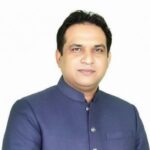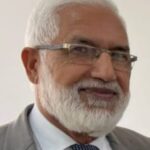
By: Dr. Muhammad Sheharyar
E. Mail: msheharyar771@gmail.com
Published By: ANI News Agency
What does economic growth mean to a father who cannot afford his children’s school fees? What comfort can economic statistics offer a mother struggling to feed her family? What future awaits an educated young person unable to find work? These questions reveal the human cost of economic hardship in Pakistan. While some households enjoy financial security, others struggle to afford food, electricity, education and healthcare.
The gap between rich and poor extends beyond differences in earnings. It reflects unequal access to resources, decent employment and opportunities for advancement. The Pakistan Bureau of Statistics’ Household Integrated Economic Survey 2024–25 illustrates this divide. Average monthly household income stood at Rs 41,851 in the lowest consumption quintile, compared with Rs 139,317 in the highest. Calculated from the survey figures, the ratio between these groups increased from approximately 2.7 in 2018–19 to 3.3 in 2024–25. Although these groups are ranked by consumption rather than income, the comparison indicates a widening gap in their average household earnings.
This disparity becomes more painful when considered alongside the rising cost of living. According to the Pakistan Bureau of Statistics, consumer prices in September 2026 were approximately 10.3 per cent higher than a year earlier. For affluent households, higher prices may require modest adjustments to discretionary spending. For families with limited incomes, they can mean smaller meals, postponed medical treatment or interrupted schooling. Even when inflation slows, prices do not necessarily fall; household budgets remain under pressure unless earnings catch up.
That pressure also affects the salaried middle class. A regular income offers limited protection when rent, utility bills, groceries and school fees absorb most of a household’s earnings. Families may turn to borrowing to meet routine expenses, leaving little room for savings or emergencies. Employment, therefore, must provide more than a monthly pay cheque: it must offer a reasonable prospect of financial stability.
For those without work, the uncertainty is greater still. Pakistan’s Labour Force Survey 2024–25 reported an unemployment rate of 7.1 per cent. Behind this figure are people searching for a livelihood and families waiting for their investment in education to bear fruit. When qualifications fail to translate into suitable employment, frustration grows and confidence in upward mobility weakens. Creating productive jobs must consequently remain central to any serious effort to reduce inequality.
The consequences reach beyond present household budgets. Children from affluent families generally have greater access to quality education, healthcare and professional networks. Disadvantaged children face barriers that can restrict their opportunities long before they enter the labour market. Without effective public support, these differences can allow poverty to persist across generations, weakening social cohesion and public confidence in national development.
Breaking this cycle requires a closer examination of how public resources are distributed, particularly through government subsidies. Subsidies should help narrow the gap between rich and poor by directing greater support towards households with the greatest need. Broad price subsidies can deliver larger financial benefits to those who consume more, leaving less fiscal space for assistance to vulnerable families. The central policy question should be straightforward: who receives the benefit, and how much does it improve their lives?
The government should therefore prioritise targeted assistance for essential electricity consumption, food and public transport, alongside affordable education and healthcare. Eligibility should reflect household circumstances, including income, family size and vulnerability, using regularly updated socioeconomic records. Transparent payments and independent audits would help reduce misuse, while accessible registration and appeals procedures would protect eligible families from exclusion. Any withdrawal of broad subsidies should be phased carefully, with support reaching vulnerable households before their costs increase.
Yet subsidies can provide only part of the solution. Lasting progress depends on productive employment, fair taxation and reliable public services. Supporting small businesses, improving agricultural productivity and linking vocational training to employers’ needs would help expand earning opportunities. At the same time, progressive taxation and stronger action against tax evasion would allow those with greater means to contribute fairly, rather than placing additional pressure on already strained households.
These reforms must reinforce one another. Targeted support can protect families from immediate hardship; education and healthcare can strengthen their future prospects; and productive investment can create the jobs needed for lasting independence. Effective labour protections and fair access to employment would help ensure that economic expansion translates into better living standards.
Above all, Pakistan needs a development strategy that places ordinary citizens at its centre. GDP growth, government revenues and investment figures matter, but their value must also be judged by improvements in purchasing power, employment and access to essential services. Economic justice requires a fair opportunity to earn a decent living and protection against avoidable deprivation.
A nation’s prosperity remains incomplete when financial success for some coexists with persistent hardship for others. Pakistan’s economic progress should enable a father to educate his children without fear, a mother to feed her family with dignity, and a young graduate to approach the future with hope. Until these possibilities become more widely shared, one question will remain: if the economy is progressing, why are so many families still struggling to meet their basic needs?