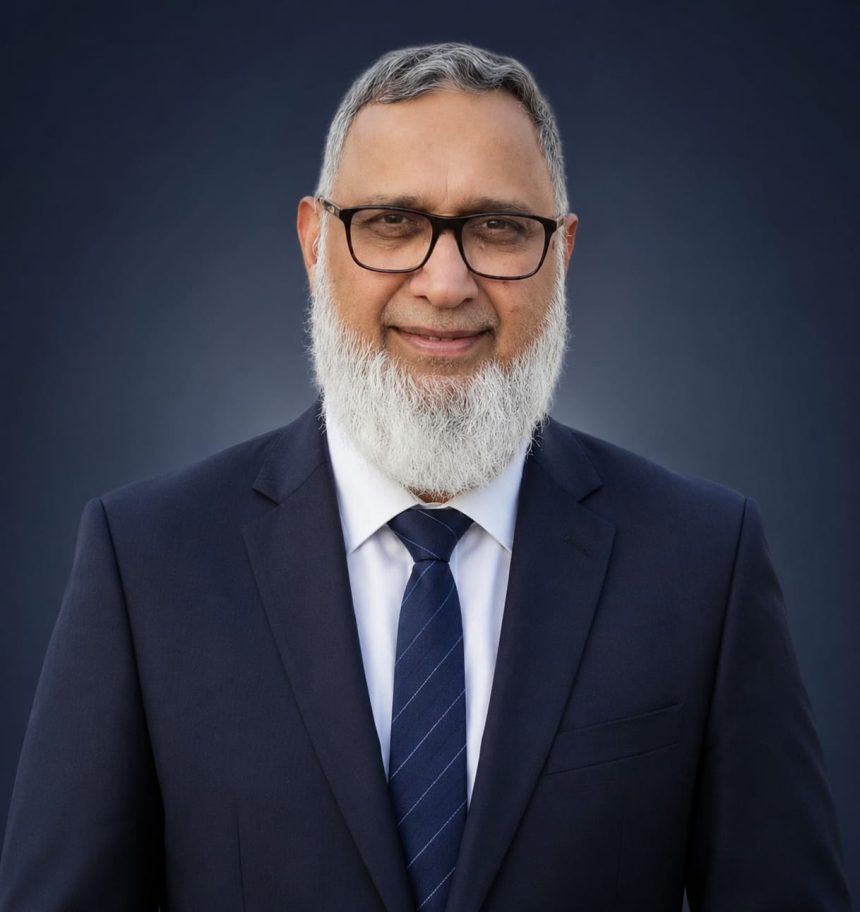
Written By: Mahmood Khan
mahmoodk308@gmail.com
Published By: ANI News Agency
Britain has always taken pride in being a diverse and multicultural society where people of different religions, ethnicities and cultures can live together with equal rights and responsibilities. Muslims are now an established and important part of British society. They contribute to the NHS, education, business, politics, journalism, local government, armed forces, voluntary organisations and almost every other sector of national life.
Yet, despite this contribution, Islamophobia remains a serious challenge to Britain’s social fabric. It is no longer simply a matter of individual prejudice or isolated incidents. Anti-Muslim hatred can influence public attitudes, political debate, social media, employment, education and the everyday experiences of British Muslims.
The consequences are therefore much wider than the Muslim community itself. Islamophobia threatens trust between communities and ultimately weakens the social cohesion upon which a stable democracy depends.
A growing sense of insecurity
For many Muslims, particularly women who wear the hijab or other visible religious clothing, hostility can be experienced in everyday life. Verbal abuse on public transport, discriminatory comments in the workplace, online harassment and attacks against individuals or places of worship can create a permanent sense of insecurity.
Government figures demonstrate the seriousness of the situation. In England and Wales, thousands of religious hate crimes are recorded against Muslims each year, making Muslims one of the most frequently targeted religious communities.
Behind every statistic is a human being, such examples are, a mother afraid for her children, a young person wondering whether they are accepted by their classmates, or an elderly person reluctant to go outside because of previous abuse.
When people begin changing their behaviour because they fear hostility, society as a whole suffers.
The danger to community cohesion
Britain’s multicultural model can only work when communities trust one another. Islamophobia undermines that trust.
If Muslims feel that they are constantly portrayed as outsiders, while sections of the wider population are repeatedly exposed to negative stereotypes about Muslims, two separate realities can develop. Communities begin to live alongside one another rather than with one another.
This is particularly dangerous for the younger generation.
Millions of British Muslims were born in Britain. English is their first language, they attend British schools and universities, work in British institutions and consider Britain their home. Yet repeated messages suggesting that Muslims are somehow less British can create an uncomfortable identity crisis.
A young British Muslim should never have to choose between being British and being Muslim. The two identities are perfectly compatible. Perhaps the greatest new challenge is the digital environment.
Social media has created an enormous platform for people to spread hatred, misinformation and conspiracy theories. A misleading video or fabricated image can reach millions of people before the truth has had an opportunity to catch up.
Artificial intelligence has made this problem even more complicated. Manipulated photographs, fabricated videos and false stories can be created with increasing sophistication.
This is particularly dangerous during moments of national tension, terrorism, international conflict or civil unrest. A criminal act committed by an individual can quickly be presented online as evidence against an entire religious community. This logic must be rejected. An individual is responsible for his or her actions; an entire religion or community cannot be held responsible for the actions of one person.
Political debate also has an important role to play. Britain must retain its tradition of free speech. People must be able to discuss religion, immigration, integration and government policy, including policies concerning Muslims. Legitimate criticism must not be confused with hatred.
But there is an important distinction between criticising an idea and demonising a community.
When political rhetoric repeatedly portrays Muslims as a threat, refuses to recognise their contribution or treats an entire population as responsible for the actions of extremists, it can legitimise prejudice.
Political leaders therefore have a special responsibility. Their words can either calm society or inflame it.
The same principle applies to Muslim leaders. They must condemn extremism, violence and intolerance clearly and consistently while also demanding equal treatment for their communities.
Islamophobia is not only a moral and social problem; it can also have economic consequences.
Britain needs the skills and talents of all its citizens. If qualified people experience discrimination in recruitment, promotion or professional life because of their religion, the country loses valuable human capital.
The same applies to young people. If a Muslim child grows up believing that discrimination will prevent them from achieving their ambitions, their confidence and aspirations may be damaged.
A genuinely successful Britain should judge people by their ability, commitment and character, not by their name, colour or religion.
What can be done tackling this?
Tackling Islamophobia requires a national effort.
First, hate crimes must be taken seriously. Victims need confidence that reporting an incident will result in appropriate action.
Second, education is essential. Schools should teach young people about Britain’s religious and cultural diversity and explain the difference between healthy disagreement and hatred.
Third, social-media platforms must do more to prevent the organised spread of hatred and dangerous misinformation.
Fourth, Muslim communities must continue to engage with wider British society. Participation in local government, politics, journalism, business, education and civic organisations is one of the strongest ways to strengthen integration.
Fifth, political parties and community leaders must condemn hatred consistently. Opposition to Islamophobia should not depend on political convenience.
And finally, Britain needs more opportunities for ordinary people from different communities to meet, work together and understand each other. Personal contact is often the most effective antidote to prejudice.
Perhaps the most important point is that Islamophobia is not merely a Muslim problem. it is a British problem.
When a Muslim is attacked because of their faith, the victim is Muslim, but the attack is against the values of British society.
When a mosque is vandalised, the immediate target is a Muslim place of worship, but the wider victim is community harmony.
When a child is bullied because of his or her religion, the damage extends beyond one family to the future generation.
Britain cannot build a cohesive society by allowing one community to feel permanently under suspicion.
Islamophobia must not mean ignoring other forms of extremism or hatred. Britain must oppose Islamophobia, antisemitism, racism, far-right extremism, Islamist extremism and all forms of violence and hatred with the same determination.
The future of Britain depends upon a simple principle: equal citizenship.
Muslims should not receive special treatment, but neither should they be treated as second-class citizens. They should have exactly what every other British citizen expects, security, dignity, opportunity and equality before the law.
The answer to Islamophobia is not isolation, confrontation or silence. It is education, justice, dialogue, responsible politics and stronger community engagement.
Britain’s Muslim population has already made an enormous contribution to the country’s social, economic and cultural life. The challenge now is to ensure that prejudice does not undermine that contribution or damage the bonds between Britain’s diverse communities.
A confident Britain should not be afraid of diversity. It should embrace it while demanding shared civic values from everyone.
The real test of British democracy is not how we treat the majority. It is how we protect the dignity and rights of minorities while maintaining the unity of the whole nation.
Britain must therefore confront Islamophobia not simply because Muslims deserve protection, but because Britain itself deserves a society based on tolerance, equality, justice and mutual respect.
Only then every citizen regardless of their faith, colour or background can look towards the future and confidently say:
“I belong here, and Britain belongs to all of us.”