By: Dr. Ghulam Nabi Fai
Chairman, World Forum for Peace & Justice
(Published by ANI News Agency )
The United Nations cannot restore global trust through speeches alone. If it is serious about strengthening faith in the international system, it must demonstrate that the principles of the UN Charter and international human rights law apply equally to powerful and weaker states.
Recent statements by UN officials have highlighted growing conflicts, declining respect for international law and increasing restrictions on human rights and civic freedoms. These concerns are important, but they also raise a fundamental question: what happens when the UN itself documents serious violations but fails to ensure meaningful follow-up?
Kashmir remains a significant example. The UN Office of the High Commissioner for Human Rights (OHCHR) reports issued in 2018 and 2019 documented allegations of serious human rights violations in Indian-administered Kashmir and recommended consideration of mechanisms, including an independent international investigation. The reports also called for cooperation with UN Special Procedures.
Years later, questions remain about the implementation of these recommendations. If the UN expects member states to respect its human rights mechanisms, it must also demonstrate that its own findings and recommendations are taken seriously.
The theme of the 81st session of the UN General Assembly—“Restoring trust, managing transformation: a United Nations that delivers for all”—therefore carries particular significance. Trust cannot be restored simply by declaring that it must be restored. It must be earned through consistent action.
The Kashmir dispute also demonstrates the dangers of leaving unresolved conflicts to deteriorate. India and Pakistan are nuclear-armed states, making every major confrontation between them a matter of international concern. Preventive diplomacy, dialogue and credible international mechanisms are therefore essential—not merely after a crisis, but before one begins.
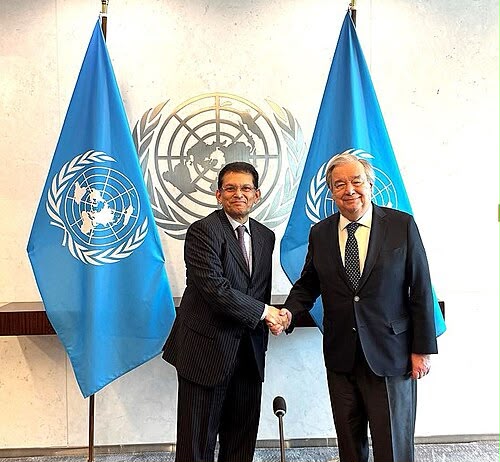
The new President of the General Assembly, Ambassador Khalilur Rahman, has an opportunity to strengthen the credibility of the organization by encouraging member states to cooperate with UN human rights mechanisms and by ensuring that outstanding recommendations receive serious attention. This does not require prejudging the final political status of Kashmir; it requires upholding universal principles of human rights, accountability and peaceful dispute resolution.
The world needs a United Nations that does more than repeat the language of peace and international law. It needs an organization willing to demonstrate that the Charter has consequences and that international law is not selectively applied.
The people of Kashmir, like people affected by conflicts elsewhere, deserve more than diplomatic statements. They deserve meaningful efforts for peace, human rights, accountability and dialogue.
The next crisis between India and Pakistan should not become another test of whether the international community learned from the previous one. Preventive diplomacy must begin before the next crisis—not after it.