
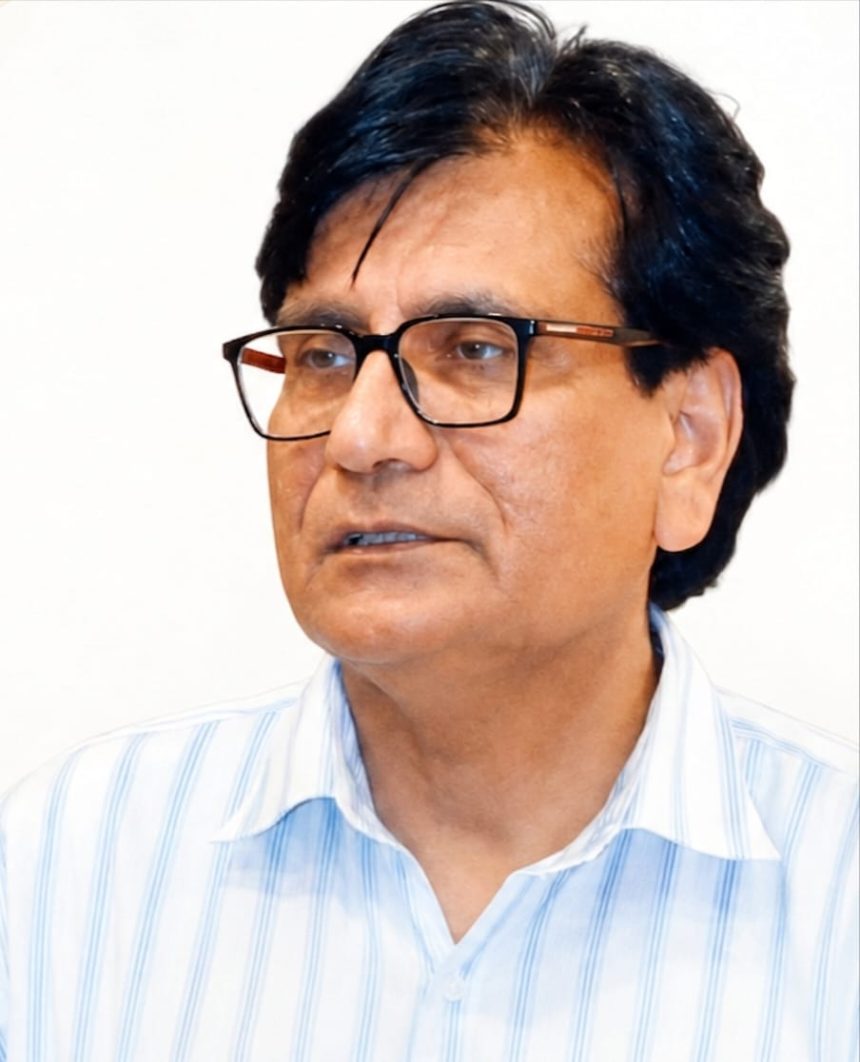
Dr. Nasser Hussyn Bukhari
Balochistan is not merely Pakistan’s largest province by area; it is central to the country’s security, economic future and regional connectivity. Stretching from the Arabian Sea to the borders of Iran and Afghanistan, it occupies a strategic position linking South Asia with the Middle East, Central Asia and western China. Yet the province has remained caught in a painful cycle of terrorism, insurgency, poverty and political alienation.
The challenge facing Balochistan cannot be reduced to a military problem. It is simultaneously a security, political, economic and governance challenge. Terrorist organisations, particularly the proscribed Balochistan Liberation Army (BLA), have increasingly employed suicide attacks, improvised explosive devices, targeted killings and coordinated assaults. Civilians, security personnel, teachers, engineers, labourers, passengers and foreign nationals have all been targeted.
Pakistan’s security forces have paid a heavy price in confronting this violence. The Pakistan Army, Frontier Corps, Balochistan Police, Levies Force and intelligence agencies have conducted sustained counterterrorism operations under difficult conditions. Many officers and soldiers have embraced martyrdom while protecting communities and national infrastructure.
The resurgence of militant violence across Pakistan has made the situation more urgent. Balochistan has emerged as major theatres of terrorism, while attacks have become more complex and coordinated. This threat requires a strategy combining intelligence, policing, border management and targeted security operations with political engagement, economic opportunity and effective governance. Balochistan’s geography explains why instability there has consequences beyond its borders.
Gwadar is envisioned as a maritime gateway for the China-Pakistan Economic Corridor and a potential logistics and trade hub connecting Pakistan with regional markets. Its proximity to the Strait of Hormuz further enhances its strategic significance.
The province’s mineral wealth is equally significant. Reko Diq contains enormous deposits of copper and gold, while Balochistan also possesses natural gas, coal, chromite, marble and other minerals. Properly managed, these resources could create employment, expand exports, stimulate local industries and generate revenue.
This is where the political dimension becomes crucial. Balochistan’s people must not feel that decisions concerning their land and resources are made without meaningful participation. Federal and provincial institutions need stronger consultation, local representation and accountability. A citizen who sees tangible improvement in daily life is less likely to believe narratives portraying the state solely as an instrument of exploitation.
Legitimate political grievances must be distinguished from terrorism. Peaceful political expression, criticism of government policies and demands for greater provincial rights are part of democracy. Violence against civilians and state institutions is something entirely different. Pakistan must therefore protect peaceful political participation while decisively confronting organisations that use violence to achieve political objectives.
External interference adds another layer of complexity. Pakistan has repeatedly presented proofs that hostile foreign intelligence networks, particularly India’s Research and Analysis Wing (RAW) support militant activity in Balochistan. Pakistan has also raised concerns about militant groups using territory across the western border that Afghan authorities have been allowing their soil to be used against Pakistan. These disputes require stronger border controls, intelligence cooperation, sustained diplomacy and responsible regional engagement. Claims of external sponsorship should be addressed through credible evidence and international diplomatic channels.
The struggle is increasingly being fought in the information space. Militants exploit social media to circulate propaganda, recruit young people, magnify grievances and portray terrorism as resistance. The state cannot defeat such narratives merely by issuing statements. It must communicate quickly, honestly and credibly. Journalists, educators, religious scholars, civil society organisations and local communities can help build resilience against extremist propaganda.
Economic development must proceed alongside security, not after it. Roads, schools, hospitals, universities, vocational institutes, digital connectivity and reliable energy supplies are instruments of national security. A young person with education, employment and hope has fewer incentives to listen to violent recruiters. Development therefore becomes a long-term counterterrorism strategy.
The same principle applies to local ownership. Balochistan cannot be transformed from Islamabad alone. District administrations, elected representatives, tribal elders, business communities, teachers, students and youth organisations must become partners in development. Local people should be trained and employed in projects established on their soil. The province’s resources should create opportunities for its population rather than merely extracting wealth from the region.
Pakistan also needs a coherent national narrative about Balochistan. The province should not be portrayed merely through terrorism. Cultural inclusion can strengthen the sense that Balochistan is an integral and valued part of Pakistan.
Ultimately, defeating terrorism requires patience, unity and strategic consistency. Military operations may disrupt terrorist networks, but lasting peace requires institutions capable of delivering justice, services and opportunity. The state must be firm against terrorism while remaining responsive to legitimate grievances. Security without development can produce temporary stability; development without security cannot be sustained. Pakistan needs both.
The future of Balochistan is inseparable from the future of Pakistan. The province’s peace is Pakistan’s peace, its prosperity is Pakistan’s prosperity and its security is Pakistan’s security. Balochistan is Pakistan, and Pakistan is Balochistan. The people of Balochistan deserve peace, dignity, opportunity and prosperity. Terrorist organisations and their alleged external sponsors may seek to obstruct this future, but they cannot permanently defeat the aspirations of people who want stability and development.
India and any proxies seeking to destabilise Pakistan will ultimately fail if the state, political leadership and people remain united. The decisive victory, however, will not be measured only by militants eliminated. It will be measured by schools filled with students, hospitals serving communities, mines generating jobs, roads connecting districts, businesses attracting investment and young people choosing careers over violence.
The process of sustained development will begin in earnest when terrorism comes to an end. Peace must therefore be treated not as a distant reward, but as the foundation of economic transformation. Pakistan must therefore win both battles: the battle against terrorism and the battle for development. Only then can Balochistan realise its enormous potential and become what it should always have been — a peaceful, prosperous and powerful pillar of Pakistan. That is the path towards a stronger, united and prosperous Pakistan.
Balochistan’s Battle for Peace, Prosperity and National Unity


1 Comment

A thought-provoking and timely analysis on Balochistan’s journey towards peace, prosperity and national unity. The article rightly highlights that lasting peace cannot be achieved through security measures alone; it requires development, political inclusion, good governance, education and meaningful economic opportunities for the people of Balochistan. A very important perspective on an issue that deserves serious national attention. 🇵🇰