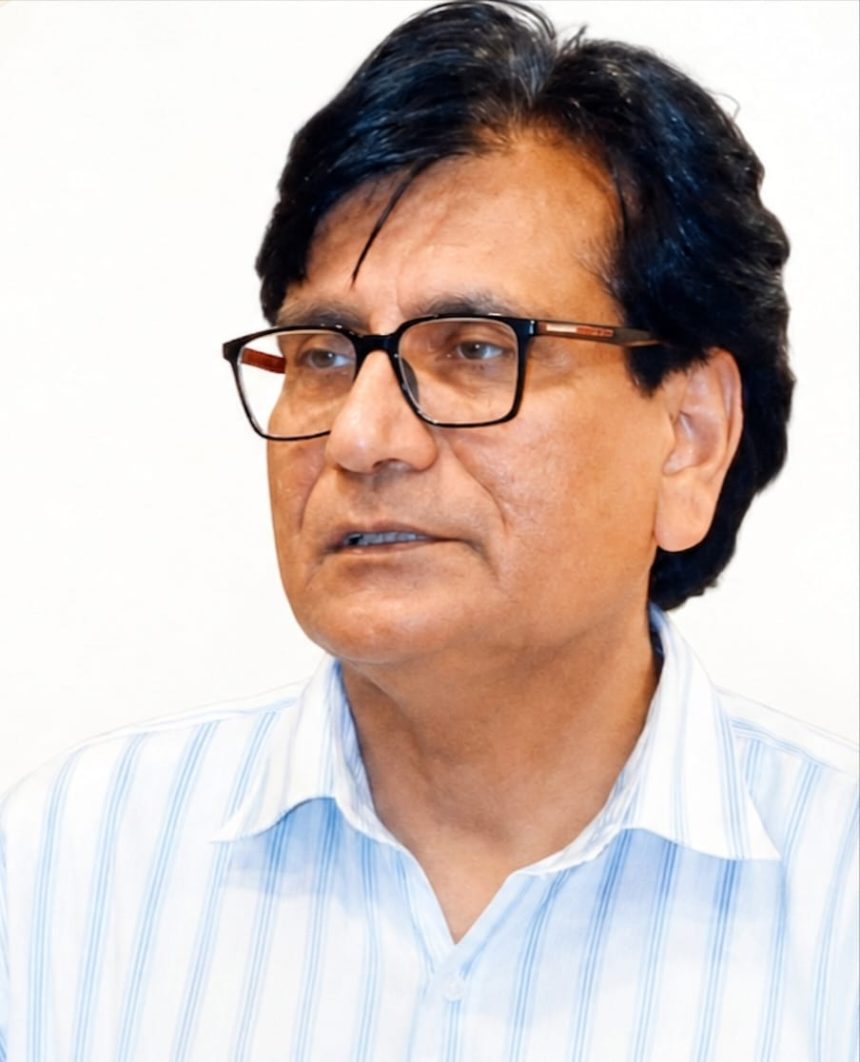
Written By: Dr. Nasser Hussyn Bukhari
Published By:ANI News Agency
Analyst & Researcher
Pakistan is home to one of the world’s youngest populations. Nearly two-thirds of its citizens are below the age of thirty, making Generation Z the country’s greatest demographic asset. This generation has grown up in an era of smartphones, artificial intelligence, global connectivity, and unprecedented access to information. It is energetic, technologically literate, entrepreneurial, and eager to participate in shaping the future. Yet many young Pakistanis also face uncertainty about identity, citizenship, opportunity, and their place in national life. The paradox is striking: a generation with immense potential often finds itself navigating institutions that struggle to prepare it for the demands of the twenty-first century.
The challenges confronting Pakistani Gen Z are not simply economic; they are intellectual, educational, social, and political. The country’s education system remains fragmented into multiple parallel streams—public schools, private schools, cadet and semi-government institutions, and religious seminaries. Each stream follows different educational priorities, teaching methods, and social environments. Rather than creating a shared civic identity, this fragmentation can contribute to different worldviews among students who are nevertheless expected to function as equal citizens within the same constitutional framework.
Curriculum reform deserves particular attention. Education should cultivate informed citizenship, ethical reasoning, scientific inquiry, and respect for constitutional values. Where curriculum content is perceived to emphasise sectarian interpretations or discourage critical engagement, policymakers should periodically review it to ensure that it promotes tolerance, constitutional equality, and evidence-based learning. The objective is not to diminish religious education but to ensure that it encourages ethical conduct, intellectual curiosity, and mutual respect in a religiously diverse society.
Similarly, the language of majority and minority, while constitutionally relevant in some contexts, should never undermine the principle that every Pakistani enjoys equal citizenship under the Constitution. Young people should grow up with a clear understanding that constitutional rights belong equally to all citizens regardless of religion, ethnicity, language, gender, or province. Civic education should strengthen national cohesion by emphasising equality before the law, shared responsibilities, and respect for diversity.
Another concern is the persistent gap between constitutional ideals and practical realities. Merit remains one of the most powerful aspirations of young Pakistanis. Whenever recruitment, admissions, promotions, or opportunities are perceived to depend on influence rather than competence, confidence in public institutions weakens. A generation that values transparency increasingly demands accountability, fairness, and equal opportunity. Restoring public trust therefore requires institutions that consistently reward merit and uphold the rule of law.
Equally significant is the rapid expansion of the private tuition industry. For many students, formal schooling no longer marks the end of the academic day. Long hours in schools are followed by equally demanding schedules in tuition academies, leaving little time for sports, reading, debating, artistic expression, community engagement, or family life. While supplementary education can benefit some learners, an excessive dependence on tuition raises important questions about the effectiveness of mainstream schooling and the overall well-being of students. Education should develop balanced personalities, not merely examination performance.
A healthy education system also introduces students to literature, history, philosophy, the social sciences, and the arts. These disciplines cultivate imagination, empathy, creativity, and critical thinking—qualities increasingly valued in the global knowledge economy. Nations that aspire to innovation cannot rely exclusively on rote memorisation or examination-centred learning. They must encourage questioning, research, experimentation, and intellectual independence.
Political socialisation represents another neglected dimension of youth development. Democratic societies require informed citizens who understand constitutional institutions, public policy, and civic responsibility. Young people should be encouraged to engage peacefully with public affairs rather than becoming alienated from politics altogether. Civic participation, debate, volunteerism, and student leadership strengthen democratic culture and prepare future leaders. Political disagreement should be understood as a normal feature of democracy rather than a threat to national unity.
Gender remains another area requiring urgent attention. Pakistani women have demonstrated extraordinary achievements in education, medicine, engineering, entrepreneurship, public administration, sports, and the arts. Nevertheless, many highly educated women continue to face structural, cultural, and economic barriers to full participation in the labour market and public life. Expanding opportunities for women is not only a matter of social justice but also an economic necessity. Countries that fully utilise the talents of both men and women are generally more innovative, productive, and globally competitive.
The digital age has transformed the expectations of Generation Z. Unlike previous generations, today’s youth compare educational systems, employment opportunities, governance models, and social freedoms across the world in real time. They seek transparency, institutional accountability, and meaningful participation in decision-making. They are less willing to accept hierarchy without explanation and more inclined to ask difficult questions. Rather than perceiving this curiosity as a challenge to authority, policymakers should recognise it as an essential ingredient of scientific progress and democratic maturity.
Pakistan therefore requires a comprehensive national strategy for youth development. Curriculum reform should strengthen critical thinking, constitutional literacy, scientific reasoning, civic ethics, and respect for diversity. Educational quality should be improved across all school systems so that every child receives comparable opportunities regardless of socioeconomic background. The examination system should reward analytical ability instead of memorisation. Public institutions must demonstrate that merit, integrity, and competence are the primary pathways to success.
At the same time, governments should invest in research universities, technical education, digital skills, entrepreneurship, innovation hubs, sports facilities, libraries, cultural institutions, and creative industries. Such investments would not merely create employment; they would cultivate confident, informed, and innovative citizens capable of competing in a rapidly changing global economy.
Pakistan’s Generation Z is not the country’s problem; it is its greatest opportunity. The question is whether national institutions will evolve quickly enough to harness their creativity, intelligence, and aspirations. If education encourages inquiry instead of conformity, if governance rewards merit instead of patronage, if constitutional equality becomes a lived reality rather than a written promise, and if young men and women are empowered to participate fully in national life, Pakistan’s demographic dividend can become its greatest strength.
The future of Pakistan will ultimately be determined not by the size of its youth population but by the quality of education, governance, and opportunities it provides that generation. Investing in Generation Z is, therefore, not simply an educational priority; it is the most important nation-building project of the twenty-first century.
A final area requiring serious reconsideration is the revival of student unions under a transparent and democratic regulatory framework. Across many democratic societies, student unions have served as important training grounds for leadership, civic engagement, debate, and public service. In Pakistan, however, student unions have largely remained absent from educational institutions since the late 1980s. This has reduced opportunities for young people to develop democratic leadership skills, negotiate differences, and participate in representative decision-making. Carefully regulated student unions could once again help nurture a new generation of responsible, tolerant, and capable leaders equipped to strengthen Pakistan’s democratic future.