.
BY:Asghar Ali Mubarak :
…….
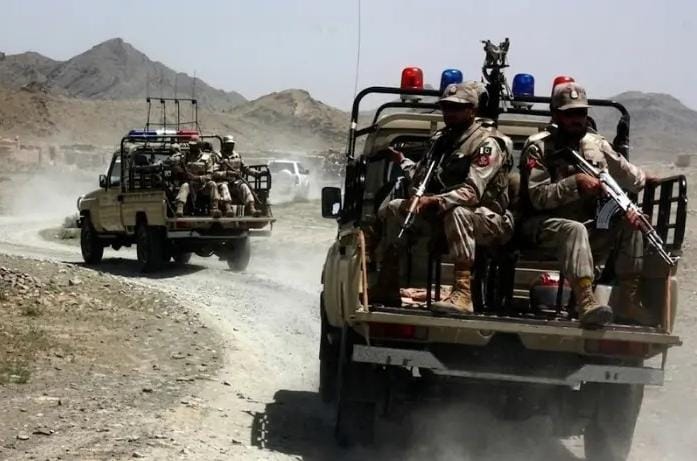
‘Operation Shaaban’ is a joint military operation of the Pakistan Army, Frontier Corps (FC), and Balochistan Police against terrorism in Balochistan.
The main objective of ‘Operation Shaaban’ is to destroy the networks of Fitna-ul-Kharij (TTP) active in the northern districts and Fitna-ul-Hindustan (separatist group/BLA) active in southern Balochistan. According to official accounts, the operation was launched in response to a deadly terrorist attack on the Mangi Dam police station near Ziarat in July 2026.
The primary objectives of the operation are to eliminate the dual threat. During ‘Operation Shaaban’ and other Intelligence-Based Operations (IBOs), major terrorist networks are being targeted, which, according to the Pakistani state and security agencies, have been divided into the following headings and categories: Fitna-ul-Khawarij, the former Tehreek-e-Taliban Pakistan network, is mostly active in the districts bordering northern Balochistan and Khyber Pakhtunkhwa. This network was involved in the attack on the Mangi Dam police station near Ziarat in early July 2026, in which nine policemen were martyred. ‘Operation Shaaban’ was launched soon after this attack.
The group uses Afghan territory and safe havens there to attack Pakistani security institutions. Dozens of terrorists from this network have been killed in air and ground operations during the operation so far.
Fitna-ul-Hindustan, Balochistan Liberation Army – BLA, and other separatist group networks are mostly active in southern and coastal Balochistan, such as Makran, Kharan, Gwadar, and Mastung. According to security sources, this network is responsible for spreading chaos in Pakistan through Indian proxies and foreign funding. Their main targets are development projects, especially CPEC, non-local workers, innocent civilians, and law enforcement agencies. On 11 July 2026, several terrorists of this network were killed in action near the N-25 crossing. As part of the long-term military strategy of the security forces, the following elements of these two networks are being uprooted, which provide shelter or logistical support to these terrorists in convenient towns and villages. Their secret arms depots and communication centers are established in difficult mountainous areas, from where M4 rifles and modern war materials are being exported.The military operation in Balochistan is aimed at dismantling terrorist networks across the province. The campaign, codenamed Operation Shaban, is being jointly conducted by the army, Frontier Corps and Balochistan Police. Operation Shaban was launched in response to a terrorist attack in the Mangi Dam area, in which 27 policemen were killed. The operation involves ground forces as well as airstrikes targeting militants in the rugged mountainous terrain of the province. Since its launch, security forces have killed around 123 militants belonging to various extremist groups across the province. Terrorist attacks have increased sharply across Balochistan in recent months. Militants from the banned Tehreek-e-Taliban Pakistan (TTP), which is allied with the Afghan Taliban, and the outlawed Balochistan Liberation Army have increasingly targeted state forces, foreign-invested projects and infrastructure in the mineral-rich region. Earlier this month, a meeting of the country’s top civil and military leadership, led by Prime Minister Shehbaz Sharif and Army Chief General Asim Munir, was held in Quetta, the capital of Balochistan, to review the deteriorating security situation. The prime minister, who chaired the meeting, said one thing is certain: it is a mutual and sole decision of the civil and military leadership that we must collectively eliminate terrorism. Security sources said Operation Shaaban is designed as a sustained military campaign to dismantle the infrastructure of terrorism, eliminate safe havens of militants and restore the writ of the state across Balochistan. Operation Shaaban is being carried out on two different geographical fronts, marking an unprecedented scale of simultaneous operations for the province. The operation is targeting TTP elements and their hideouts in the northern districts of the province, including Ziarat and its surroundings. Pakistan has repeatedly accused the TTP of using Afghan sanctuaries as launch pads for cross-border attacks. Pakistan maintains that the group enjoys safe havens and logistical support inside Afghanistan, which has enabled it to expand its operations in Balochistan. In southern Balochistan, particularly in the districts of Lasbela and Khuzdar, the military campaign has focused on the BLA and its affiliated separatist groups. These areas have witnessed repeated high-profile attacks due to their strategic location near critical infrastructure and trade routes. Importantly, the growing convergence of operations between the TTP and Baloch militants reflects a changing and highly complex threat environment. By expanding into Balochistan alongside local militants, the TTP has exacerbated provincial insecurity. This development seems to have forced Pakistani authorities to design a much more comprehensive security response to address this challenge. Undoubtedly, Operation Shaaban is an indication that the threat posed by these groups has reached a point where significant action is deemed necessary. Coordinated ground attacks, aerial surveillance, and intelligence-led targeting are being employed on a large scale to systematically degrade terrorist networks. It is likely that the operation will remain in an intensive phase for the foreseeable future. The scale of the operation also reflects what the federal government sees as a sign of normalization and stability in Balochistan. While military action is necessary to restore the writ of the state and destroy the terrorist infrastructure, long-term stability in the province can only be achieved when security measures are complemented by long-term administrative, developmental, and political measures. Mobilizing operations are going to play a crucial role in securing the immediately challenging situation, but these efforts should be geared towards strengthening local institutions and presenting a more inclusive path for the province, along with socio-economic development. While those who resort to violence and challenge the integrity of the state must be dealt with firmly, the government must ensure that the doors of reconciliation remain open to those who are willing to work within the constitutional framework. Furthermore, efforts should continue in this regard for a viable political process, involving political leaders and other stakeholders at all levels. Operation Shaaban will have significant implications not only for Balochistan but also for the overall internal stability of Pakistan. If the operation helps restore security and creates space for development and dialogue, it could prove to be a significant step towards normalizing the situation in one of the most strategically important regions of the country.The long-term campaign was launched after terrorists targeted security forces and key development and economic projects in the province.
Air and ground operations: Forces are targeting terrorist hideouts in difficult and mountainous areas through coordinated operations by helicopter gunships and ground forces. M4 rifles, rocket launchers, and other advanced communication equipment have been recovered from the terrorist hideouts during the operations. A total of 129 terrorists have been eliminated so far under Operation Shaaban and other Intelligence-Based Operations (IBOs) that began on July 5. Security sources say that this military campaign will continue uninterrupted until complete peace and order is restored in Balochistan and the last terrorist is eliminated.