

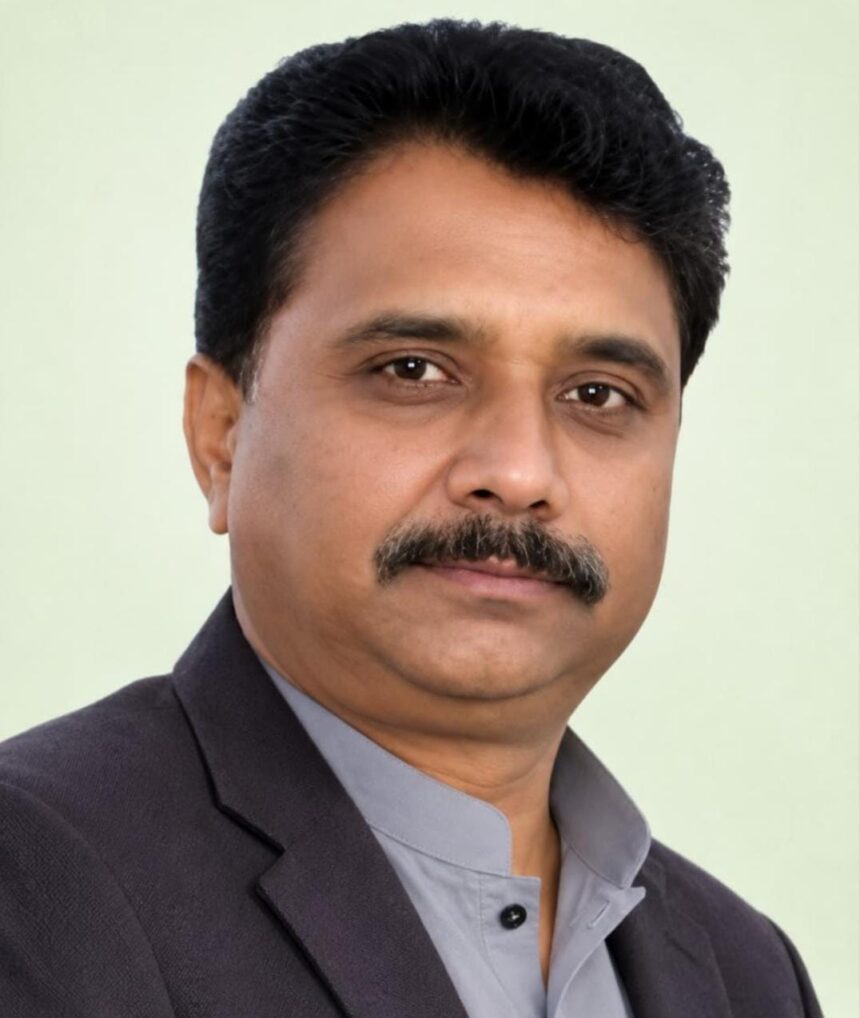
*BY: Ch. Shabbir Balochistani*
There are defining moments in the history of nations when the central question is no longer who holds power, but where the state itself is headed. Pakistan stands at such a crossroads today. The crisis confronting the country is not merely one of governments; it is a crisis of political culture, institutional conduct, and collective national consciousness. When personalities take precedence over the Constitution, vested interests outweigh principles, and confrontation replaces dialogue, the problem ceases to be about individuals—it becomes a crisis of political thought and governance.
One of Pakistan’s enduring misfortunes has been the gradual transformation of political parties from schools of democratic values into personality-driven organizations. Internal democracy has steadily weakened, ideological training has faded, merit has been replaced by personal loyalty, and dissent is too often viewed as rebellion rather than constructive criticism. In such an environment, new leadership struggles to emerge, political stagnation deepens, and that stagnation eventually translates into national weakness.
Equally alarming is the tendency to convert every political disagreement into a matter of state intervention. Instead of defeating opponents through public support and democratic competition, successive political actors have relied on state power to marginalize rivals. This practice has not only undermined the democratic process but has also drawn state institutions into political controversies from which they should constitutionally remain detached. When institutions become participants in politics, both democracy and public confidence in those institutions inevitably suffer.
History offers a clear lesson: power alone has never produced lasting political stability. Coercion may impose temporary silence, but enduring peace, public trust, and national cohesion can only be achieved through justice, the rule of law, and meaningful public participation. These are the foundations upon which successful democracies are built, and unfortunately, they are the very principles from which Pakistan has repeatedly drifted away.
Another troubling reality is the near absence of political self-accountability. Every political party finds justification for its own mistakes while portraying the failures of its opponents as national catastrophes. Yet history consistently demonstrates that whenever a political force seeks short-term advantage through unelected or extra-political centers of influence, it ultimately establishes a precedent that returns to haunt it. The instruments used against today’s opponents often become tomorrow’s threat to those who once relied upon them.
The true strength of a state lies in its Constitution, its institutions, and the confidence of its citizens—not in an atmosphere of fear. When Parliament is weakened, political parties fail to practice democracy internally, the justice system faces persistent questions, and freedom of expression becomes increasingly constrained, national security itself is placed at risk. Genuine national security extends beyond the protection of borders; it requires a society in which every citizen feels equal before the law and views the state as a protector rather than a distant authority.
The need of the hour is for political parties to begin genuine reform from within. Their organizational structures must be strengthened, party workers should be meaningfully involved in decision-making, young leadership must be encouraged to emerge, dissent should be respected, and politics must once again become a vehicle for public service rather than personal allegiance. Likewise, state institutions must faithfully operate within their constitutional boundaries and uphold impartiality under all circumstances. Strong states are built upon strong institutions—not powerful individuals.
If Pakistan once again fails to learn from its own history, there is a genuine risk that the resulting political vacu


Excellent analysis. The article presents complex ideas in a clear and thought-provoking manner, encouraging readers to look beyond political differences and focus on the broader national interest. Appreciations to the author for such a meaningful contribution.
Chaudhary Sahib, aap ne bohat important baat likhi hai. Hamare haan democracy ka matlab aksar sirf election, party aur leader tak reh gaya hai, jabke asal imtehan awaam ki overall political scoch samjh hoti hai. Hum apni pasand ki party ke liye har ghalat baat defend kar dete hain, lekin Pakistan ke interest par aik honay ko tayyar nahi. Aap ka column parh kar laga ke baat sirf siyasatdanon ki nahi, hum sab ko bhi apna rawayya dekhna hoga. Allah aap ke qalam mein aur taqat de. Job well done