
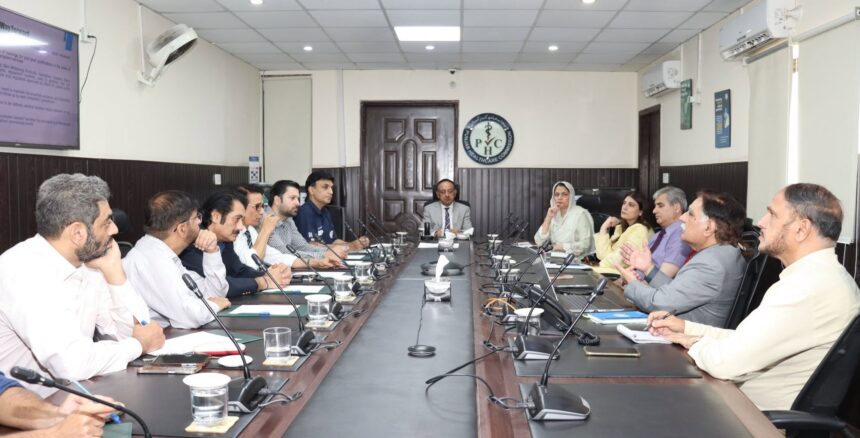
The Punjab Healthcare Commission convened a consultative meeting to discuss the draft guidelines for hair restoration and aesthetic centres, and to apprise participants of recent developments from the Pakistan Medical & Dental Council (PM&DC) on credentialing in aesthetic medicine.Aesthetic medicine is a rapidly expanding speciality worldwide, driven by increasing public demand for cosmetic treatment procedures, aimed at enhancing appearance, improving quality of life and boosting self confidence. The field encompasses a broad spectrum of services, ranging from non invasive and minimally invasive procedures, such as Botulinum Toxin (Botox) injections, platelet rich plasma (PRP) therapy, chemical peels and laser treatments, to invasive surgical interventions, including hair transplant, face lifting, rhinoplasty and cosmetic surgery.With the growing popularity of these procedures, the need for effective regulation, standardisation and oversight has become increasingly important. It is imperative to establish comprehensive standards to ensure service quality, and protect patients from potential harm associated with unsafe and unethical practices and substandard products. Clear regulatory guidelines, defined credentialing requirements and robust monitoring mechanisms are essential to maintaining public trust and safeguarding patient welfare in this evolving healthcare domain.The consultative meeting, chaired by Chief Executive Officer PHC Dr Muhammad Saqib Aziz, was attended by experts in dermatology and plastic surgery as well as representatives of the Hair Restoration Society of Pakistan (HRSP). Director Clinical Governance PHC Dr Mushtaq Ahmed updated regarding credentialing of the professionals by the Pakistan Medical &Dental Council (PM&DC) and presented the draft MSDS for hair restoration centres and the draft guidelines for aesthetic centres developed by the PHC. Deputy Director (Standards Development and Dissemination) Dr Imtiaz Ali also participated in the deliberations.During the meeting, participants were informed that both draft documents have undergone extensive consultation with relevant experts and stakeholders and have received endorsement by the Technical Advisory Committee (TAC) of the PHC. However, a key challenge in advancing regulatory enforcement remains the absence of clearly defined credentialing criteria for aesthetic physicians, aesthetic surgeons and core and non core specialists, all of which fall under the mandate of the PM&DC, and have yet to be comprehensively addressed.The participants were informed that the PM&DC has recently recognised the American Board of Hair Restoration Surgery (ABHRS), which provides a potential pathway for defining competency and qualification requirements in hair restoration. Nevertheless, several important questions, including the recognition of local training pathways, the accreditation of training centres, the eligibility criteria and the approval of trainers and training programmes within Pakistan, remain unresolved. Stakeholders emphasised that clear guidance from the PM&DC on these matters is essential for the effective implementation of regulatory standards and the protection of patient safety.The meeting concluded with a consensus that continued collaboration among the PHC, PM&DC, professional societies and subject experts is necessary to establish a robust regulatory framework that promotes safe, ethical and quality driven aesthetic and hair restoration services.
Consultative meeting on guidelines for hair restoration and aesthetic


Leave a Comment
