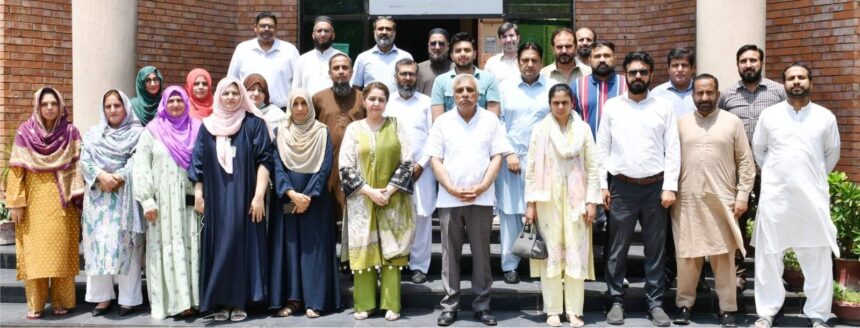
Vice Chancellor Prof. Dr. Qamar-uz-Zaman visited the faculties and institutes of Pir Mehr Ali Shah Arid Agriculture University Rawalpindi to closely review academic, administrative and research activities across the campus. During the comprehensive visit, he met deans, directors, chairpersons, faculty members and administrative staff, while members of the university’s facilitation committees also accompanied him to support the review process.
Speaking with the academic teams, the Vice Chancellor emphasized that AI training would play a central role in strengthening the university’s teaching and learning environment. He announced that the University Institute of Information Technology would lead training programs for faculty members from all departments so teachers can develop stronger digital competencies and use modern tools more effectively in the classroom.
He said that exposure to artificial intelligence and other digital tools would help faculty improve their professional capacity and bring more contemporary knowledge into student learning. According to him, universities must keep pace with changing academic requirements, and the adoption of technology is essential for preparing students for a rapidly evolving world.
Prof. Dr. Qamar-uz-Zaman also underlined the importance of entrepreneurship education across all disciplines. He encouraged faculties to promote innovation, creativity and entrepreneurial thinking among students so they can contribute to economic growth with practical ideas and productive skills. He said that a strong entrepreneurial mindset is vital for national progress and can help young people move from job seeking to job creation.
During the visit, the Vice Chancellor reviewed the implementation of Outcome-Based Education and directed academic units to ensure continuous improvement in curriculum design, teaching methods and student learning outcomes in line with national and international quality standards. He stressed that academic planning should remain focused on measurable outcomes and long-term institutional development.
He further instructed the concerned authorities to speed up the upgradation of laboratories, modernize teaching facilities and improve academic infrastructure across the university. He noted that state-of-the-art laboratories, updated classrooms and enhanced learning resources would create a more supportive environment for students and contribute to a better overall educational experience.