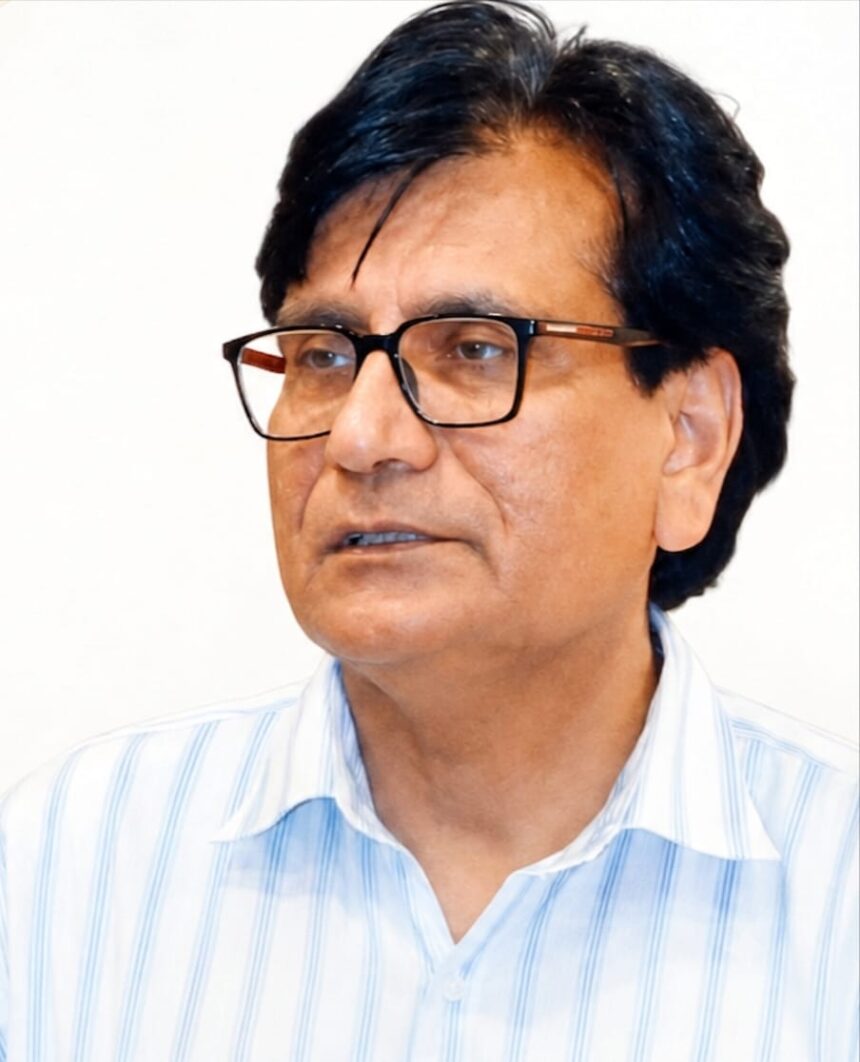
By: Dr. Nasser Hussyn Bukhari
Analyst and researcher writes about Geopolitics, Global issues and Pakistan
Published By: ANI News Agency
Empires rarely fall on the battlefield first. They begin to crack at the petrol pump, in the pharmacy queue, at the kitchen table where a family counts what the month has left it. On November 3, American voters carried that quiet arithmetic into the ballot box. Networks and the Associated Press projected that Democrats had taken both the House and the Senate, prying seats from Republican hands in places as unlikely as Texas and Maine. "Landslide" may still be a word to use with care while the final counts settle, but the direction of the tide is not in doubt. Even Donald Trump, a man who seldom concedes the weather, has admitted that Iran played its part in his party's undoing.
The two parties arrive at this moment bearing different catechisms. Republicans under Trump have fused tax relief for the fortunate with deep cuts to Medicaid and other public programmes, wrapped the whole in tariffs, deportations and deregulation, and dressed foreign policy as a ledger in which allies are clients and rivals are debtors. Democrats, divided and often timid, still defend the safety net, speak of immigration as something to be managed rather than punished, and insist that a republic must not go to war without asking its legislature. Neither is a peace party. But one promises to spend on the sick and the other on the missile, and the voters, weary of the latter, have noticed the difference.
Why did the Democrats win? Because politics, in the end, is the art of the price of bread. Gas prices climbed by more than a quarter after the Iran war began in February, and according to Al Jazeera, diesel touched record highs while the Federal Reserve, against the president's wishes, raised interest rates. Wages trailed prices for months. Trump had promised cheaper living on his first day, and on every day since delivered the opposite. Polls found that most Americans considered the war not worth fighting. Tariffs taxed the shopping basket, insurance premiums swelled, and the threat of lost health coverage hung over millions. When the president dismissed "affordability" as a Democratic hoax, he insulted the very voters he needed. They answered, as voters do, in November.
Is this the funeral of Trump's neo-imperial doctrine? Its spirit has been wounded; its machinery stands. The doctrine had three pillars: the fist abroad, the wall at home, the tariff as a weapon between. The capture of Nicolás Maduro in January showed how far one man's authority could reach beyond the law. Even Democrats who were glad to see a dictator removed called it an act of war waged without Congress, and the world saw a superpower that no longer troubled to hide its habits. The Iran war then did what empires dread most: it sent the cost of conquest home. Americans did not necessarily repudiate empire. They repudiated an empire that billed them for it. That distinction is the whole of the matter, and Democrats forget it at their peril.
Will they undo it? They will resist it, and resistance is not repeal. A Democratic Congress can starve, summon, investigate and obstruct, and in the Senate it can hold up national security appointments. According to Al Jazeera's analysis, however, it lacks the two-thirds majority required to override a veto. War powers resolutions on Iran, votes to unpick tariffs, bills to restore Medicaid and revive lapsed health credits will all meet the president's pen. On China, the consensus in Washington runs deeper than party; Democrats may sand the edges of the tariffs but will not abandon the contest with Beijing. On immigration, expect gentler language and sterner oversight, not open gates. Two years of gridlock, subpoenas and constitutional quarrel is the likeliest harvest.
Nowhere will the tremors be felt more keenly than inside the Republican house itself. Every defeated president leaves behind courtiers who suddenly remember they were always their own men, and Trump's heirs are no exception. JD Vance, the vice president and presumed frontrunner, has already begun, according to Al Jazeera, to put visible distance between himself and the Iran war, even as Trump insists it will end only when he wishes. Marco Rubio, the secretary of state, is reported by The Independent and others to be weighing his departure from the administration, with sources urging him to pin the war on Trump. Yet this is a delicate art. Both men built their careers beside the president, both defended his policies, and the Republican base still adores him. To run from Trump too fast is to forfeit the faithful; to cling to him is to inherit his unpopularity. Vance has called Rubio his best friend, and Rubio has deflected questions about his own ambitions. Friendship, in presidential politics, has a short shelf life. Whoever emerges will have to explain how a man can be both the architect's apprentice and the architect's critic.
Abroad, the world will exhale but not unclench. European and Asian capitals, bruised by tariffs and lectured on alliance, will welcome a restraining hand, yet they have learned that American moods swing like a pendulum and that 2028 waits behind the curtain, possibly with a Trump loyalist in a reformed costume. Adversaries will read the defeat as fatigue and may try to outlast Trump, as Iranian officials have openly suggested. Poorer economies, battered by fuel costs and a capricious dollar, would welcome any pause. The deeper wound is to trust. From Brussels to Beijing, governments are hedging their reserves and building trade routes that bypass Washington. One election cannot unring that bell.
In the Middle East, the result narrows the president's room to escalate. Congress holds the purse, and Democrats had already blocked his enormous military budget request in the Senate. Pressure will mount for a ceasefire and a negotiated settlement with Tehran, with Hormuz, sanctions and nuclear limits as the coin of exchange. But no Democratic majority will walk away from Israel, and arms will keep flowing, perhaps with conditions attached. Palestinians should not mistake a change of Congress for a change of heart. On Venezuela, Democrats will demand to know who governs, who profits from the oil, and under what law the operation was waged, but they are unlikely to turn back the clock. And Iran, reading the result as proof that patience pays, may be tempted toward pride rather than compromise.
For Pakistan, the verdict is double-edged. A tamed Trump could mean fewer oil shocks and cooler markets, a mercy for an economy drowning in import bills. Yet Democrats have long pressed harder on rights and democracy, and Islamabad should expect sharper congressional questions.
The blue wave is real, but it is a brake, not a steering wheel. It may slow American adventurism; it will not by itself abolish American ambition. The question now is whether Democrats will offer the world a different story, and whether Trump's would-be heirs will tell the old one in a softer voice.