Report: ANI
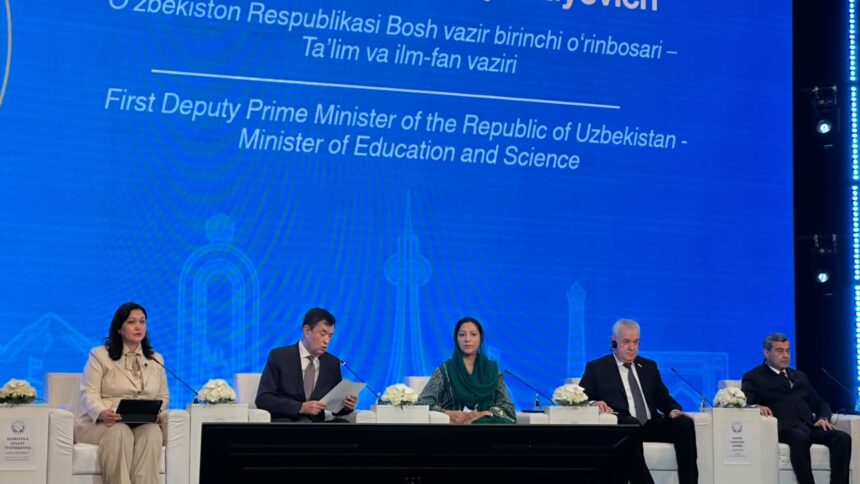
TASHKENT: Minister of State for Federal Education and Professional Training Wajiha Qamar on Tuesday reaffirmed Pakistan’s commitment to strengthening educational, scientific and technological cooperation with Uzbekistan and other Central Asian countries.
Addressing the International Education Forum 2026 in Tashkent, themed “Developing a Common Educational Space in Central Asia and International Cooperation,” she called for stronger academic partnerships, student exchanges and collaborative research to promote regional integration and sustainable development.
Wajiha Qamar highlighted the historic ties between Pakistan and Uzbekistan, rooted in shared history, culture and intellectual traditions. She appreciated Uzbek President Shavkat Mirziyoyev’s vision for advancing education, science and innovation.
She said Prime Minister Muhammad Shehbaz Sharif’s Education Emergency reflected the government’s commitment to bringing out-of-school children into classrooms, improving learning outcomes and expanding access to quality education, particularly for girls and underserved communities.
Emphasising the growing impact of artificial intelligence and digital transformation, she highlighted the role of the Higher Education Commission (HEC) and the National Vocational and Technical Training Commission (NAVTTC) in strengthening research partnerships and developing market-relevant skills.
The minister proposed expanding student and faculty exchanges, introducing joint degree programmes, facilitating mutual recognition of academic qualifications and promoting collaborative research. Artificial intelligence, engineering, medicine, agriculture, mining, renewable energy and language education were identified as key areas for cooperation.
Referring to academic engagement between Pakistan’s National University of Sciences and Technology (NUST) and Uzbekistan’s University of Geological Sciences, she said institutional partnerships could advance scientific research and educational collaboration.
She identified academic mobility, stronger university-industry linkages and inclusive educational opportunities as key priorities, stressing that cooperation must deliver tangible benefits beyond formal agreements.
Wajiha Qamar reaffirmed Pakistan’s readiness to work with Uzbekistan, Central Asian countries, Türkiye and international partners to promote a connected, inclusive and innovation-driven educational future.
Professor Dr. Zia Ul Haq, Executive Director of the Higher Education Commission of Pakistan, accompanied the minister at the forum.