By: Sumblina Hassan
Secretary to Shaheed Mohtarma Benazir Bhutto
Former Consultant to the Foreign Office, Islamabad
In charge of Office 10, UK, RCC, Bilawal House
Published By: ANI News Agency
Some events in a nation’s history are never forgotten with the passage of time. They remain deeply embedded in collective memory because of the lives they changed, the sacrifices they represent and the questions they leave behind. The Karsaz tragedy of October 18, 2007, is one such defining moment in Pakistan’s political history.
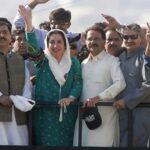
The day began with anticipation and hope. After years of exile, former Prime Minister Mohtarma Benazir Bhutto returned to Pakistan, and Karachi witnessed an extraordinary public reception. Hundreds of thousands of people gathered along the route of her procession, reflecting the political significance of her return and the expectations surrounding the country’s democratic future.
But the atmosphere of celebration was transformed into tragedy near Karsaz.
A deadly terrorist attack struck the procession, killing and injuring a large number of people. Families who had come to welcome their political leader were suddenly confronted with unimaginable loss. The streets that had been filled with political slogans and expressions of hope became a scene of grief and devastation.
The Karsaz tragedy was not merely an attack on a political gathering. It was an attack on ordinary citizens who had assembled to participate in a significant political moment. Among the victims were political workers, supporters and citizens whose names may not have become widely known, but whose loss was deeply felt by their families.
Behind every victim was a personal story a parent, a child, a spouse, a sibling or a friend whose life was changed forever. For the families of those who died, October 18 is not simply a date in Pakistan’s political calendar. It remains a painful reminder of the loved ones they lost and the future they were denied.
Yet Karsaz cannot be understood without remembering Benazir Bhutto herself.
Her return to Pakistan was more than a political homecoming. It marked a significant moment in her political journey after years abroad and reflected her determination to re-enter the country’s political landscape. Despite the security threats surrounding her return, she chose to face the public and continue her political struggle.
The attack at Karsaz demonstrated the grave dangers surrounding that journey. Benazir Bhutto survived the attack, but hundreds of people accompanying her procession were killed or injured. The tragedy consequently became an inseparable part of the final chapter of her political life.
Only a little more than two months later, on December 27, 2007, Benazir Bhutto was assassinated in Rawalpindi. Her death plunged the country into mourning and further deepened the national grief that had followed the Karsaz tragedy.
Remembering Karsaz is therefore also an opportunity to pay tribute to Benazir Bhutto not only as a political leader, but as a woman whose life was marked by exile, struggle, public service and personal sacrifice. Her return to Pakistan in October 2007, despite the risks involved, remains one of the most significant moments of her political career.
Her legacy continues to be discussed from different political and historical perspectives. However, the human dimension of her story cannot be separated from the people who stood beside her during the final months of her life, including those who lost their lives while welcoming her home.
The Karsaz tragedy also raises broader questions about political life in Pakistan. Can political differences exist without turning into hostility? Can citizens participate in public life without fear? And can a democratic society protect the right of people to express their political beliefs peacefully?
These questions remain relevant today.
Pakistan has paid an enormous price in its struggle against terrorism. Soldiers, police officers, journalists, political workers and ordinary citizens have lost their lives in acts of violence across the country. The victims of Karsaz are part of this larger national history of sacrifice.
The importance of remembering them lies not simply in recalling the tragedy, but in understanding what it represents. Democracy is not only about elections or the transfer of political power. It also requires tolerance, dialogue, respect for differences and the protection of citizens who choose to participate in public life.
For this reason, the victims of Karsaz deserve to be remembered with dignity. Their sacrifice should strengthen the national commitment to peace, justice and democratic values. The families who lost their loved ones deserve more than annual tributes; their suffering should serve as a reminder of the human cost of political violence and terrorism.
This historic moment in Pakistan’s national journey has left a lasting mark on its youth, ordinary citizens and countless innocent people. At the same time, it has strengthened the resolve of those who believe that the country’s democratic aspirations must never be surrendered to forces that seek to undermine freedom and political expression.
The Karsaz tragedy, along with the sacrifices that followed, continues to remind Pakistanis that courage in the face of adversity is essential to preserving democracy and justice. Benazir Bhutto’s life and ultimate sacrifice became powerful symbols of resilience, reminding the nation that the will of the Pakistani people cannot, and must not, be compromised by violence or fear.
Her memory, together with that of those who lost their lives at Karsaz, remains an enduring part of Pakistan’s democratic history. Their sacrifices call upon future generations to value peace, uphold democratic principles and continue striving for a Pakistan where freedom, justice and human dignity are protected.
The most meaningful tribute to Benazir Bhutto and the victims of Karsaz is to ensure that their sacrifices are not reduced to a chapter in history, but inspire a future in which political differences are resolved through dialogue rather than violence, and democratic freedoms are protected for generations to come.