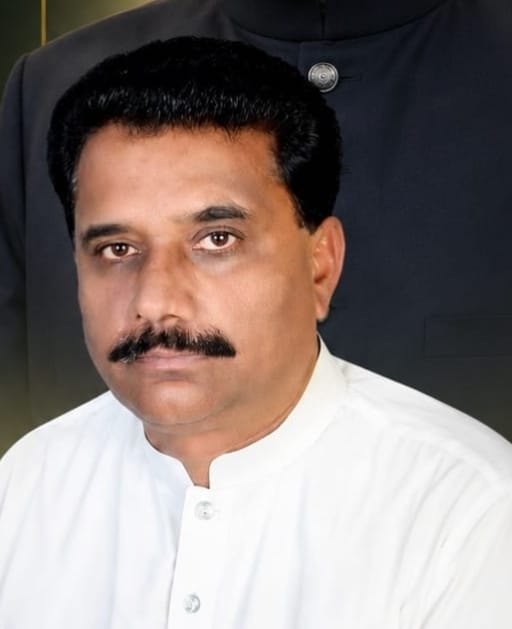
BY : Ch shabbbir Balochistani : Published by ANI
What greater honour could there be for Balochistan than to have its Governor represent the province at one of the world’s most important international platforms, the United Nations Headquarters in New York, and speak about youth, artificial intelligence, education, skills development and the policies shaping the future—among diplomats, senior government officials and policymakers from different countries?
The participation of Governor Balochistan Sheikh Jaffar Khan Mandokhail at the United Nations needs to be viewed in its proper context. This was not merely a routine official visit; it was undertaken following a direct invitation and nomination by the United Nations. This fact alone adds considerable significance to the visit.
When an international institution of the stature of the United Nations invites the Governor of Balochistan to participate in a global forum and speak on issues such as youth and artificial intelligence, the invitation should not be viewed merely as an opportunity for an individual. It is an opportunity to place the voice, aspirations and future of Balochistan and its young generation before the international community.
More importantly, the Governor’s engagement in the United States is not confined to a single United Nations programme. A number of other programmes, meetings and forums relating to Balochistan are also being held during his visit to the United States, where Governor Sheikh Jaffar Khan Mandokhail is expected to present Balochistan’s perspective on its challenges, opportunities, youth development, education, investment and prospects for economic growth.
These engagements are significant because Balochistan needs to be introduced to the international community not merely through the lens of its challenges, but also through its enormous potential, natural resources, talented youth and opportunities for development and investment.
The world is rapidly entering a new era driven by artificial intelligence, digital technology and a knowledge-based economy. For Balochistan, one of the most important questions is where its young people will stand in this transformation. Will they merely witness the technological revolution, or will they become active participants in it?
This is precisely why Balochistan’s representation at a global forum dealing with issues such as Youth and AI should not be reduced to the description of a ceremonial speech. It can, and should, become part of a broader policy conversation about the future of Balochistan’s youth.
At this point, it is also important to address the criticism levelled by Imran Riaz regarding the Governor’s visit.
Criticism is an essential part of journalism. Journalists have every right to question public officials, scrutinise government expenditure and ask what tangible outcomes can be expected from an official visit. But journalism has another equally important responsibility: to present the complete facts.
When an international organisation extends an invitation, nominates a provincial governor for participation in a global forum, and the visit also includes additional programmes and engagements concerning Balochistan in the United States, reducing the entire exercise to a merely political trip presents only one side of the picture.
If Imran Riaz or any other journalist asks what concrete benefits this visit will bring to Balochistan, how many young people can gain access to international opportunities, how investment can be attracted, and how these international engagements can be translated into effective public policy, that would be constructive and meaningful criticism.
However, when criticism overlooks the basic facts regarding the invitation, the nature of the programme and the opportunity for Balochistan to present its case internationally, the discussion risks becoming more about political perception than objective reality.
The role of journalism is not merely to interfere; it is also to interpret, investigate and place facts in their proper context. Governments and politicians should certainly be questioned and held accountable. But when an opportunity arises that can potentially serve Balochistan’s interests, its positive dimensions should also be acknowledged.
Balochistan needs opportunities more than noise.
If the Governor of Balochistan is using his engagements in the United States to speak about the province’s youth, education, employment, investment, technology and future, these efforts deserve to be assessed from the perspective of Balochistan’s collective interest rather than through the narrow lens of political rivalry.
The real success of this visit will ultimately be measured not by photographs or speeches, but by outcomes. Can it create new educational opportunities for Balochistan’s youth? Can it strengthen cooperation with international institutions? Can it attract investment? Can it open new avenues in technology and artificial intelligence? Can it help connect Balochistan’s young generation with the global economy?
The United Nations invitation is not merely a personal achievement; turning that opportunity into a collective benefit for Balochistan is the real measure of success.
Therefore, instead of asking only why the Governor of Balochistan travelled to the United States, the more meaningful question should be:
What can he bring back to Balochistan from this engagement with the international community?
If the visit results in even one new educational opportunity, one new technological initiative, one new investment opportunity or a stronger international image for Balochistan, the achievement will not belong to the Governor alone. It will belong to the people of Balochistan.
Balochistan needs to tell the world not only about its challenges, but also about the potential of its youth, the strength of its resources and the promise of its future.
And if the voice of Balochistan has reached the United Nations and other international forums, that voice should be strengthened—not diminished by unnecessary political controversy.