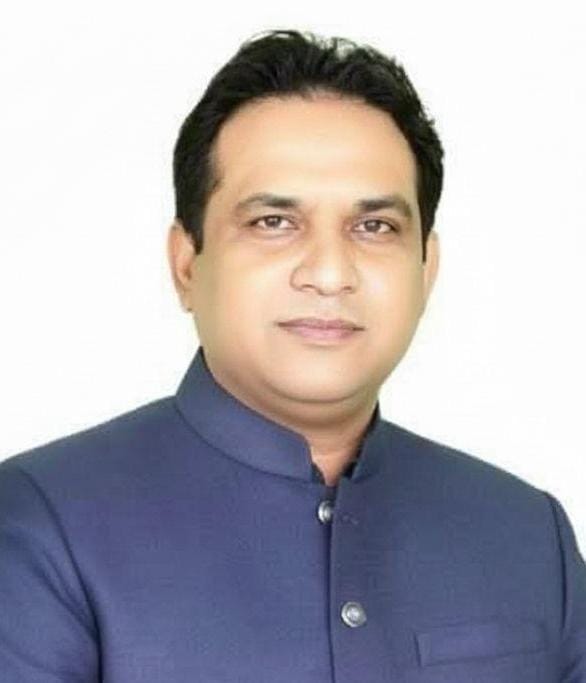
By : Rana Farooq Ashraf
Published By:ANI News Agency
Pakistan is once again confronted with the debate over the creation of new provinces. But the real question is not simply whether new provinces should be created; it is whether our problems will be solved by redrawing maps or by transferring power to the people. While strong political sentiments exist in Sindh against its division, major urban centres, particularly Karachi, continue to demand administrative autonomy, fair distribution of resources and better governance. The answer, therefore, lies not in confrontation but in constitutional reform, broad political consensus and genuine devolution of authority.
President Asif Ali Zardari has consistently advocated federalism and constitutional politics throughout his political career. The slogan “Pakistan Khappay” reflects this political philosophy. Rather than pursuing the politics of separation, the Pakistan Peoples Party has traditionally focused on provincial autonomy and the struggle for rights within the federal structure. The question of new provinces, too, should be settled through the Constitution, dialogue and political consensus—not through political pressure or street agitation.
From the Constitution introduced under Zulfikar Ali Bhutto to Benazir Bhutto’s vision of a “New Social Contract,” the idea of bringing power closer to the people has remained part of the PPP’s political discourse. The 18th Amendment was an important milestone in strengthening provincial autonomy. Yet an important question remains: have the powers transferred to the provinces genuinely reached districts, divisions and local governments?
If the answer is no, then the debate over new provinces should first be accompanied by a serious debate on the devolution of power. A large province may face administrative challenges, and the creation of a new province can be one possible solution. But empowered districts, effective local governments, stronger administrative divisions and a fair distribution of resources can also address many of these problems.
The problem is not always the size of a province; sometimes it is the concentration of power.
Karachi remains at the heart of this debate. The administrative, municipal and economic grievances of Karachi’s citizens cannot be ignored. However, addressing these grievances does not necessarily require the division of Sindh.
The Chandigarh model could also be examined as a point of reference. Chandigarh serves as the capital of both Punjab and Haryana while functioning as a Union Territory in India. Pakistan has a different constitutional structure, so this model cannot simply be replicated. However, the principle behind it could stimulate discussion about whether Karachi, while remaining an integral part of Sindh, could be granted exceptional administrative, financial and municipal powers through an appropriate constitutional arrangement.
If the unity of Sindh is to be preserved while addressing Karachi’s grievances, the wiser course may be to explore empowerment rather than division. Such a framework, however, must never be imposed by a single political party. The PPP, MQM, other political parties, constitutional experts, civil society and all relevant stakeholders from Karachi and Sindh should sit together and find a mutually acceptable solution.
The future of Karachi should not be decided by one side; it should emerge from broad, dignified and sustainable political consensus.
Sindh is not merely an administrative unit. It represents a deep historical, cultural and political identity. Issues relating to its unity, water, land and resources are therefore highly sensitive. Yet defending the unity of Sindh and demanding better governance for Karachi and other urban areas are not contradictory positions.
Strong and financially empowered local governments can address many of the grievances that fuel demands for greater administrative autonomy.
This is why Pakistan needs a national consensus not only on the question of provincial boundaries but, more importantly, on the distribution of power and resources. Reforms in the NFC framework and provincial financial systems should ensure that a meaningful share of resources reaches the grassroots and that local governments possess genuine administrative and financial authority.
The debate over a referendum must also be viewed in this context. If the people are ever asked to directly decide a fundamental question such as the creation of new provinces, transparency and public confidence will be essential.
A referendum is not merely about counting votes; it is about creating trust in the process and its outcome.
Pakistan must now move beyond the question of “How many provinces?” and ask the more fundamental question: “How much power do the people actually have?”
If citizens have to approach provincial capitals for basic services, if local governments lack resources and if elected representatives lack meaningful decision-making powers, simply creating another province will not resolve the fundamental crisis of governance.
Dividing provinces does not necessarily divide problems; sometimes it merely draws new boundaries around old grievances.
Whether new provinces are created or not, the decision must be based on the Constitution, the genuine will of the people and broad political consensus. Pakistan’s immediate priority should be to bring government closer to citizens, devolve authority and resources to the grassroots, and encourage political leadership to seek solutions rather than create new divisions.
Pakistan needs a new system of governance before it needs new maps.
Ultimately, the real question is not how many provinces Pakistan has. The real question is how much power Pakistan’s people have to resolve their own problems.
Before redrawing the map, we must transfer power to the people—because a stronger Pakistan will not be built merely through stronger provinces, but through empowered citizens.