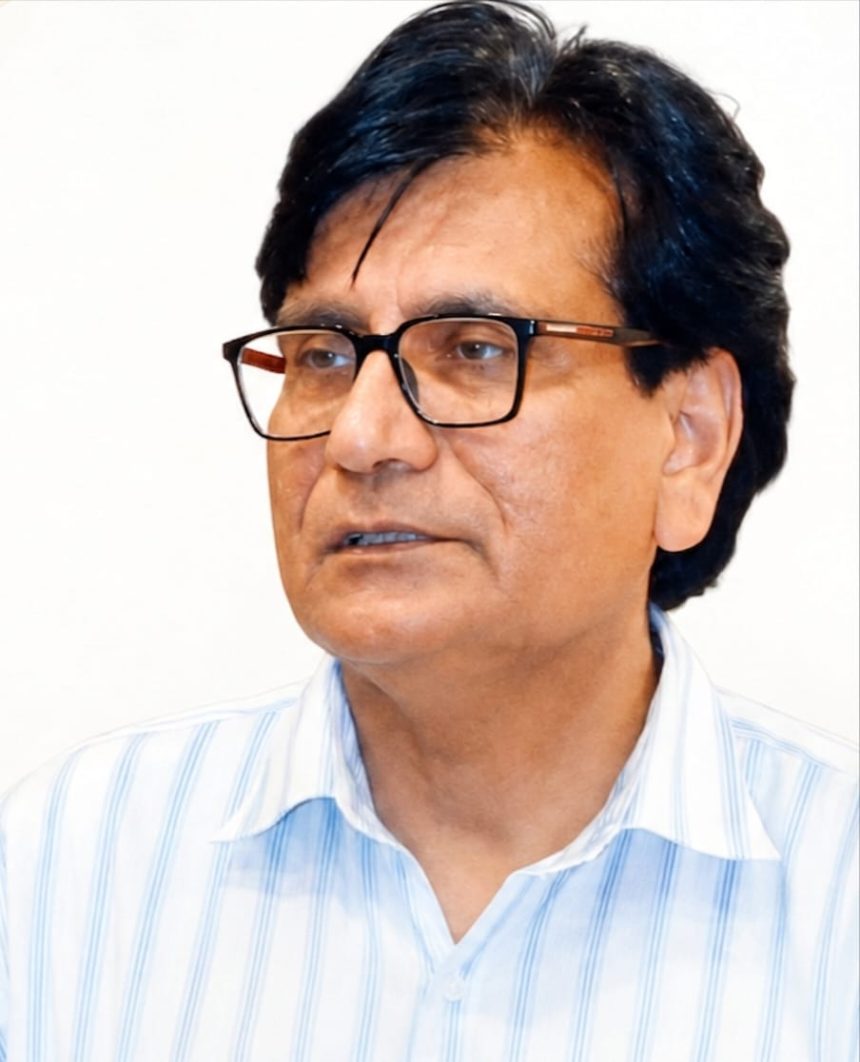
Written By:Dr. Nasir Hussain Bukhari
Published By:ANI News Agency
It is said that ” history repeats itself”, unfortunately, history repeats itself repeatedly in Pakistan ,perhaps the Pakistani government and masses both are not willing to learn from history. The brutal murder of an educated professional lady Hina Jave has repeated the history of the barbaric Murder of Noor Muqadam. The incident of acid attack on Dr Mah Noor while she was performing her professional duties at a hospital in Quetta, and the tragic death of Eshal Fatima, an eleventh-grade student in Jhang, have once again drawn national attention to the persistent issue of violence against women in Pakistan. These incidents are not isolated tragedies; rather, they reflect a deeper social crisis that continues to threaten the safety, dignity and freedom of women across the country. They compel us to ask a difficult but necessary question: why do Pakistani women remain vulnerable despite constitutional guarantees, religious teachings and social norms that emphasize their protection and respect? The rape and murder of innocent Ayat Noor in Haripur has shaken the humanity. The one and half year baby s rape in Karachi is beyond perception of human being.
The answer of these barbaric act lies in a complex interaction of historical, cultural, social and political factors that have evolved over decades. Understanding these factors is essential if Pakistan is to find a lasting remedy for violence against women and create a society where women can live without fear.
Pakistan’s social history may broadly be divided into two phases: the period before General Zia-ul-Haq’s rule and the period that followed. While no society is entirely free from discrimination or violence, many observers argue that pre-Zia Pakistan was relatively more tolerant, pluralistic and socially open. Women actively participated in education, public life, culture and professional fields. The state generally promoted a moderate outlook, and women’s participation in national development was widely encouraged.
The post-Zia era, however, witnessed significant changes in the country’s social and political landscape. The process of Islamization, combined with regional conflicts and the rise of militant ideologies, contributed to increasing intolerance and extremism in many spheres of society. Public discourse became more conservative, and patriarchal attitudes gained greater social legitimacy. Although it would be simplistic to attribute all contemporary problems solely to this period, it is undeniable that the social environment created during those years left lasting effects on gender relations and perceptions of women’s roles.
One of the major reasons for violence against women is the persistence of deeply entrenched patriarchal attitudes. In many communities, women are still viewed as subordinate to men and are denied equal opportunities in education, employment and decision-making. Such attitudes are often reinforced by cultural traditions rather than religious teachings. Islam grants women dignity, rights and protection, yet social customs frequently distort these principles and use tradition as a justification for discrimination.
Feudal structures also contribute significantly to women’s vulnerability. In many rural areas, powerful social hierarchies continue to shape everyday life. Women often become victims of practices intended to preserve family honour, tribal influence or economic interests. Forced marriages, restrictions on mobility and the denial of inheritance rights remain realities for many women. These practices are not merely violations of individual rights; they are symptoms of a broader system that seeks to control women’s autonomy.
Religious extremism represents another serious challenge. Extremist interpretations of religion often promote rigid gender roles and discourage women’s participation in public life. Such narratives undermine the spirit of justice, equality and compassion that forms the foundation of Islamic teachings. They also create an environment in which violence against women may be tolerated, justified or ignored.
From homes to workplaces, from roads to educational institutions, women continue to face harassment and insecurity. Female political leaders and workers are frequently subjected to trolling, character assassination and gender-based abuse. Cases involving the deprivation of inheritance rights, domestic violence and honour killings often remain underreported. In many instances, families avoid pursuing cases of sexual abuse due to social stigma and cultural taboos. As a result, many victims suffer in silence while perpetrators escape accountability.
Equally important is the role of family upbringing. Respect for women should begin at home. Children must be taught from an early age to value women as mothers, daughters, sisters and wives. Unfortunately, many families unconsciously reproduce gender stereotypes that privilege boys and impose unnecessary restrictions on girls. Consequently, discriminatory attitudes become normalized and are carried into adulthood.
Education is another area requiring urgent attention. The curriculum should not merely impart academic knowledge; it should also cultivate values of equality, respect and responsible citizenship. Schools and universities must encourage critical thinking and challenge harmful stereotypes. Students should learn that gender equality is not a foreign concept but a principle consistent with democratic values and the ethical teachings of Islam.
The rapid expansion of social media has introduced new dimensions to the problem. While digital platforms offer opportunities for communication, education and empowerment, they have also become spaces for harassment, exploitation and abuse. Online stalking, blackmail, character assassination and the non-consensual sharing of personal information disproportionately affect women and girls. Many cases of violence begin with online harassment and later escalate into physical harm. This challenge requires a combination of legal measures, digital literacy and responsible use of technology.
The harassment of women in professional environments remains another troubling reality. Female doctors, nurses, teachers, journalists and other professionals frequently encounter verbal abuse, intimidation and discrimination. The acid attack on Dr Mah Noor is particularly alarming because it targeted a woman serving society in a professional capacity. Such crimes are not only attacks on individuals but also attacks on the principle of women’s participation in public life. They send a message of fear to countless other women striving to build careers and contribute to national development.
Pakistan’s legal framework regarding violence against women has improved in recent years, but implementation remains inconsistent. Laws are effective only when they are enforced swiftly and fairly. Acid attacks, honour killings, domestic violence and sexual crimes require special attention from lawmakers, law enforcement agencies and the judiciary. Perpetrators must face severe punishment, and victims must receive protection, legal assistance and psychological support.
Another emerging concern is the growing prevalence of drug abuse among young people. Drug addiction not only destroys individual lives but also contributes to crime, violence and social instability. Reports indicating the increasing involvement of young men and women in narcotics should serve as a warning to policymakers, parents and educational institutions. Drug mafias pose a grave threat to Pakistan’s future by weakening families, corrupting communities and exposing young people to criminal networks. Combating this menace requires a coordinated national strategy involving law enforcement, public awareness campaigns, rehabilitation programmes and stricter border controls.
The media also has an important role to play. Responsible journalism can raise awareness, challenge harmful stereotypes and amplify the voices of victims. At the same time, sensationalism should be avoided, as it often reduces complex social issues to temporary headlines. Sustainable change requires continuous public engagement and informed debate.
Civil society organisations, religious scholars, educational institutions and political parties must work together to address the roots of gender-based violence. This issue cannot be solved through legislation alone. It requires a transformation of attitudes and social norms. Communities must reject all forms of violence against women and recognise that the safety and dignity of women are essential indicators of a healthy society.
Pakistan’s progress as a nation depends upon the full participation of women in every sphere of life. Women constitute nearly half of the country’s population and contribute significantly to education, healthcare, business, agriculture and public service. Their empowerment is not merely a women’s issue; it is a national imperative.
The tragedies involving Dr Mah Noor and Eshal Fatima should not fade from public memory after a few news cycles. Instead, they should inspire serious reflection and meaningful action. A society that fails to protect its women cannot claim to be just, democratic or civilized. Pakistan must confront the structural causes of violence against women and commit itself to building a future where every woman can live, work and pursue her aspirations without fear.
Only through education, legal reform, social awareness, responsible use of technology and a collective commitment to equality can Pakistan hope to eliminate violence against women and create a more humane, just and inclusive society for future generations.
Women constitute the fifty percent of the total population of Pakistan, therefore, they must be given fifty percent quota in all the institutions of federal and provincial governments to work so that gender equality can be brought into the social fabric as well.as Pakistan can develop. Women are not less intelligent than men. Their financial.empowerment is essential for the development of their families and nation. An educated working woman, an educated decent family.
These barbaric incidents are the outcome of the ill mindset of social psychology. The sociologists and psychologists can offer the remedies of this ill-mindset. Unfortunately Pakistani educational system.has excluded the subject of sociology mad psychology from the educational institutions almost,so Pakistan is facing the dilemma of who can present a viable remedies of these burning issues.