

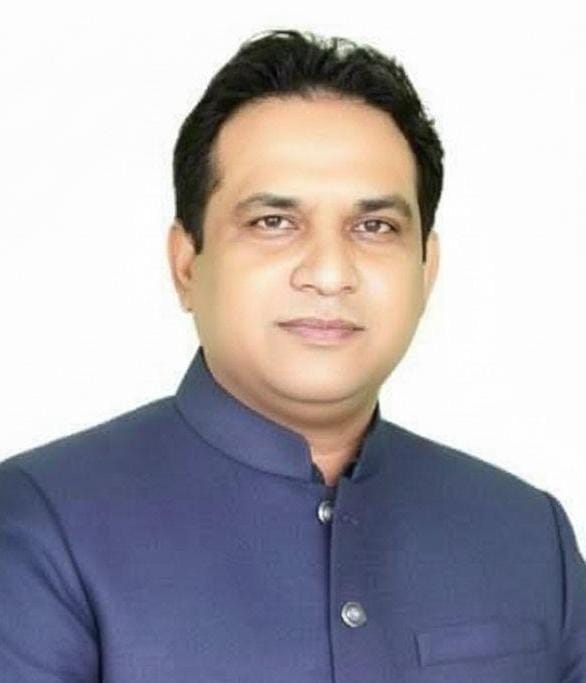
By Rana Farooq Ashraf : Published by ANI
Pakistan appears to be approaching another important political crossroads. The debate surrounding a possible 28th Constitutional Amendment has brought several fundamental questions back to the centre of national politics: should Pakistan have additional provinces or administrative units? Should some powers be reconsidered between the federation and the provinces? Can local governments be made genuinely autonomous? And, perhaps most importantly, can the country’s major political forces agree on a framework of governance that survives beyond the life of a single government?
At present, there is no final, publicly available text of a 28th Amendment. Much of what is being discussed remains at the level of proposals and political speculation. Yet the debate itself is significant. Recent discussions have included the possibility of new administrative units, the division of large provinces and a stronger local-government structure.
The question of new provinces cannot, however, be treated as a simple exercise in redrawing maps. Pakistan’s Constitution provides a specific procedure for altering provincial boundaries, including the requirement of a two-thirds majority in the relevant provincial assembly. Any serious attempt at restructuring must therefore be based on constitutional procedure, political consultation and public legitimacy.
There is a compelling argument for administrative reform. Pakistan’s population has expanded dramatically, while many citizens continue to struggle to access basic state services. Large provinces often make effective administration difficult, particularly when decision-making remains concentrated far from the communities it is supposed to serve.
But smaller provinces alone will not solve Pakistan’s governance crisis.
The country also needs empowered local governments with political, administrative and financial authority. A recent national debate involving representatives from the PML-N, PPP, PTI, MQM, JI and JUI-F highlighted precisely this point: new provinces, fiscal devolution, stronger local governments and institutional reform should be considered together rather than as mutually exclusive alternatives.
This is where the debate over the 18th Amendment becomes particularly sensitive. The PPP has repeatedly warned against any attempt to undermine provincial autonomy or reverse the devolution of powers achieved through the amendment. The party has maintained that constitutional change affecting the provinces must be pursued through consensus and the constitutional framework.
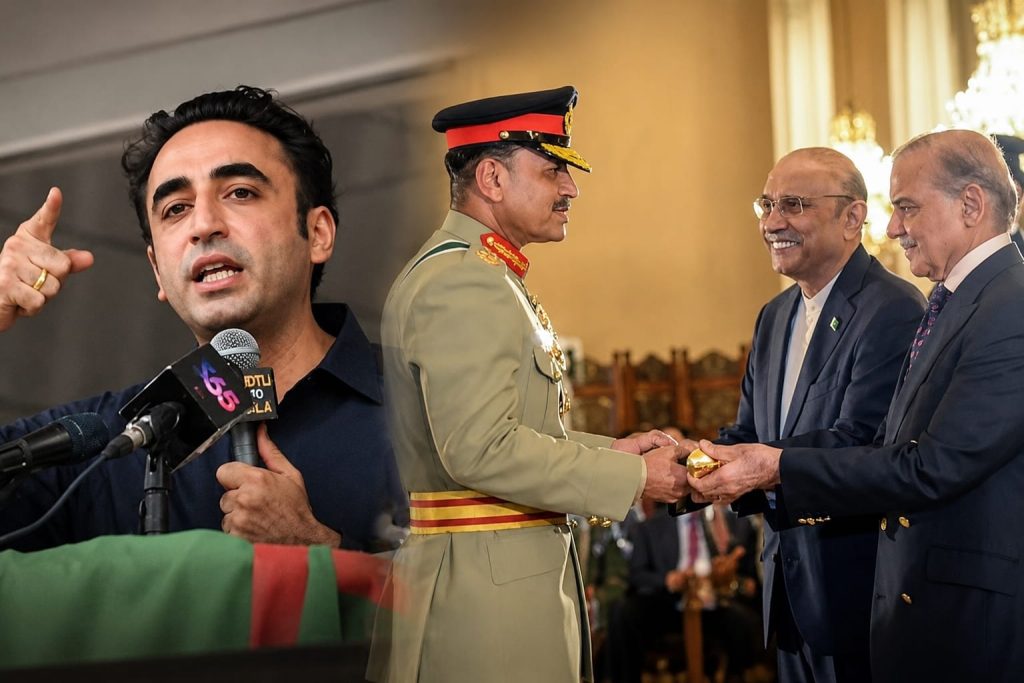
The latest deterioration in relations between the PPP and the PML-N makes the situation even more delicate. Bilawal Bhutto-Zardari has announced that the PPP will suspend cooperation with the government until its concerns are addressed. He has also stressed that parliament must be allowed to perform its constitutional role.
This development should not necessarily be viewed as the end of coalition politics. It may instead become an opportunity for a more mature form of political negotiation.
The future of the Pakistan Democratic Movement, or the broader political coalition that has emerged around the PML-N-led government, will depend on whether it can move beyond the politics of numbers. Parliamentary strength is important, but constitutional reform requires something greater: political legitimacy.
If the government wants to pursue a major constitutional package, it should not attempt to construct it behind closed doors and then seek votes at the final stage. The process should begin with structured negotiations with the PPP, PTI and other parliamentary forces. Every major proposal should be examined for its constitutional, financial, administrative and political consequences.
The PTI, too, has a role to play.
If its parliamentarians are ultimately required for constitutional legislation, the party should judge every proposal on its merits rather than treating parliamentary cooperation as an unconditional endorsement of the government. Likewise, the government should recognise that seeking opposition votes is not a political defeat. It is the essence of parliamentary democracy.
The political debate surrounding Imran Khan’s family also deserves greater restraint. Reports of different opinions among family members should not automatically be converted into accusations of betrayal, conspiracy or an attempt to capture the party. Political disagreements within a family, as within a political party, do not necessarily represent disloyalty. Responsible political discourse requires separating disagreement from hostility.
Pakistan now needs institutional politics more than personality-driven politics.
For the PDM, the immediate challenge is therefore not merely how to survive the next parliamentary confrontation. Its greater challenge is to determine what kind of political coalition it wants to become.
If it remains primarily an arrangement for maintaining a government in office, its political future will remain vulnerable. If, however, it develops a wider programme centred on political reconciliation, economic stability, constitutional governance, local government reform and institutional strengthening, it could create a more durable political space.
The country also needs a new understanding between the federation and the provinces.
Any proposal to transfer powers back to the centre should be based on administrative necessity rather than political convenience. Conversely, provincial governments must accept greater responsibility for the quality of services delivered within their jurisdictions. Devolution cannot mean merely the transfer of authority; it must also mean accountability.
Similarly, if new provinces are created, their financial sustainability must be examined before political boundaries are drawn. Who will finance the new governments? How will assets and liabilities be divided? What will happen to the civil services, police, courts and higher education institutions? How will the National Finance Commission arrangements be adjusted? These are not secondary questions. They are the substance of administrative reform.
Pakistan should therefore resist the temptation to treat the 28th Amendment as a political trophy.
If the amendment comes, it should emerge from a national conversation rather than a parliamentary numbers game. Its objective should be to bring government closer to citizens, strengthen institutions, improve service delivery and create a clearer division of responsibilities between the federation, provinces and local governments.
The PDM should particularly recognise that its political survival will depend on reconciliation rather than confrontation. The PPP’s reservations should be addressed through negotiations. The PTI should be brought into parliamentary dialogue. Smaller parties should have a meaningful voice. And constitutional experts, economists, civil society and provincial stakeholders should be included in the process.
Pakistan has already spent too much political energy on proving who defeated whom.
The next phase should be about proving whether the state can deliver.
The real test of the 28th Amendment will therefore not be the number of new provinces it creates, nor the number of powers shifted from one tier of government to another. Its real test will be whether an ordinary citizen can obtain justice more quickly, receive better healthcare, access quality education, find a responsive administration and hold elected representatives accountable.
Pakistan does not merely need new maps. It needs a new political culture.
The coming months may determine whether the country moves towards another cycle of confrontation or begins a more serious process of political accommodation. The PML-N, PPP and PTI all have an opportunity to choose the latter.
Because governments come and go, coalitions rise and fall, and political leaders change. The state, however, remains.
Power is temporary. Pakistan is permanent.
If the political leadership can understand this simple principle, the proposed 28th Amendment could become more than another constitutional exercise. It could become the beginning of a broader national settlement — one that moves Pakistan from confrontation towards consensus, from excessive centralisation towards balanced devolution, and from political survival towards effective governance.



In countries like Pakistan, introducing amendments to laws or the constitution is not a particularly difficult task; in the current scenario, everyone knows exactly how such amendments can be pushed through. I fully agree with the writer’s point regarding the impact the upcoming constitutional amendment might have on the public’s living conditions. Will the creation of new provinces or administrative units, or the devolution of power to the grassroots level, actually lead to improvements in the circumstances described by the author—or will it prove to be nothing more than a charade?
The masses, crushed by poverty, want decent employment and quality healthcare. They want good, affordable education for their children, an end to terrorism, and a robust national infrastructure. The general public is not concerned with whether these things are achieved through the creation of new provinces, the devolution of power to the grassroots level, a new constitutional amendment, or simply through good governance and a government that truly empathizes with the people’s pain and hardships.