By Rana Farooq Ashraf : Published by ANI
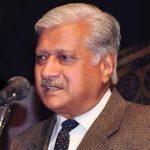
Politics has a way of turning ordinary men into distant figures. Public office often creates walls between leaders and the people who once stood beside them. Yet, every so often, one encounters a political leader whose office does not change his basic temperament. Punjab Governor Sardar Saleem Haider Khan, in my personal observation, belongs to that rare category.
I have had the opportunity to observe several governors of Punjab from close quarters. During my tenure as Information Secretary in Lahore, I worked closely with the late Salman Taseer. I also observed the political and administrative styles of Sardar Latif Khosa, Makhdoom Syed Ahmed Mahmood and Chaudhry Sarwar. Each possessed his own strengths, political standing and administrative approach. Each had a distinct relationship with his party, constituency and the wider public.
But what I have found particularly striking about Sardar Saleem Haider Khan is his simplicity.
It is not merely the simplicity associated with informal conversation or personal mannerisms. It is a political simplicity — the ability to remain connected with ordinary party workers and citizens despite occupying one of the highest constitutional offices in Punjab.
Sardar Saleem Haider Khan’s political journey is important in understanding this temperament. His political career began at the grassroots level, and he gradually moved through student politics, local political activity and parliamentary politics. He was elected to the National Assembly in 2008 on a Pakistan Peoples Party ticket and subsequently served in federal responsibilities, including as Minister of State for Defence Production and Minister of State for Defence. He later served as Special Assistant to the Prime Minister on Overseas Pakistanis and Human Resource Development. In May 2024, he took oath as Governor of Punjab.
For me, however, his biography is less important than what that journey has done to his personality.
I once watched him narrate an episode from his political career concerning his nomination and political rise. What struck me was not the event itself but the manner in which he described it. There was no exaggerated claim of greatness, no attempt to portray himself as a born leader. Instead, there was a simple account of how an ordinary political worker gradually earned recognition through loyalty, perseverance and public engagement.
That simplicity is perhaps his greatest political asset.
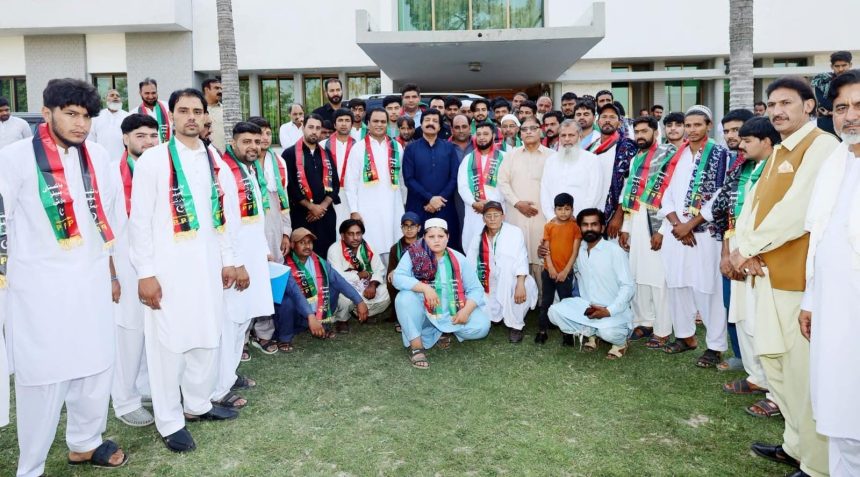
Since assuming office, Governor House has increasingly become a point of contact for Pakistan Peoples Party workers from different parts of Punjab. At a time when the party’s organisational structure in Central Punjab faces serious challenges, many workers — including those without formal organisational positions — often feel disconnected from the party’s decision-making process.
For such workers, the Governor House has remained accessible.
The significance of this approach should not be underestimated. A political worker who approaches the governor is not necessarily asked first about his organisational designation. The more important consideration appears to be whether he is a worker of the Pakistan Peoples Party, a political worker associated with the legacy of Shaheed Zulfikar Ali Bhutto and Shaheed Mohtarma Benazir Bhutto, and someone who believes in the party’s future leadership.
This attitude has created a sense of political inclusion among workers who might otherwise feel marginalised.
Governor Saleem Haider Khan has repeatedly emphasised the importance of party workers and grassroots organisation. In meetings with PPP leaders and workers from different parts of Punjab, he has stressed the need to strengthen the party at the grassroots level, increase public contact and rebuild organisational activity.
This approach is particularly relevant in Punjab, where the PPP has historically faced the challenge of translating its national political identity into an effective organisational presence.
The governor’s political activity has also extended beyond Lahore. His visits to different districts, meetings with party workers and engagement with local political groups indicate an attempt to maintain contact with the party’s field structure. Whether it is an election, a by-election, an organisational dispute or a worker facing a personal or political difficulty, he has often preferred direct engagement.
His role during by-elections has been particularly noticeable. Rather than treating electoral contests as the responsibility of a particular local group, he has attempted to bring different factions, party committees and workers into a common political effort.
This is not always an easy task.
Political parties are made up of competing personalities, local interests and different generations of workers. Reconciliation requires patience, accessibility and political confidence. Bringing dissatisfied groups to the table is often more difficult than addressing one’s political supporters.
In this context, the governor’s willingness to engage with different factions is significant.
His public role has also included engagement with administrative institutions, particularly during emergencies. During the floods, he visited affected areas and relief camps, reviewed arrangements and interacted with people affected by the disaster. Such visits are important because a constitutional office acquires credibility when its holder is willing to see administrative realities beyond official briefings.
For a governor, however, political engagement must always operate within constitutional boundaries. The office is not a substitute for party organisation, nor should it become an alternative administrative centre. The real test is whether accessibility, political outreach and administrative responsibility can coexist without compromising institutional propriety.
This is where Sardar Saleem Haider Khan’s role deserves attention.
His greatest contribution may not ultimately be measured by the number of meetings he holds or districts he visits. It may instead be measured by whether ordinary political workers once again begin to feel that their leadership is accessible.
Political parties do not survive merely through offices, titles and organisational notifications. They survive through workers. When a worker believes that his leadership will listen to him, respect him and stand beside him during difficult times, political organisation begins to acquire life.
That is the political space in which Governor Saleem Haider Khan appears most comfortable.
His simplicity is therefore more than a personal characteristic. It has become part of his political style. He has retained the demeanour of a worker while occupying the office of governor.
Punjab needs political leadership that can communicate with its people without creating unnecessary distance between the state, political parties and society. The PPP, particularly in Central Punjab, needs organisational revival and stronger grassroots engagement. The two challenges are different, but they intersect at the level of political communication.
If Governor Saleem Haider Khan continues to keep the doors of Governor House open, engage with workers across Punjab, encourage reconciliation among competing groups and maintain constructive relations with state institutions, his political legacy may extend beyond the constitutional office he currently occupies.
Ultimately, a governor is remembered not only for the authority attached to his office but for the manner in which he exercised it.