BY:Report ANI
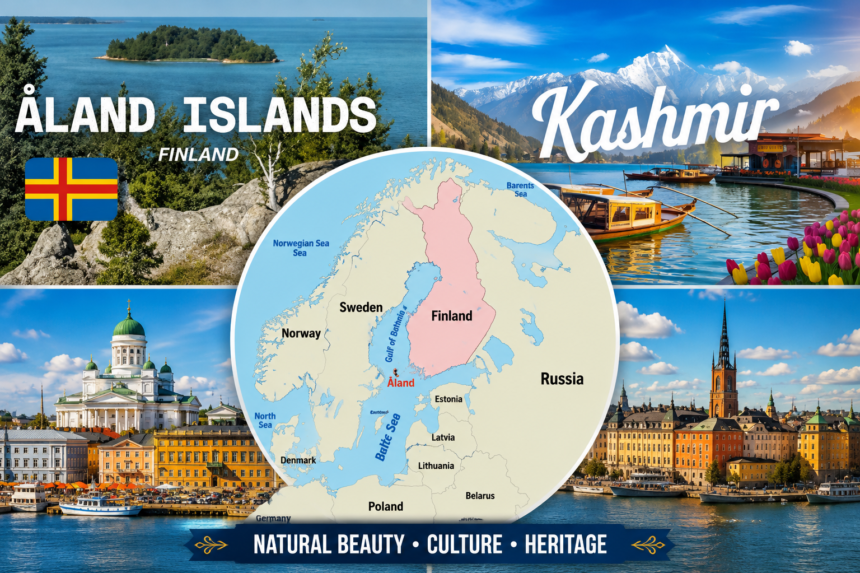
The history of the Åland Islands dispute between Finland and Sweden offers valuable lessons for resolving long-standing territorial conflicts, including the Kashmir dispute, writes Dr. Ghulam Nabi Fai, Chairman of the World Forum for Peace & Justice.
Dr. Fai argues that while Kashmir and the Åland Islands have different historical, legal, and geopolitical backgrounds, both cases highlight the importance of balancing sovereignty, security concerns, and the aspirations of local populations.
The Åland Islands dispute emerged after Finland gained independence from Russia in 1917, when the predominantly Swedish-speaking islanders sought reunification with Sweden. Finland opposed the move, considering it an internal matter, but the issue was referred to the League of Nations. The international body ultimately granted sovereignty to Finland while ensuring guarantees for the islands’ Swedish language, culture, autonomy, and demilitarized status.
According to Dr. Fai, the Åland settlement demonstrates that international diplomacy, legal frameworks, and political compromise can help transform deeply rooted disputes into peaceful arrangements.
Discussing Kashmir, he noted that since the partition of British India in 1947, India and Pakistan have maintained competing positions over the territory, while the people of Kashmir have also expressed their own aspirations. The dispute has resulted in wars, military tensions, and prolonged instability between two nuclear-armed neighbours.
Dr. Fai highlighted that India considers Kashmir an integral part of the country and supports a bilateral approach under the Simla Agreement, while Pakistan maintains that the issue remains unresolved and should involve the aspirations of the Kashmiri people.
He stressed that recent developments have once again demonstrated the risks associated with continued tensions, emphasizing that Kashmir remains one of the world’s most sensitive regions.
“The lesson of Åland is not that Kashmir should follow the same path, but that even complex disputes can find solutions through dialogue, international engagement, and institutional guarantees,” Dr. Fai stated.
He called for a durable settlement that addresses the legitimate concerns of India and Pakistan while ensuring that the voices and interests of the people of Kashmir are considered.
Dr. Fai concluded that history shows conflicts involving territory, identity, and sovereignty can be managed through courage, compromise, and diplomacy, adding that a negotiated solution involving India, Pakistan, and genuine Kashmiri leadership remains essential for lasting peace and stability in the region.