The Pakistan Institute of Legislative Development and Transparency has welcomed the stronger budget scrutiny applied to the Federal Budget 2026-27, calling it a meaningful step toward reinforcing Parliament’s constitutional role in overseeing public finances.
PILDAT noted that the National Assembly’s Standing Committee on Finance and Revenue, chaired by Syed Naveed Qamar, MNA, devoted substantial time to reviewing the budget in detail. The committee held a series of meetings to examine budgetary proposals, listen to government officials, stakeholders and experts, and assess both taxation and expenditure measures before the National Assembly took them up for consideration.
According to PILDAT, this level of engagement reflects a growing appreciation for the central role that parliamentary committees must play in ensuring accountability, transparency and informed fiscal decision-making. The organization said the process showed that budget scrutiny can move beyond a brief plenary debate and instead become a more systematic and evidence-based exercise.
The committee-led review, PILDAT observed, allows lawmakers to study proposals more closely, understand their wider implications and offer recommendations that can improve the quality of legislation as well as the management of public finances. It added that such detailed scrutiny strengthens Parliament’s ability to represent citizens’ interests more effectively.
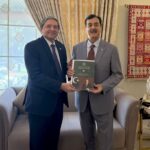
PILDAT also appreciated Speaker National Assembly Sardar Ayaz Sadiq for supporting an environment in which meaningful committee examination of the budget could take place. The group said that this kind of institutional support is essential if parliamentary oversight is to become more robust and consistent.
Reiterating its long-standing position, PILDAT said standing committees should be given enough time, technical assistance and institutional capacity to examine budget proposals in depth. It added that the experience of the Federal Budget 2026-27 shows how stronger budget scrutiny can improve the budget-making process and deepen Parliament’s role in public financial oversight.