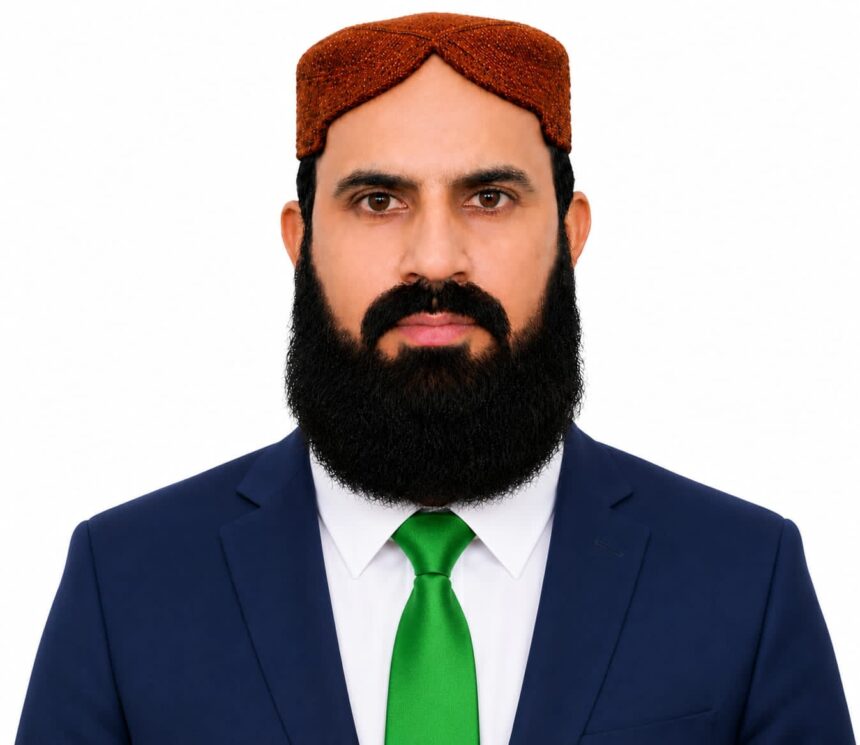
By: Mansoor Nizamani
Published By: ANI News Agency
The future of any country is closely linked to its younger generation. Young people are not merely a significant segment of a country's population; they are also important drivers of intellectual, political and economic transformation in society. History demonstrates that societies which provide young people with opportunities to think, question, express disagreement and assume leadership have been more successful in strengthening democratic values and political awareness. In contrast, where restrictions have been imposed on the political and social activities of young people, political awareness, tolerance and leadership abilities have gradually suffered. The question of restoring student unions in Pakistan is also an important national and democratic issue of this nature.
On November 25, 2026, an important development emerged in the Sindh Assembly regarding student union elections when a resolution presented by Jamaat-e-Islami member Muhammad Farooq was unanimously passed by the House. The resolution called for elections to student unions in public and private educational institutions across Sindh. Minister for Universities and Boards Ismail Rahoo also supported the demand and stated that universities had been directed to formulate rules and regulations under the law. Approval was also granted for the establishment of a parliamentary committee to oversee the implementation of the resolution. This development is undoubtedly significant, but the fundamental question remains: Will the restoration of student unions once again remain limited to an announcement in the Assembly, or will elections actually be held?
A review of Pakistan's history of student politics reveals that student organisations and unions have played an important role in the country's political struggle. During the early decades of Pakistan, students actively participated in movements against dictatorship, undemocratic measures and political injustices. Several student leaders eventually went on to establish themselves in national politics. Student unions were not merely platforms for elections or selecting office-bearers; they also provided students with opportunities to engage in debates, express differing opinions, organise themselves, develop leadership skills and collectively address common problems.
However, in 1984, the military government of General Zia-ul-Haq imposed a ban on student unions. This decision closed an important avenue for democratic representation of students within educational institutions. In 1989, an attempt was made to lift the ban during Benazir Bhutto's government. However, following a Supreme Court decision in 1993, strict restrictions were once again imposed on students' political activities. For several decades thereafter, different political, social and student organisations continued to demand the restoration of student unions, but the issue was never fully implemented.
Sindh took an important step in this regard when the Sindh Assembly passed the Sindh Students Union Bill 2019 on February 12, 2022. The purpose of this legislation was to provide a legal framework for establishing student unions and regulating their activities in educational institutions. Despite the passage of the law, elections have yet to take place in many educational institutions. This raises an important question: When legislation exists, the Assembly supports the initiative, and the need for student representation has also been acknowledged, why is implementation still being delayed?
The reality is that the restoration of student unions should not be treated merely as a political slogan or linked to the interests of any single political party. The primary purpose of student unions should be to represent students' legitimate concerns, advocate improvements in educational facilities and engage with institutional administrations on issues such as tuition fees, hostels, transportation, libraries, sports and other essential facilities. When students have representatives elected by their own votes, they gain an opportunity to raise their concerns in an organised and democratic manner.
Nevertheless, the troubled aspects of student politics in the past cannot be ignored. At different times, violence, factionalism, the use of weapons and the influence of political parties within educational institutions adversely affected the academic environment. Many parents are also concerned that the restoration of student unions could once again turn educational institutions into centres of political confrontation and violence. Rather than dismissing these concerns, they must be addressed seriously. It is also essential to distinguish between independent student unions and student federations operating under the influence of political parties. Student unions should be based on students' free choice, democratic representation and educational interests, rather than the instructions of external political forces.
To achieve this objective, the government must introduce clear and transparent rules and regulations. Elections should be conducted under impartial supervision, and every student should have the right to participate without discrimination based on political affiliation, language, religion or group identity. There should be no room for weapons, violence, intimidation or coercion within educational institutions. The responsibilities and powers of elected representatives must be clearly defined, while formal forums should be established to resolve disagreements between students and institutional administrations. It is equally important to educate students about democratic principles, respect for the rule of law and tolerance of differing opinions.
Another major problem in our educational institutions is that students are awarded degrees but are not provided with sufficient opportunities to develop leadership, collective decision-making and democratic attitudes for practical life. A university should not merely be a place for passing examinations and obtaining degrees. It should also serve as an intellectual and academic environment where young people can learn to question, present arguments, tolerate disagreement and understand social challenges. Student unions can serve as an important means of providing this essential training.
Similarly, democracy cannot be strengthened in any democratic country by keeping young people away from politics. Democracy does not simply mean holding general elections every few years; its true spirit lies in involving people in democratic processes from an early age. Student unions can provide an important platform for teaching young people leadership, tolerance, responsibility and political awareness. What is needed is to learn from the mistakes of the past and restore student unions on independent and democratic foundations, free from violence and political interference. After all, today's student will become tomorrow's teacher, journalist, administrator, politician and responsible citizen. If we want informed and capable leadership in the future, its training must begin today within our educational institutions.