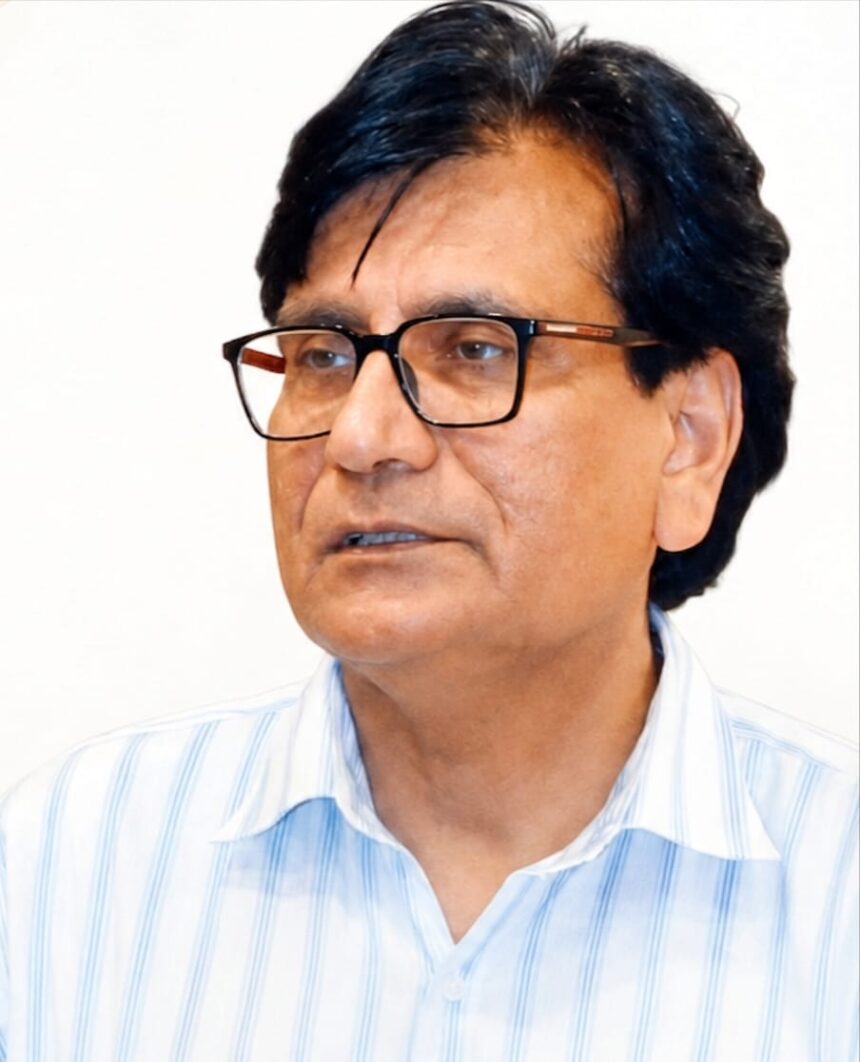
By: Dr. Nasser Hussain Bukhari
Analyst writes on Geopolitical, Global and National Issues in Pakistan
Published By: ANI News Agency
A society is not judged merely by the height of its buildings, the speed of its technological advancement or the prosperity of its economy. Its real civilisation is reflected in how it treats its most vulnerable members, particularly women and children. A nation may embrace modern technology, construct metropolitan cities and produce highly qualified professionals, yet remain socially primitive if its people cannot respect one another's dignity, freedom and fundamental rights. Pakistan today is confronting precisely this contradiction. Beneath the appearance of modernisation, an alarming culture of social intolerance, male chauvinism and violence is threatening the very foundations of our social fabric. Most disturbing is the growing insecurity of women, who increasingly face threats not only in public spaces but also within the walls of their own homes.
The recent killing of television anchorperson Rabia Ahsan in Rawalpindi has once again exposed this painful reality. She was found shot dead at her residence, and her husband was arrested as the prime suspect. A murder case was registered, and the court authorised police custody for investigation. The accused reportedly claimed that the firearm had discharged accidentally; the circumstances remain subject to judicial investigation. Nevertheless, the tragedy raises a fundamental question: how can a woman's home, which should be her safest sanctuary, become a place where her life is at risk? Her death, alongside other reported incidents of violence against women, demands that Pakistan examine the deeper social and psychological causes of this growing intolerance.
The first major factor is Pakistan's transition from an agrarian society towards a technology-driven, urban and economically interconnected social structure. This transformation is rapidly changing the economic and social roles of both men and women. Women are entering professional institutions, businesses, universities and leadership positions, gaining financial independence and greater social visibility. However, a significant segment of the male population has failed to adjust its traditional mindset to these changing realities. Economic empowerment of women is sometimes perceived not as progress for the family and society but as a challenge to male authority. This resistance becomes a catalyst for domestic conflict, harassment and violence. The problem is not women's changing role; it is men's reluctance to accept social change.
Second, patriarchy and male chauvinism remain deeply embedded in Pakistan's social structure. In many households, authority is traditionally associated with men, while women are expected to demonstrate obedience and submission. A woman's independent opinion, professional ambitions, financial autonomy or personal choices may be interpreted as defiance. Such attitudes transform relationships into unequal power arrangements rather than partnerships based on mutual respect. When men consider control over women their inherent right, intolerance becomes normalised, and violence may become an instrument of enforcing authority.
Third, gender inequality begins at home and extends into workplaces and public institutions. Women frequently encounter discrimination in educational opportunities, employment, promotions, remuneration and decision-making. Even educated and professionally successful women may face restrictions on their personal freedom. The contradiction is particularly visible in metropolitan centres, where modern lifestyles coexist with deeply conservative attitudes. Many men who migrate from rural and tribal environments to major cities acquire professional qualifications and urban appearances without necessarily transforming their inherited social attitudes. Their educational credentials do not automatically produce psychological maturity, emotional intelligence or respect for gender equality.
Fourth, the misuse and misinterpretation of religion contribute to this problem. Certain religious preachers and self-appointed custodians of morality propagate interpretations that portray women as inferior to men or subordinate in every aspect of social life. Such narratives are fundamentally inconsistent with the principles of dignity, justice, compassion and mutual respect taught by Islam and exemplified by the Holy Prophet Hazrat Muhammad (peace be upon him). Islam recognises women's dignity, property rights, consent and social responsibilities. Religious discourse must promote justice and protection rather than provide ideological justification for domination, coercion and violence.
Fifth, tribal customs, cultural taboos and outdated social traditions continue to reinforce discriminatory attitudes. Practices that restrict women's choices, suppress their voices or treat them as family possessions cannot be defended in the name of culture. Honour-based violence, forced marriages and domestic abuse reflect a distorted understanding of honour and social responsibility. A society that protects family reputation at the expense of a woman's life has fundamentally misunderstood the meaning of morality.
However, one of the most neglected dimensions of this crisis is the failure of Pakistan's educational system to develop tolerant, emotionally mature and gender-sensitive individuals. Our national curriculum gives considerable attention to academic achievement, examinations and professional preparation, but insufficient attention to personality development, emotional intelligence, conflict resolution and gender equality. Boys are often groomed to associate masculinity with authority rather than responsibility, respect and compassion. Schools must become institutions of social transformation, not merely centres for transferring academic information.
The curriculum should incorporate gender equality, mutual respect, human rights, emotional regulation and non-violent conflict resolution as essential learning components from early childhood through adolescence. Boys must learn that women are equal human beings, entitled to dignity, independent choices, economic opportunities and personal security. Teachers should be trained to challenge discriminatory attitudes, while educational institutions should encourage shared responsibilities and respectful interaction between boys and girls.
Equally important is the role of families. The first lessons in tolerance, respect and equality are learned at home. Parents must raise sons who understand that masculinity is demonstrated through responsibility, empathy and self-control, not intimidation or domination. Mothers and fathers should share domestic responsibilities, respect one another's opinions and provide equal opportunities to their children. A boy who watches his father disrespect his mother may internalise that behaviour as an acceptable social norm. Consequently, transforming society requires transforming family relationships.
Finally, the state must move beyond symbolic condemnations and ensure effective protection for women. Domestic violence must be investigated professionally, complaints must be taken seriously, shelters and legal assistance must be accessible, and perpetrators must face lawful consequences. Reconciliation or forgiveness must never be imposed on victims or their families through social pressure, intimidation or economic dependence. Where the law permits settlement in particular offences, it must operate within legal safeguards and must not become a mechanism for escaping accountability. The state has a responsibility to protect life and prevent violence.
Pakistan's crisis of social intolerance is ultimately a crisis of education, values, governance and social transformation. Economic modernisation without psychological and cultural evolution produces a dangerous contradiction: technologically advanced individuals carrying socially regressive attitudes. The real measure of our progress will not be the number of women entering workplaces but whether they can live, work, disagree and make independent decisions without fear. A society that cannot guarantee the safety of its women cannot claim to be civilised, democratic or progressive. The transformation must begin at home, continue through schools and universities, and be reinforced by the state and religious and cultural institutions. Respect for women is not a favour granted by men; it is a fundamental human right. Pakistan must educate its sons to respect that right, reform its institutions to protect it and ensure that violence against women is met with justice rather than compromise. The future of a tolerant Pakistan depends on this transformation.