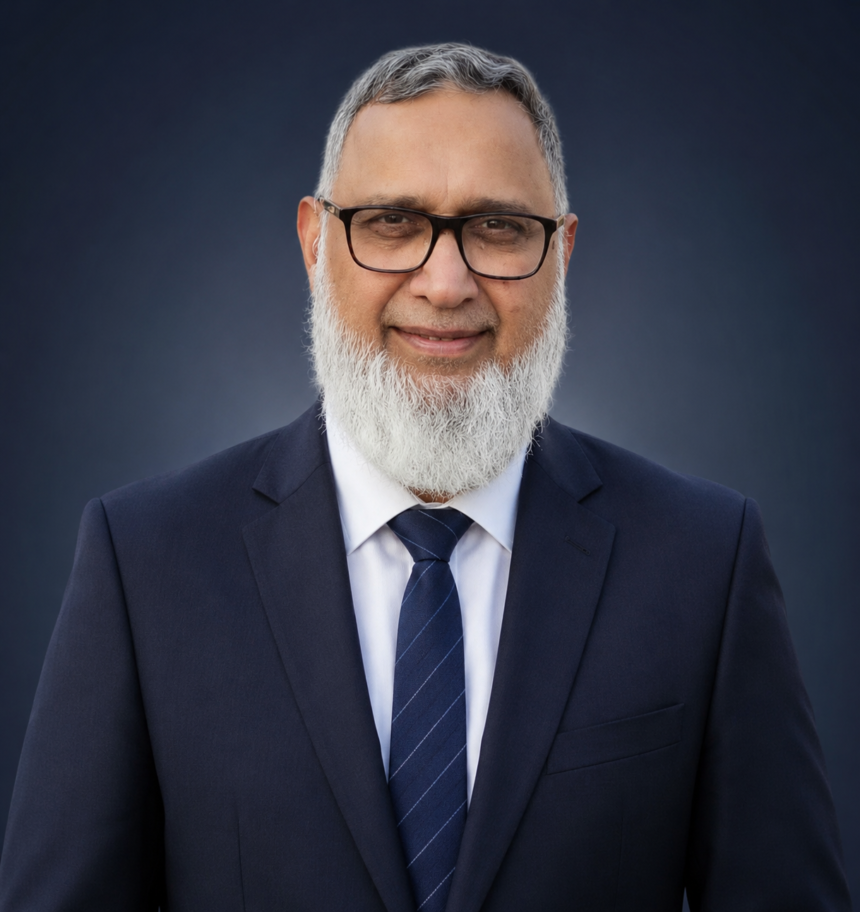
By: Mahmood Khan
Published by: ANI News Agency
The friendship between Türkiye and Pakistan is one of the most enduring relationships between two Muslim-majority countries. It is rooted in history, strengthened by mutual respect and sustained by close people-to-people ties. Over the years, the relationship has evolved beyond traditional diplomacy into a broad partnership covering defence, trade, education, technology, energy and regional cooperation.
The roots of this friendship go back to a period before Pakistan came into existence. Muslims of the Indian subcontinent expressed strong support for the Turkish people during the Turkish War of Independence. The establishment of the modern Turkish Republic also inspired many Muslims in South Asia. When Pakistan emerged as an independent country in 1947, these historical connections provided a strong foundation for relations between the two nations.
Since then, successive governments and people in both countries have maintained close ties. Natural disasters and humanitarian emergencies have repeatedly provided opportunities for Türkiye and Pakistan to support each other. Such solidarity has given the relationship a strong public dimension that goes beyond formal diplomatic engagement.
Strengthening Institutional Cooperation
The institutional framework between the two countries has also expanded over time. In 2009, Türkiye and Pakistan established the High-Level Cooperation Council, which was later upgraded to the High-Level Strategic Cooperation Council (HLSCC).
The seventh session of the HLSCC was held in Islamabad in February 2025. During the meeting, both sides agreed to deepen and institutionalise cooperation across a range of sectors. New standing committees dealing with security and defence, health, and science and technology were also established, reflecting the growing scope of bilateral relations.
Defence and Strategic Cooperation
Defence cooperation remains an important pillar of the Pakistan-Türkiye partnership. The two countries have developed extensive cooperation in military training, defence production and technology. Their relationship has increasingly moved towards joint projects and a more structured approach to defence and security cooperation.
In July 2025, Türkiye and Pakistan inaugurated a Joint Standing Committee on Security, Defence and Intelligence, creating another institutional mechanism for cooperation in these areas.
The partnership gained an additional strategic dimension in August 2026 when Türkiye, Pakistan and Saudi Arabia signed the Makkah Joint Defence Agreement. The agreement underlined the three countries' interest in closer defence cooperation and enhanced collective security.
Expanding Economic Relations
While defence and strategic cooperation remain significant, economic relations may offer some of the greatest opportunities for the future. A strong political relationship becomes more sustainable when it translates into investment, employment, trade and technological development.
Pakistan and Türkiye have identified several sectors with considerable potential, including trade and investment, energy, mining, information technology, agriculture and connectivity. During the July 2026 meeting between Prime Minister Shehbaz Sharif and President Recep Tayyip Erdoğan, both sides reaffirmed their ambition to increase bilateral trade towards the US$5 billion mark.
Energy is another promising area. Companies from both countries have explored opportunities in petroleum and natural-gas exploration, while mineral resources and other sectors also offer room for greater cooperation.
For Pakistan, Turkish experience in industrial development, infrastructure and technology can provide valuable opportunities. For Türkiye, Pakistan offers a large consumer market, a growing technology sector and a strategically important location linking South Asia with other regional markets.
Education, Culture and People-to-People Ties
The relationship is not limited to governments and institutions. Education and culture have become important bridges between the two societies.
Turkish educational institutions and cultural programmes have expanded their presence in Pakistan. In 2025, Türkiye's Foreign Minister stated that the Türkiye Maarif Foundation had more than 80 schools in Pakistan, with further expansion planned.
Turkish television dramas have also gained considerable popularity in Pakistan, while tourism, student exchanges and academic cooperation have created additional opportunities for interaction. These cultural links matter because the long-term strength of bilateral relations will depend not only on political leaders but also on younger generations.
The Road Ahead
The friendship between Pakistan and Türkiye has a strong foundation, but its future will depend on how effectively both countries convert goodwill into practical outcomes.
There is considerable scope for increasing two-way trade, encouraging private-sector investment, simplifying business procedures and improving transport and connectivity. Cooperation can also be expanded in emerging fields such as artificial intelligence, cybersecurity, renewable energy and advanced manufacturing.
Pakistan can benefit from Türkiye's industrial and technological experience, while Turkish businesses can explore opportunities in Pakistan's large market and strategic geographic position. Greater interaction between the private sectors of both countries could therefore become an important driver of the next phase of the relationship.
Ultimately, the strength of Pakistan-Türkiye relations lies in the combination of a shared historical bond, public goodwill and strategic interests. The challenge for both countries is to translate that goodwill into greater economic opportunity, educational exchange, technological cooperation and regional stability.
Pakistan and Türkiye have often described their relationship as “Two Souls, One Heart.” The coming years will show how effectively that sentiment can be transformed into stronger institutions, deeper economic partnerships and lasting opportunities for the people of both countries.