Report: ANI Correspondent:
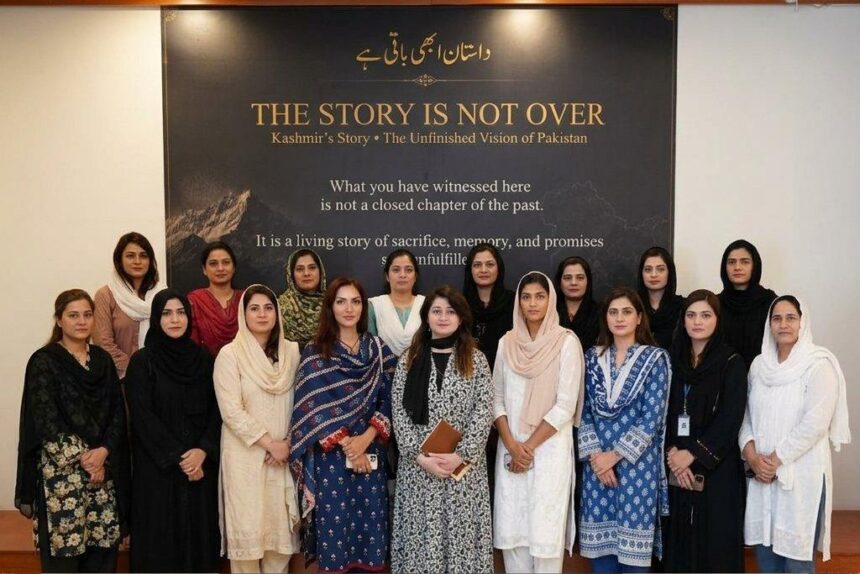
MUZAFFARABAD — A delegation of working professional women from different fields visited the newly constructed Kashmir Baithak in Muzaffarabad on the International Day of Non-Violence to review the historical, political and humanitarian dimensions of the Kashmir dispute.
The delegation was led by Qurat ul Ain Ali Khawaja, Chairperson of the All Pakistan Media Council (APMC), and included journalists from the Muzaffarabad Press Club and Burhan Wani Central Press Club, educationists, medical and health professionals, businesswomen, social welfare organisers, MTOs, social activists and representatives of educational institutions.
During the visit, the participants reviewed the Kashmir Baithak’s historical displays, portraits, charts, graphics and infographics documenting developments related to Jammu and Kashmir from the pre-1947 period to 2026.
The delegation discussed the relevance of non-violence, dialogue and peaceful conflict resolution in the context of longstanding disputes and regional security challenges.
Participants also examined material presented at the facility concerning developments in Indian-administered Jammu and Kashmir, including political, humanitarian and civil-liberties issues. They said the exhibits provided an opportunity to reflect on the human dimensions of the Kashmir dispute and the importance of peaceful diplomatic efforts.
Qurat ul Ain Ali Khawaja said the participation of professional women from diverse sectors demonstrated the importance of women's engagement in discussions concerning peace, human rights, education and social development.
The delegation also discussed the role of diplomacy and international institutions in addressing protracted conflicts and stressed the importance of dialogue and respect for human dignity.
The participants said that the International Day of Non-Violence provided an opportunity to reflect on the principles of peaceful dialogue, tolerance and the protection of human rights, while emphasising the need for peaceful efforts toward resolving longstanding regional disputes.
The visit concluded with the participants reiterating the importance of greater awareness, dialogue and engagement by civil society, particularly women professionals, in promoting peace and understanding.