

By Hurish shah
Published By: ANI News Agency
A public university weakens its moral authority when a citizen must repeatedly submit applications, send reminders and ultimately engage a lawyer merely to obtain records of its official decisions. Institutions that encourage critical inquiry should be equally willing to answer questions about their own administration.
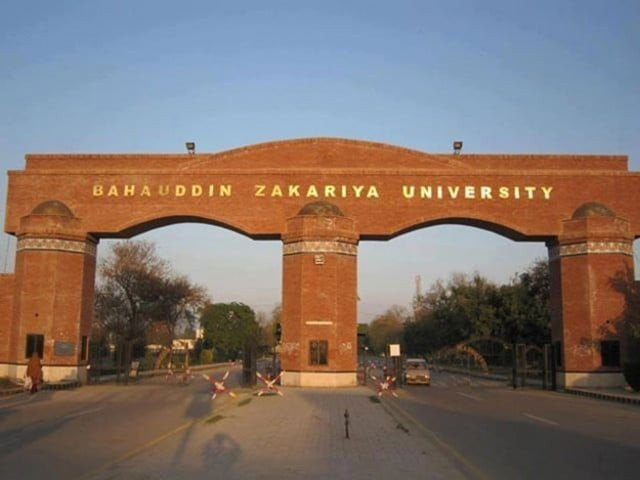
Yet the documents and allegations surrounding Bahauddin Zakariya University (BZU), Multan, present a continuing dispute over access to official records, the limits of privacy protections and the accountability of public institutions. With a legal notice now served on the Vice Chancellor, a fundamental question arises: why has this matter been allowed to approach the threshold of litigation?
The controversy has previously received attention in Daily Financial Times. My column published on 10 June 2026, titled “Ignoring the Governor’s Orders? Allegations Against Bahauddin Zakariya University Multan’s Vice Chancellor Prof. Dr. Zubair Ahmad Ghori and Registrar Ejaz Ahmad Over Withholding Records and Harassment of a Citizen,” examined Muhammad Aslam’s efforts to obtain documents concerning the Registrar’s appointment.
The requested material included an appeal, supporting documents, official responses and the final decision. The column also reported Aslam’s allegations of intimidation, while making clear that these claims required independent verification and that the university officials concerned should be given an opportunity to respond.
A second column, published on 15 June 2026 under the title “BZU Transparency Row Raises Right to Information Concerns,” examined the university’s reported reliance on privacy protections to refuse disclosure. It raised questions about whether records relating to official conduct and administrative decisions could properly be withheld through a general assertion that they concerned university officers.
These questions have now acquired greater urgency.
A legal notice dated 23 September 2026, issued through registered post by Malik Shah Nawaz Khokhar, Advocate Supreme Court of Pakistan, on behalf of Muhammad Aslam, addresses the Vice Chancellor directly. It demands compliance with the directions issued by the Governor’s Secretariat on 14 May 2026 and the provision of certified and duly attested copies of the requested records.
According to the notice, the university’s Legal Branch declined the request through a letter dated 10 June 2026. Aslam subsequently submitted a representation to the Vice Chancellor on 14 June and a reminder on 27 July. His counsel maintains that the requested documents remain unavailable and that no sufficiently reasoned decision identifying the precise legal grounds for withholding them has been communicated.
The notice identifies specific records, including a representation submitted by Dr Muhammad Shaukat, Professor and Director of the Institute of Banking and Finance at BZU, on 7 June 2022, and a report and comments submitted by the university’s Registrar on 20 July 2022. It also seeks the accompanying annexures, supporting documents, relevant inquiry proceedings, findings, recommendations, decisions and correspondence exchanged with the Governor’s Secretariat.
This specificity matters. The university is being asked to address identifiable administrative records, rather than respond to an undefined demand for information. A substantive response should therefore explain the status of the requested documents and the legal basis for any decision to withhold them.
Which document is exempt from disclosure, and why? What specific information requires protection? Has the administration considered releasing the remaining material after redacting any genuinely protected information? How does its position address the Governor’s Secretariat’s directions? Who holds the records, and which official is responsible for deciding the request?
These are questions that deserve clear, documented answers.
Privacy is a legitimate concern, and public institutions must protect information where the law requires them to do so. However, invoking privacy does not, by itself, explain why an entire collection of official correspondence, inquiry records and administrative decisions should remain inaccessible. The legal notice expressly seeks disclosure of separable material and a reasoned explanation identifying the statutory basis for any withholding.
The broader constitutional principle is clear. Article 19-A of the Constitution of Pakistan recognises citizens’ right to access information in matters of public importance, subject to regulation and reasonable restrictions imposed by law. The Punjab Transparency and Right to Information Act, 2013, also provides a statutory framework for obtaining information held by public bodies.
The dispute therefore calls for a legally grounded response, rather than an assumption that official records are beyond public scrutiny. At the same time, the precise scope of any disclosure obligation must be assessed against the applicable law, the nature of the records and any specific exemption that may legitimately apply.
The notice further states that Aslam has approached the Punjab Information Commission in Lahore through an application and a subsequent reminder. It demands preservation of the original and electronic records and calls for compliance within seven days of receipt. The deadline runs from the date the notice is received; its date of issuance alone does not establish when the period expires.
If the requested documents are not provided within the stipulated period, Aslam intends to pursue their disclosure through a writ petition before the Lahore High Court, invoking Article 199 of the Constitution, while continuing the pending proceedings before the Punjab Information Commission.
The notice sets out this intended course of legal action. It does not establish that a writ petition has already been filed, nor does it predetermine the outcome of any proceedings.
Nevertheless, the prospect of further litigation raises an important administrative question: why should a citizen have to bear additional expense to obtain a clear and legally adequate response from a public institution? What public interest would be served by avoidable litigation? Has the Vice Chancellor personally reviewed whether the university’s position is adequately supported by the record and the applicable law?
These questions are not a substitute for legal proceedings. They are, however, legitimate matters of public accountability when the dispute concerns access to official records held by a public-sector university.
The legal notice represents the applicant’s position, not a judicial finding. The allegations must not be treated as established facts, and BZU must be afforded a fair opportunity to explain its actions, clarify the status of the requested records and set out the legal grounds for its decision.
Equally, fairness requires that the applicant receive an answer supported by reasons and, where disclosure is legally required, access to the relevant information. Neither allegations nor institutional silence can substitute for evidence.
The university leadership still has an opportunity to resolve the dispute responsibly: disclose the records that can lawfully be released, identify and justify any specific withholding, preserve the complete record and explain how its actions comply with the Governor’s Secretariat’s directions and the applicable right-to-information framework.
The university’s response will be important not only for Muhammad Aslam but also for public confidence in the administration of public-sector institutions.
A university’s credibility rests not merely on the education it provides, but also on the standards of transparency, accountability and reasoned decision-making it upholds within its own administration. An institution that teaches students to question, investigate and seek evidence must be prepared to demonstrate those same principles in practice.
Ultimately, the issue is not whether a public institution should be exempt from scrutiny. It is whether its decisions can be explained, its legal obligations fulfilled and legitimate requests for public information resolved without unnecessary recourse to the courts. BZU now has an opportunity to provide that answer.
28 responses to “BZU’s Withheld Records on Acting Registrar’s Appointment: Legal Notice Urges Vice Chancellor to Comply with Governor’s Disclosure Directive or Face Writ Petition in Lahore High Court”
-
The university issue has been pending for a considerable period, yet no meaningful progress has been made towards its resolution. The Minister for Education and the Higher Education Commission (HEC) should take immediate notice of the matter, review the facts, and take effective steps to resolve the issue without further delay.
The Financial Times team also deserves appreciation for continuously highlighting this matter and keeping it in the public and educational spotlight for a long time. It is hoped that the relevant authorities will now take the issue seriously and ensure prompt action.
-
This column’s strength lies in its specific questions about the requested documents, responsibility for disclosure and reasons for withholding information. Appreciation to Hurish Shah and Daily Financial Times for encouraging a response that readers can assess through records rather than competing assertions.
-
-
The continued efforts of Daily Financial Times and Hurish Shah highlight the value of journalism that seeks answers and keeps public responsibility in view. BZU now has an opportunity to respond constructively. A timely, reasoned resolution would serve the applicant, the university and public confidence.
-
Daily Financial Times and Hurish Shah deserve appreciation for their sustained attention to transparency at BZU. Following this dispute beyond the first report demonstrates a commitment to public accountability. Citizens seeking official records deserve respectful treatment, clear explanations and a timely response.
-
Daily Financial Times and Hurish Shah deserve appreciation for their sustained attention to transparency at BZU. Following this dispute beyond the first report demonstrates a commitment to public accountability. Citizens seeking official records deserve respectful treatment, clear explanations and a timely response.
-
Appreciation to the writer and newspaper for recognising both transparency and legitimate privacy interests. Asking whether protected details can be redacted while other material is disclosed is a practical contribution. Such careful questioning helps move the discussion towards a fair administrative solution.
-
Appreciation to the writer and newspaper for recognising both transparency and legitimate privacy interests. Asking whether protected details can be redacted while other material is disclosed is a practical contribution. Such careful questioning helps move the discussion towards a fair administrative solution………..
-
Continued coverage matters because unresolved public concerns can disappear from attention before an answer emerges. Daily Financial Times and Hurish Shah deserve credit for following the correspondence and proposed legal action while maintaining a clear focus on a peaceful, documented resolution.
-
Appreciation to the writer and newspaper for recognising both transparency and legitimate privacy interests. Asking whether protected details can be redacted while other material is disclosed is a practical contribution. Such careful questioning helps move the discussion towards a fair administrative solution.zinda Abad
-
The value of this continued coverage will be greatest if it leads to a fair and documented resolution. Hurish Shah and Daily Financial Times deserve appreciation for maintaining public attention and encouraging BZU to respond with the openness expected of a public university.
-
This sustained coverage will be most meaningful if it results in a fair and well-documented resolution. The reporting team deserves recognition for keeping public focus on the issue and urging the university to respond with the transparency expected of a public institution.
-
Responsible journalism should raise difficult questions while remaining open to an evidence-based response. This column follows that approach. Hurish Shah and Daily Financial Times deserve appreciation for encouraging scrutiny without presenting unresolved allegations as established wrongdoing.
-
Hurish Shah has presented a strong case for resolving this dispute through documentation and lawful procedures. Credit goes to Daily Financial Times for supporting journalism that encourages accountability while allowing the university a fair opportunity to explain its position.
-
Hurish Shah strongly argues for resolving the dispute through lawful procedures and documentation. The Daily Financial Times should be commended for its balanced reporting, which demands accountability while allowing the university to explain its position.
-
Hurish Shah’s column invites university leadership to take ownership of the response. Daily Financial Times deserves recognition for encouraging responsible decision-making at the appropriate level. Public trust grows when institutions explain who considered a request and how the decision was reached.
-
Appreciation to Hurish Shah for asking precise questions about the records being withheld. Identifying which documents require protection and explaining why would help clarify the dispute. Daily Financial Times provides a valuable platform for that public discussion.
-
Appreciation to Daily Financial Times and Hurish Shah for keeping the desired outcome clear: disclosure where permissible, justified explanations where necessary and a timely resolution. This gives the university a practical opportunity to address concerns and demonstrate accountability.
-
Daily Financial Times and Hurish Shah rightly encourage a peaceful, evidence-based resolution. Disagreements over official records should be addressed through reasoned decisions and lawful remedies, with every person protected from threats, harassment and intimidation.
-
Appreciation to the writer and newspaper for highlighting the burden that repeated applications and possible litigation place on a citizen. Administrative responsiveness matters because delays can consume time and resources that a clear, timely decision might save.
-
The distinction between a legal notice and a judicial finding is particularly valuable. Hurish Shah maintains that distinction while questioning the reported refusal of disclosure. Daily Financial Times deserves credit for making room for firm but fair scrutiny.
-
Persistent coverage gives unresolved concerns the attention they deserve. Daily Financial Times and Hurish Shah have kept the focus on records, explanations and responsibility. A documented response from BZU would help move this matter towards a fair conclusion.
-
Appreciation to Daily Financial Times for keeping this matter in public discussion and to Hurish Shah for explaining its significance. Persistent journalism can help ensure that a citizen’s request receives serious consideration. The column’s call for disclosure and reasoned decisions offers a constructive path forward.
-
The emphasis on preserving original and electronic records is a useful part of this discussion. Appreciation to Hurish Shah and Daily Financial Times for drawing attention to documentation that may help establish the facts and support an impartial review.
-
Responsible journalism should raise difficult questions while remaining open to an evidence-based response. This column follows that approach. Hurish Shah and Daily Financial Times deserve appreciation for encouraging scrutiny without presenting unresolved allegations as established wrongdoing.
-
Threats and intimidation undermine meaningful dialogue wherever they occur. The newspaper and writer deserve appreciation for promoting a course based on evidence and lawful remedies, while recognising that reported allegations must be independently examined.
-
Hurish Shah’s attention to the chronology of correspondence makes the issue easier to understand. Appreciation to Daily Financial Times for publishing coverage that gives readers specific points to consider and encourages the administration to address outstanding questions.
-
Hurish Shah’s column combines firm questioning with fairness by distinguishing allegations from established facts and recognising the university’s opportunity to respond. Credit also goes to Daily Financial Times for providing space for reporting that encourages institutions to answer legitimate concerns through evidence.
-
The continued efforts of Daily Financial Times and Hurish Shah highlight the value of journalism that seeks answers and keeps public responsibility in view. BZU now has an opportunity to respond constructively. A timely, reasoned resolution would serve the applicant, the university and public confidence.





Leave a Reply