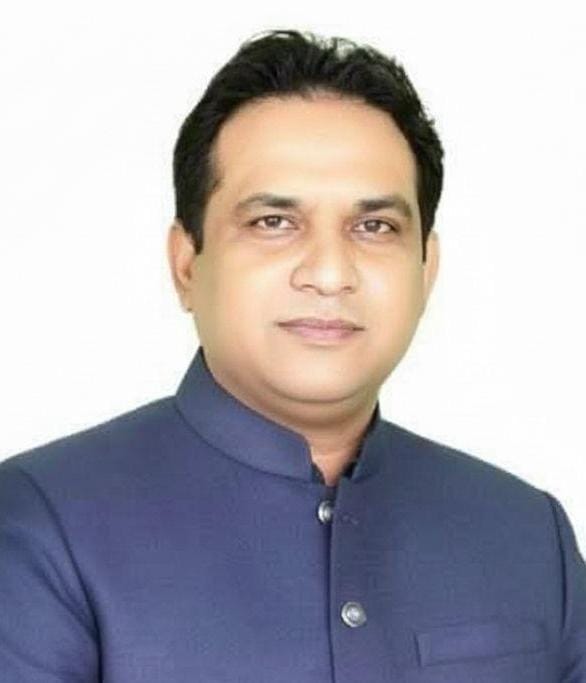
Written By: Rana Farooq Ashraf
Published By:ANI News Agency
In politics, sometimes a single explanation raises more questions than it answers. The controversy surrounding Punjab Chief Minister Maryam Nawaz’s recent use of the provincial government’s aircraft for a London trip has now reached precisely that point.
Maryam Nawaz has said that the aircraft does not belong to her personally but to the office of the Chief Minister of Punjab. She has also stated that she personally paid approximately Rs27.5 million for the London trip, undertaken to attend her daughter’s graduation ceremony, and indicated that the payment receipt would be made available.
The central issue, therefore, is not simply where a chief minister travelled. The real issue is public office, public resources and financial transparency.
If the entire cost of the trip was genuinely paid from the chief minister’s personal funds, then the matter should be capable of being settled through documentation. The public deserves to know the complete amount paid, the recipient of the payment, the invoice, the method of payment, the applicable government rules governing the use of the aircraft and whether any cost—fuel, parking, security, crew, maintenance or other operational expenses—was ultimately borne by the public exchequer.
There is another legitimate question that naturally follows the claim of personal payment. If Rs27.5 million was paid personally, what was the documented source of that money?
There is nothing inherently improper about a public office-holder spending personal wealth. But when a senior elected official makes a personal expenditure of this magnitude, questions about declared income, assets and the financial source of the payment are matters of legitimate public interest. The appropriate test is not political rhetoric but documentary consistency between declared income, assets and major expenditures.
This does not mean that an allegation should automatically be treated as proof of wrongdoing. It means that transparency should be sufficient to answer the question.
The controversy has already generated competing claims. An opposition member of the Punjab Assembly sought clarification over allegations that approximately Rs12.5 million had been spent from the public exchequer on fuel, parking and other expenses connected with the London journey. The government, however, has maintained that Maryam Nawaz herself bore the expenses.
That difference makes one thing particularly important: the release of verifiable records.
Questions about the aircraft itself also deserve clear answers. Under what legal and administrative procedure was the aircraft acquired? What was the approval mechanism? What procurement rules were followed? Was competitive tendering conducted where required? Who recommended the aircraft and on what technical grounds? What is its annual operating and maintenance cost? Under what rules can it be used for a journey connected with a family event?
These are not questions that should be dismissed merely because they are politically inconvenient.
A chief minister is undoubtedly required to remain connected with government affairs. Maryam Nawaz has argued that a chief minister or prime minister is never truly “off duty” and that she continued to work during the journey. But that argument does not, by itself, settle the separate question of whether the use of a state aircraft for a particular journey complied with the applicable rules.
There is also a broader principle involved. Pakistan is a country where government expenditure is ultimately supported by taxpayers. At a time when the federal government has itself been reintroducing austerity measures, questions about the privileges and expenses of public office-holders naturally attract public attention.
The answer to such questions should not be anger, ridicule or political counterattack. It should be transparency.
If Maryam Nawaz paid the entire amount personally, the receipt and payment trail can establish that fact. If public money was spent on any part of the journey, the relevant expenditure should be disclosed along with the legal authority under which it was incurred. If the payment came from personal income or assets, the relevant financial declarations should provide a basis for understanding it.
Democracy does not weaken when citizens ask questions. It becomes stronger when public officials answer them with records.
The principle should therefore remain the same regardless of political party or personality: public office demands public accountability. The people should not have to rely on competing political narratives when official documents can settle the matter.
The question is not whether Maryam Nawaz is entitled to travel. The question is whether every rupee connected with the use of public resources can withstand public scrutiny.
If the answer is yes, then transparency is the simplest defence.
And if the money was genuinely personal, the documentary evidence should make that fact clear.
That is not hostility towards a government. It is the ordinary price of holding public office in a democracy.